Vision transformer to differentiate between benign and malignant slices in 18F-FDG PET/CT
Daiki Nishigaki, Yuki Suzuki, Tadashi Watabe, Daisuke Katayama, Hiroki Kato, Tomohiro Wataya, Kosuke Kita, Junya Sato, Noriyuki Tomiyama, Shoji Kido

TL;DR
This study uses Vision Transformers to improve the classification of benign and malignant lesions in PET/CT scans, outperforming traditional CNN models.
Contribution
The novel use of Vision Transformer (ViT) for classifying 18F-FDG PET/CT slices as benign or malignant.
Findings
ViT achieved an AUC of 0.90, outperforming CNN models like EfficientNet and DenseNet.
ViT maintained strong performance (AUC 0.81) even for low FDG uptake cases, surpassing CNNs.
The model showed clinical value in identifying hard-to-detect malignant lesions.
Abstract
Fluorine-18-fluorodeoxyglucose (18F-FDG) positron emission tomography (PET)/computed tomography (CT) is widely used for the detection, diagnosis, and clinical decision-making in oncological diseases. However, in daily medical practice, it is often difficult to make clinical decisions because of physiological FDG uptake or cancers with poor FDG uptake. False negative clinical diagnoses of malignant lesions are critical issues that require attention. In this study, Vision Transformer (ViT) was used to automatically classify 18F-FDG PET/CT slices as benign or malignant. This retrospective study included 18F-FDG PET/CT data of 207 (143 malignant and 64 benign) patients from a medical institute to train and test our models. The ViT model achieved an area under the receiver operating characteristic curve (AUC) of 0.90 [95% CI 0.89, 0.91], which was superior to the baseline Convolutional…
Genes, proteins, chemicals, diseases, species, mutations and cell lines named across the full text — each resolved to its canonical identifier and authoritative record.
Click any figure to enlarge with its caption.
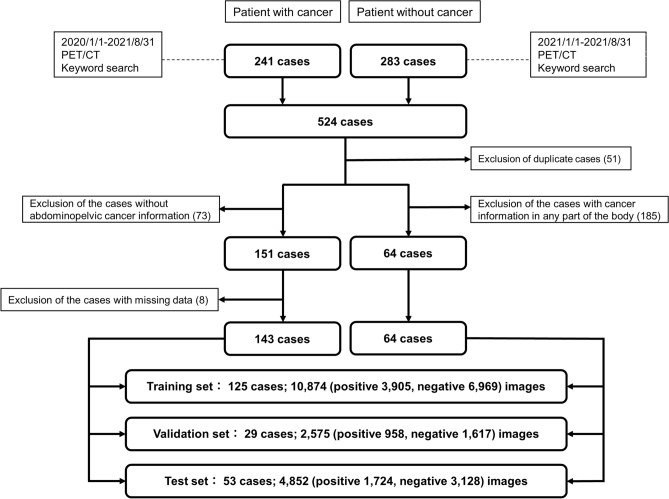 Figure 1
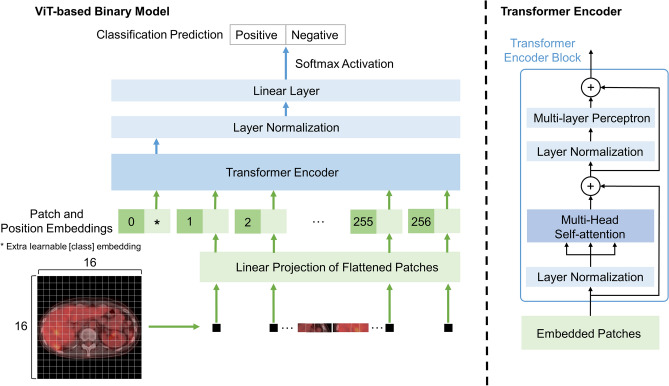 Figure 2
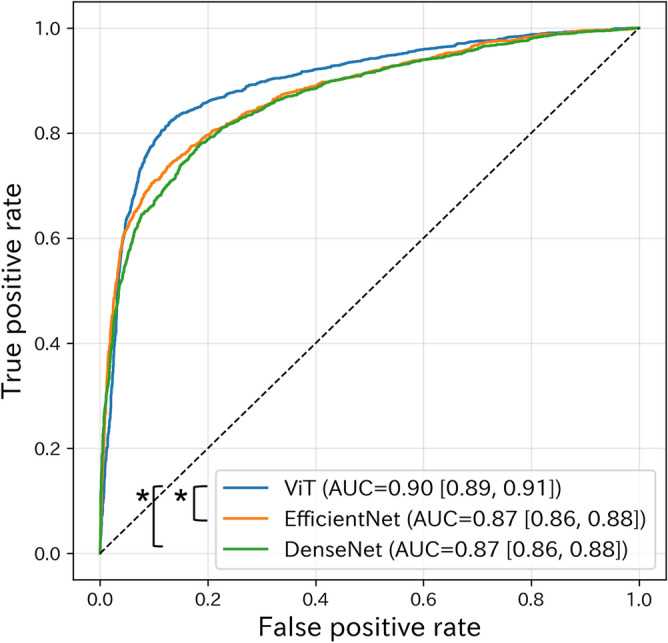 Figure 3
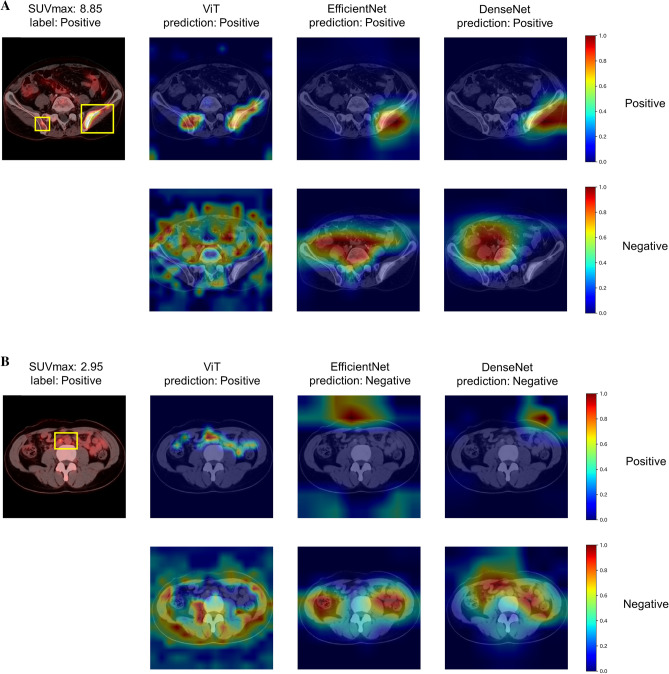 Figure 4
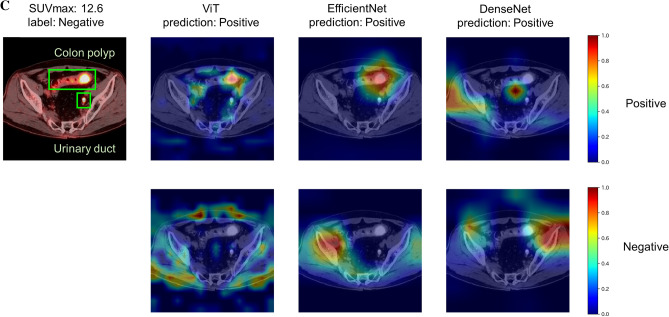 Figure 4
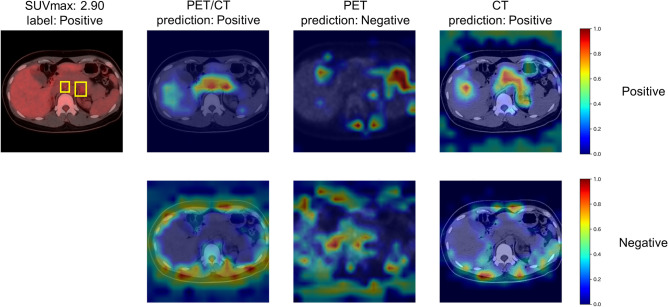 Figure 5
Peer Reviews
No public reviews on file for this paper yet. If you reviewed it on a platform where reviews are public (OpenReview, ICLR, NeurIPS, ICML), you can paste yours below so the community can read it here.
Videos
No videos yet. Explain this paper in a talk, walkthrough, or lecture? Add one.
Taxonomy
TopicsItalian Fascism and Post-war Society