A clinico-anatomical dissection of the magnocellular and parvocellular pathways in a patient with the Riddoch syndrome
Ahmad Beyh, Samuel E. Rasche, Alexander Leff, Dominic ffytche, Semir Zeki

TL;DR
A patient with Riddoch syndrome shows selective visual deficits and hallucinations due to damage to specific visual pathways, not the primary visual cortex.
Contribution
Demonstrates that Riddoch syndrome can result from damage to optic radiations, not just V1, and highlights differential vulnerability of magnocellular and parvocellular pathways.
Findings
Patient YL showed Riddoch syndrome symptoms despite intact V1, indicating optic radiation damage.
High-resolution fMRI revealed strong magnocellular but weak parvocellular responses in V1.
Patient reported visual hallucinations of moving stimuli, suggesting functional parvocellular pathway disruption.
Abstract
The Riddoch syndrome is thought to be caused by damage to the primary visual cortex (V1), usually following a vascular event. This study shows that damage to the anatomical input to V1, i.e., the optic radiations, can result in selective visual deficits that mimic the Riddoch syndrome. The results also highlight the differential susceptibility of the magnocellular and parvocellular visual systems to injury. Overall, this study offers new insights that will improve our understanding of the impact of brain injury and neurosurgery on the visual pathways. The Riddoch syndrome, characterised by the ability to perceive, consciously, moving visual stimuli but not static ones, has been associated with lesions of primary visual cortex (V1). We present here the case of patient YL who, after a tumour resection surgery that spared his V1, nevertheless showed symptoms of the Riddoch syndrome. Based…
Genes, proteins, chemicals, diseases, species, mutations and cell lines named across the full text — each resolved to its canonical identifier and authoritative record.
Click any figure to enlarge with its caption.
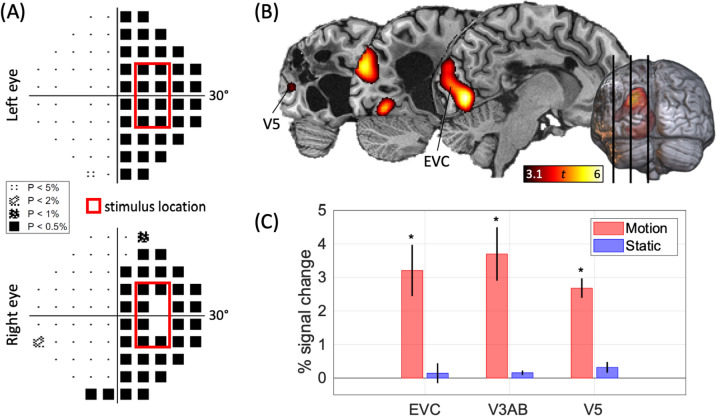 Figure 1
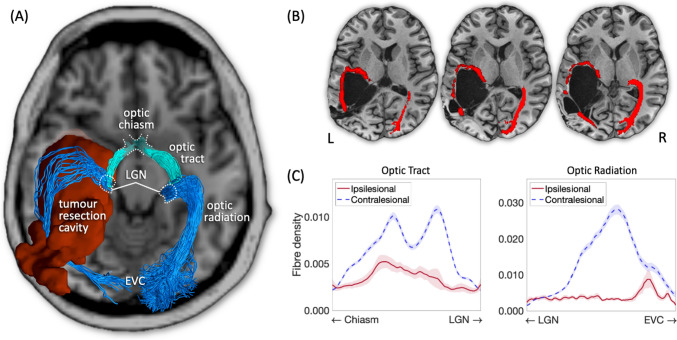 Figure 2
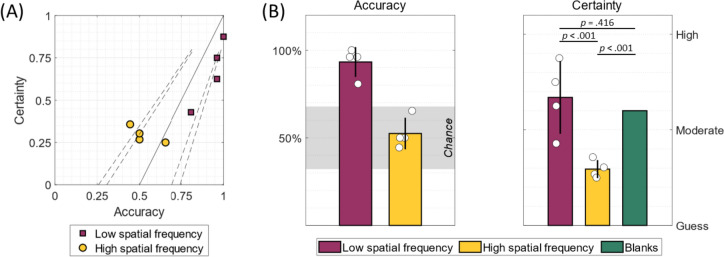 Figure 3
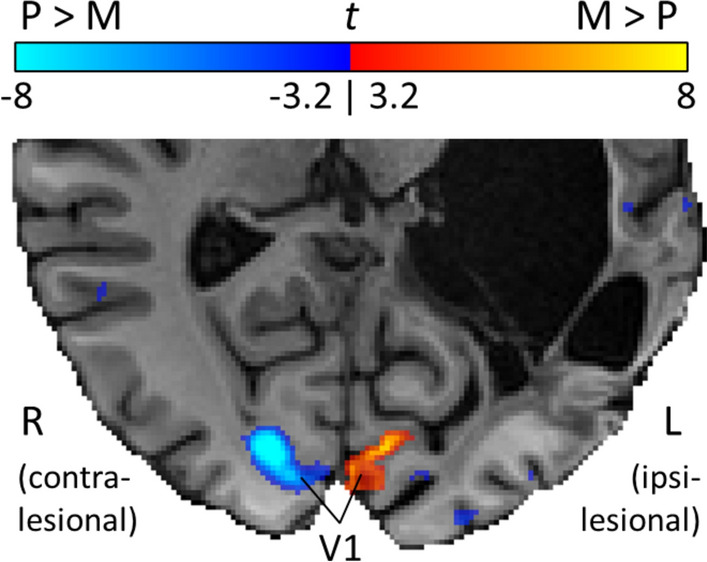 Figure 4
Peer Reviews
No public reviews on file for this paper yet. If you reviewed it on a platform where reviews are public (OpenReview, ICLR, NeurIPS, ICML), you can paste yours below so the community can read it here.
Videos
No videos yet. Explain this paper in a talk, walkthrough, or lecture? Add one.
Taxonomy
TopicsFunctional Brain Connectivity Studies · Advanced Neuroimaging Techniques and Applications · Neural dynamics and brain function