Comparative efficacy of acupuncture point stimulation treatments for dialysis patients with uremic pruritus: a systematic review and network meta-analysis
Po-Hsuan Lu, Hui-En Chuo, Ling-Ya Chiu, Chien-Cheng Lai, Jen-Yu Wang, Ping-Hsun Lu

TL;DR
This study compares different acupuncture treatments for itching in dialysis patients and finds that combined acupuncture methods are most effective.
Contribution
A network meta-analysis comparing multiple acupuncture point stimulation treatments for uremic pruritus in dialysis patients.
Findings
Combination treatment with acupuncture reduced pruritus more effectively than conventional treatment alone.
Acupoint injection and massage showed benefits in treating uremic pruritus based on effectiveness rates.
Network meta-analysis identified optimal adjuvant therapies for uremic pruritus in dialysis patients.
Abstract
Uremic pruritus (UP) is a common complication of chronic kidney disease that causes sleep disturbances and increases all-cause mortality. Currently, the first-line medications for UP exhibit inadequate pruritus control with adverse effects. Various acupuncture point stimulation treatments (APSTs) have been shown to be effective as adjuvant therapies in UP, and a network meta-analysis can offer relative efficacy estimates for treatments for which head-to-head studies have not been performed. We conducted a random-effects network meta-analysis on a consistency model to compare the different APSTs for UP. The primary outcomes were the mean visual analog scale (VAS) score and effectiveness rate (ER). The network meta-analysis retrieved 27 randomized controlled trials involving 1969 patients. Compared with conventional treatment alone, combination treatment with acupuncture (mean…
Genes, proteins, chemicals, diseases, species, mutations and cell lines named across the full text — each resolved to its canonical identifier and authoritative record.
Click any figure to enlarge with its caption.
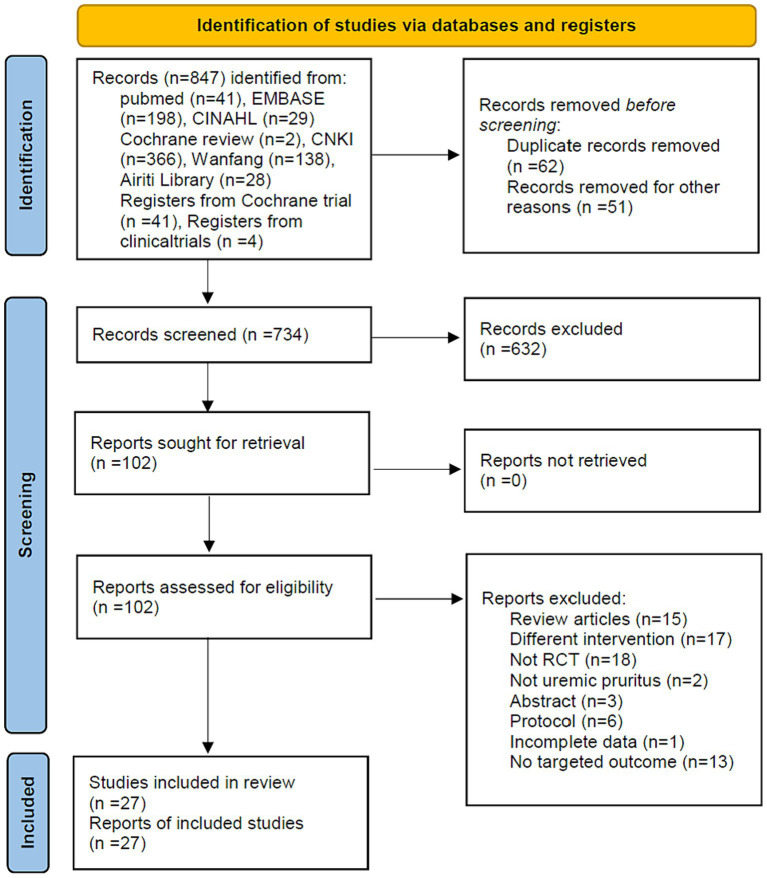 Figure 1
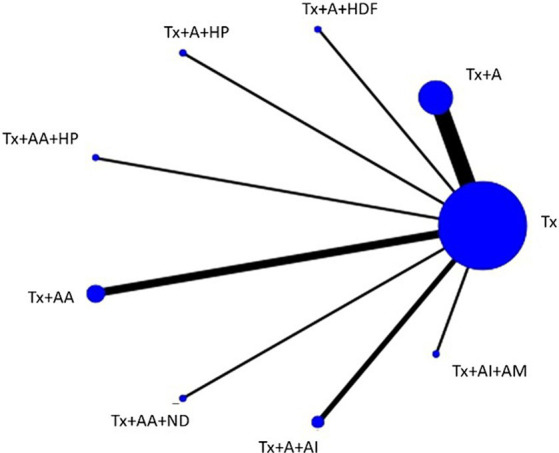 Figure 2
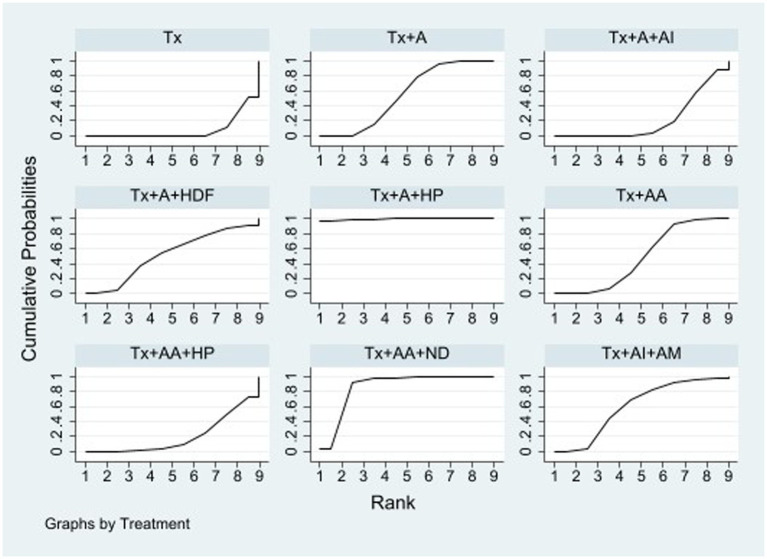 Figure 3
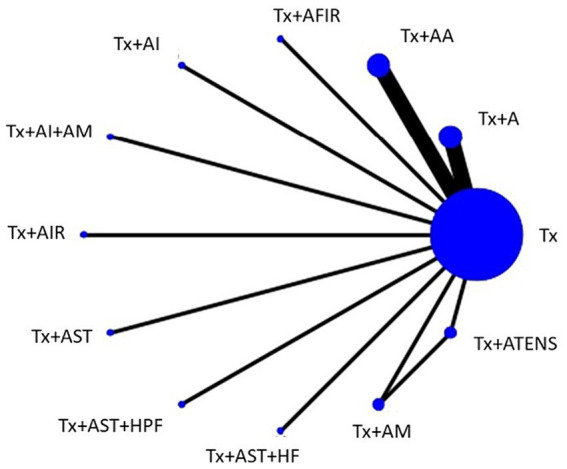 Figure 4
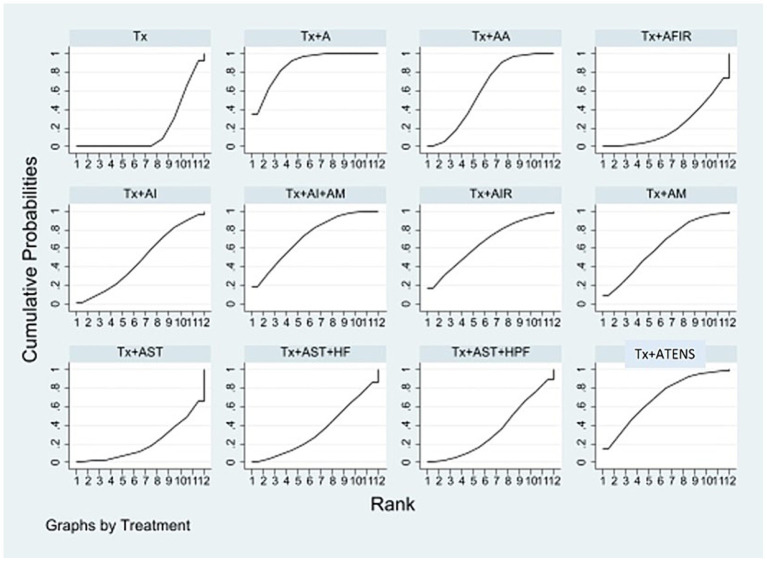 Figure 5
| (A) Overall ER | ||||||||
|---|---|---|---|---|---|---|---|---|
|
| 0.17 (0.02, 1.28) | 0.09 (0.01, 0.63)* | 0.08 (0.01, 0.58)* | 0.09 (0.01, 0.62)* | 0.08 (0.01, 0.56)* | 0.07 (0.01, 0.49)* | 0.07 (0.01, 0.49)* | 0.07 (0.01, 0.46)* |
| 5.95 (0.78, 45.18) |
| 0.54 (0.27, 1.10) | 0.50 (0.26, 0.97)* | 0.52 (0.24, 1.12) | 0.49 (0.25, 0.94)* | 0.43 (0.22, 0.82)* | 0.42 (0.21, 0.83)* | 0.40 (0.21, 0.77)* |
| 11.01 (1.58, 76.83)* | 1.85 (0.91, 3.77) |
| 0.93 (0.68, 1.28) | 0.96 (0.58, 1.60) | 0.90 (0.66, 1.23) | 0.79 (0.58, 1.08) | 0.78 (0.55, 1.11) | 0.74 (0.56, 0.99)* |
| 11.84 (1.73, 81.19)* | 1.99 (1.03, 3.86)* | 1.07 (0.78, 1.47) |
| 1.03 (0.67, 1.60) | 0.97 (0.82, 1.16) | 0.85 (0.72, 1.00) | 0.84 (0.65, 1.07) | 0.80 (0.70, 0.91)* |
| 11.44 (1.60, 81.63)* | 1.92 (0.89, 4.15) | 1.04 (0.63, 1.72) | 0.97 (0.63, 1.49) |
| 0.94 (0.61, 1.45) | 0.82 (0.53, 1.26) | 0.81 (0.51, 1.29) | 0.77 (0.51, 1.16) |
| 12.18 (1.78, 83.45)* | 2.05 (1.06, 3.96)* | 1.11 (0.81, 1.51) | 1.03 (0.86, 1.22) | 1.06 (0.69, 1.64) |
| 0.87 (0.73, 1.03) | 0.86 (0.68, 1.10) | 0.82 (0.73, 0.92)* |
| 13.99 (2.04, 95.92)* | 2.35 (1.22, 4.55)* | 1.27 (0.93, 1.74) | 1.18 (1.00, 1.40) | 1.22 (0.79, 1.89) | 1.15 (0.97, 1.36) |
| 0.99 (0.78, 1.27) | 0.94 (0.83, 1.07) |
| 14.13 (2.05, 97.59)* | 2.38 (1.20, 4.70)* | 1.28 (0.90, 1.83) | 1.19 (0.93, 1.53) | 1.24 (0.78, 1.97) | 1.16 (0.91, 1.48) | 1.01 (0.79, 1.29) |
| 0.95 (0.77, 1.17) |
| 14.87 (2.18, 101.53)* | 2.50 (1.31, 4.78)* | 1.35 (1.01, 1.80)* | 1.26 (1.10, 1.43)* | 1.30 (0.86, 1.97) | 1.22 (1.09, 1.37)* | 1.06 (0.94, 1.20) | 1.05 (0.85, 1.30) |
|
| (A) Overall ER | |||
|---|---|---|---|
| Treatment | SUCRA | Pr Best | Mean Rank |
| Tx | 7.8 | 0.0 | 8.4 |
| Tx + A | 54.2 | 0.0 | 4.7 |
| Tx + A + HDF | 52.2 | 0.0 | 4.8 |
| Tx + A + HP | 99.1 | 96.2 | 1.1 |
| Tx + AA+HP | 20.3 | 0.0 | 7.4 |
| Tx + AA | 48.5 | 0.0 | 5.1 |
| Tx + AA+ND | 86.3 | 3.8 | 2.1 |
| Tx + A + AI | 21.1 | 0.0 | 7.3 |
| Tx + AI+AM | 60.5 | 0.0 | 4.2 |
Peer Reviews
No public reviews on file for this paper yet. If you reviewed it on a platform where reviews are public (OpenReview, ICLR, NeurIPS, ICML), you can paste yours below so the community can read it here.
Videos
No videos yet. Explain this paper in a talk, walkthrough, or lecture? Add one.
Taxonomy
TopicsDermatology and Skin Diseases · Acupuncture Treatment Research Studies · Complementary and Alternative Medicine Studies
Introduction
Uremic pruritus (UP) is a troublesome complication of chronic kidney disease (CKD) with a prevalence ranging from 18 to 80% (1). Approximately 40% of patients with UP suffer from a moderate to severe itching with an inconsistent distribution and duration (2). Patients with UP experience sleep disturbances, depressive symptoms, impaired quality of life, an increased risk of infection, and even increased mortality (3, 4). The pathophysiology of UP is unclear and intricate; it involves skin changes, toxin deposition, immune dysregulation, metabolic changes, neuropathy, and an opioid imbalance (4, 5). Recent studies have challenged the role of the metabolism of minerals in the pathogenesis of UP; in contrast, many previous studies have focused on the inflammasome and nonhistaminergic pruritogens (4, 5). Antihistamines, gabapentin, and opioid-receptor modulators are the current treatments for UP, but these show variable therapeutic responses and potential side effects in patients with CKD (4, 6). Many adjuvant therapies including phototherapy, acupuncture, diet supplement, and sodium thiosulphate injection have recently been reported (6–8).
Studies on acupuncture point stimulation treatments (APSTs) for UP have shown efficacy in itch control (9–11). However, APSTs include various techniques: acupuncture, auricular acupressure (AA), acupoint injection (AI), acupoint massage (AM), acupoint sticking therapy (AST), acupoint infrared radiation (AIR), and acupoint transcutaneous electrical stimulation (ATENS) (12). The exact mechanism of action of acupuncture to treat UP remains poorly understood. Previous studies have found that the acupoints on the meridians are rich in high-density nerve endings (13). By stimulating the numerous membrane receptors on the peripheral nerves in different ways (i.e., electronic, chemical, or mechanical stimulation), acupuncture affects the regulation of cytokines, neuroimmunity, and the degranulation of mast cells (13). To date, no studies have compared the clinical efficacy of various APST techniques for treating UP. Therefore, to identify the effectiveness of different APSTs for UP, we performed a network meta-analysis to offer relative efficacy estimates for interventions that lack head-to-head studies.
Methods
Literature search
We searched seven major databases including PubMed, Embase, CINAH, the Cochrane Library, Wanfang, Chinese National Knowledge Infrastructure, and the Airiti Library from their inception to September 29, 2022, without language restriction. The search string used was based on MeSH and Emtree search headings: acupuncture (including acupuncture OR acupressure OR Shiatsu OR Zhi Ya OR Chih Ya OR Shiatzu OR auricular acupuncture OR ear acupuncture OR auricular acupressure OR ear acupressure OR auricular therapy OR auriculotherapy OR auricular needle OR otopoint OR otoneedle OR auriculoacupuncture OR otopuncture OR acupressure point OR acupoints OR Tui Na), pruritus, chronic kidney disease, dialysis, uremia. We also searched for free text words and word combinations containing the above mentioned terms (Supplementary Table S1). In addition to performing systematic searches of relevant databases, we conducted manual searches of the reference sections of the retrieved papers and contacted leading experts in the field to identify additional research studies. Furthermore, we examined unpublished studies available in the ClinicalTrials.gov registry1. This research is registered with PROSPERO (CRD42023425739). To ensure transparency and adherence to best practices, the reporting of this systematic review followed the guidelines outlined in the Preferred Reporting Items for Systematic Reviews and Meta-Analyses (PRISMA) extended statement for network meta-analysis.
Study selection
Randomized controlled trials (RCTs) were selected based on the following inclusion criteria: (1) inclusion of dialysis patients with UP, (2) utilization of APST, and (3) availability of quantitative data regarding itching severity. Articles were excluded based on the following criteria: (1) non-randomized study design, (2) absence of a UP diagnosis, and (3) inclusion of control groups receiving additional treatments such as oral Chinese herbal medicine, herbal baths, charcoal tablets, or antihistamines. In cases in which data were either missing or in raw form, we contacted the authors via email for clarification. In situations in which multiple articles presented overlapping data, we excluded duplicate articles and selected those with larger population sizes.
Data extraction and risk of bias assessment
According to the above mentioned inclusion and exclusion criteria, two reviewers (Hui-En Chuo and Ping-Hsun Lu) evaluated the initially selected studies for eligibility for the network meta-analysis independently. The comments of the two reviewers were recorded and compared. Any disagreements were submitted and resolved by a third reviewer later. For each selected study, the following information was listed: first author, publication year, number of patients, patient ages, intervention modes of acupuncture, concomitant treatment, severity of pruritus, inspection data, effectiveness rate (ER), and acupoint.
Two reviewers independently performed a quality assessment of each study using the Risk of Bias 2 tool recommended by the Cochrane Collaboration (14). The assessment tool addresses five domains to evaluate the methodological quality of the included RCTs. Any difference of opinions between the reviewers was determined by a third reviewer.
Outcome measurement
Two outcomes were extracted and analyzed: visual analog scale (VAS) scores and ER of UP in dialysis patients. Higher VAS scores (0–10 points on each scale) indicate more severe pruritus. The definition of the ER is the number of patients with resolved pruritus or improvement in symptoms among the total patients which complain from UP.
Statistical analysis and software
To compare the groups, continuous consequences, such as VAS scores, were measured as weighted mean differences, and the ER was measured using dichotomous outcomes. We used the network package of STATA (version MP 17.0, StataCorp, College Station, TX, United States) to perform the statistical analyses as well as to generate the figures and tables (15). The surface under the cumulative ranking curve (SUCRA) is an index that ranges between 0 and 1; a larger value is associated with a better treatment response. Funnel plots were generated to detect publication bias. RevMan 5.4 (Cochrane Collaboration, Copenhagen, Denmark) was applied to evaluate the risk of bias graph and summary.
Results
Characteristics of the included studies
To evaluate the effect of APSTs for UP, RCTs were identified according to the PRISMA flowchart process (Figure 1). We identified 847 articles from electronic databases and excluded 632 articles based on the titles and abstracts. A total of 102 full-text articles were reviewed, and 75 of these articles were excluded for the following reasons: 15 studies were review articles, 17 studies involved different interventions, 18 studies were not RCTs, 2 studies did not involve patients with UP, 3 studies had abstracts only, 6 studies were protocols, 1 study provided incomplete data, and 13 studies did not report the target outcome. We synthesized the remaining 27 articles qualitatively and quantitatively.
PRISMA 2020 flow diagram.
Table 1 lists the characteristics of the retrieved RCTs. The included studies were published between 2004 and 2021 and had a total of 1,969 participants. The sample size of the included RCTs ranged from26–150 participants. All acupuncture interventions are combined with conventional therapy (dialysis for electrolyte balance, blood pressure, and body fluid maintenance). In studies following APSTs in patients with UP on dialysis, 11 involved acupuncture, nine involved AA, two evaluated patients were treated with AI and acupuncture (AI + A), and the remaining seven examined patients were treated with the following: acupoint far infrared (AFIR), AI, AI combined with AM (AI + AM), AIR, AM, AST, or ATENS. The acupoints used for each acupuncture therapy are listed in Supplementary Table S2.
Risk of bias assessment
The results of the risk of bias assessment charts for the included studies are shown in Supplementary Figures S1A,B. All the included trials were randomly allocated, and seven studies provided information about the hidden allocation sequence. Twelve studies described random methods (seven studies used tables of random numbers, three studies used random number generators, and one study used drawing of lots, and one study used chart numbers). Eight studies did not use intention-to-treat analysis, and the loss-to-follow-up rate of eight studies was greater than 5%. There were eight studies with lost outcome data >5%; none had any evidence to support the consistency of the missing data analysis results. Four studies reported different reasons for missing data, and the others did not report the reasons for missing data. Only two studies were double-blinded, and 1 study was single-blinded. The overall bias and outcome measurement domains exhibited a high risk of bias because most of the studies were not double-blinded and self-assessed itch scores are subjective outcomes. All outcome data were available from the included trials.
Overall effectiveness rate
Sixteen studies including eight types of APST combinations in the network meta-analysis reported overall ERs. Six studies involved acupuncture, three involved AA, two involved AI + A, and the other involved the following different acupuncture treatment combinations: acupuncture with hemodiafiltration (A + HDF), acupuncture with hemoperfusion (A + HP), auricular acupressure with hemoperfusion (AA + HP), auricular acupressure with nocturnal dialysis 3 times per week (AA + ND), and AI + AM. For different APST combinations, the network graph (Figure 2) shows that the most publications evaluated traditional treatments, followed by APST, while A + HDF was the subject of few publications. Most trials reported comparisons between usual treatment (Tx) and acupuncture. Table 1 presents a comprehensive overview of the acupuncture treatment combinations that led to increased ERs through a direct comparison. In dialysis patients, the addition of different acupuncture treatment combinations to Tx, including Tx + A + HP, Tx + AA+ND, Tx + AI+AM, Tx + A, and Tx + AA, demonstrated a significant increase in the ERs of UP treatment compared with Tx alone. The treatment of Tx + A + HP (risk ratio (RR), 14.87; 95% confidence interval (CI), 2.18 to 101.53) was the most effective in increasing the ER, followed by Tx + AA+ND, Tx + AI+AM, and Tx + A, which were superior to Tx + AA (Table 1A). The overall ranking of each treatment can be visualized through the SUCRA. In Figure 3 and Table 2A, the descending order of SUCRA rankings for the ER of APST combinations in dialysis patients with UP are as follows: Tx + A + HP (SUCRA = 99.1), Tx + AA + ND (SUCRA = 86.3), Tx + AI + AM (SUCRA = 60.5), Tx + A (SUCRA = 54.2), Tx + A + HDF (SUCRA = 52.2), Tx + AA (SUCRA = 48.5), Tx + A + AI (SUCRA = 21.1), Tx + AA + HP (SUCRA = 20.3), and Tx (SUCRA = 7.8).
Network plot of the network meta-analysis on ERs every node represents a specific treatment, where the size of each node reflects the number of subjects involved, and the thickness of the lines corresponds to the number of RCTs providing comparative data. A, acupuncture; AA, aricular acupressure; AI, acupoint injection; AM, acupoint massage; HDF, hemodiafiltration; HP, hemoperfusion; ND, nocturnal dialysis; Tx, conventional treatment.
SUCRA of the network meta-analysis on ERs surface under the cumulative ranking curve. The overall ranking of each treatment is determined by the SUCRA. A greater area under the curve indicates a higher ranking, which signifies a superior treatment in the network meta-analysis. A, acupuncture; AA, aricular acupressure; AI, acupoint injection; AM, acupoint massage; HDF, hemodiafiltration; HP, hemoperfusion; ND, nocturnal dialysis; Tx, conventional treatment.
Visual analog scale
In the network meta-analysis, 16 studies reported VAS scores for 11 different combinations of APSTs. Among these, four studies used Tx + A, four used Tx + AA, and the remaining nine used various combinations, such as Tx + AFIR, Tx + AI, Tx + AI+AM, Tx + AIR, Tx + AST, Tx + AST + HPF, Tx + AST + HF, Tx + AM, and Tx + ATENS. In the network plot (Figure 4), it is evident that studies involving Tx + A and Tx + AA had the most subjects, whereas studies involving Tx + AFIR, Tx + AI, Tx + AI + AM, Tx + AIR, Tx + AST, Tx + AST + HPF, Tx + AST + HF, Tx + AM, and Tx + ATENS had only one subject per study. The majority of the trials reported a comparison between Tx and Tx + A. Table 1B, which shows the league table, presents the outcomes of both direct and indirect comparisons of the efficacy of various APSTs in decreasing VAS scores. The results indicate that Tx + A, Tx + AI + AM, and Tx + AA were significantly more effective in reducing VAS scores among dialysis patients with UP than Tx. The most successful intervention in reducing VAS scores among the tested treatments was Tx + A, with a mean difference (MD) of −2.63 (95% CI = −3.71 to −1.55). Following Tx + A, Tx + AI + AM was the second most effective treatment, with an MD of −2.04 (95% CI = −3.96 to −0.12). The ability of these treatments to reduce VAS scores of UP in dialysis patients was ranked based on SUCRA scores (Figure 5 and Table 2B). In descending order, the rankings were as follows: Tx + A (SUCRA = 88.0), Tx + AI + AM (SUCRA = 72.4), Tx + ATENS (SUCRA = 69.9), Tx + AIR (SUCRA = 66.9), Tx + AM (SUCRA = 63.1), Tx + AA (SUCRA = 61.8), Tx + AI (SUCRA = 47.4), Tx + AST + HF (SUCRA = 34.9), Tx + AST + HPF (SUCRA = 34.5), Tx + AFIR (SUCRA = 22.6), Tx + AST (SUCRA = 20.7), and Tx (SUCRA = 17.9).
Network plot of the network meta-analysis for VAS scores. Every node represents a specific treatment, where the size of each node reflects the number of subjects involved, and the thickness of the lines corresponds to the number of RCTs providing comparative data. A, acupuncture; AA, aricular acupressure; AFIR, acupoint far infrared; AI, acupoint injection; AIR, acupoint infrared; AM, acupoint massage; AST, acupoint sticking therapy; ATENS, acupoint transcutaneous electrical nerve stimulation; HF, hemofiltration; HPF, hemodiafiltration; Tx, conventional treatment.
SUCRA of the network meta-analysis for VAS scores. Surface under the cumulative ranking curve. The overall ranking of each treatment is determined by the SUCRA. A greater area under the curve indicates a higher ranking, which signifies a superior treatment in the network meta-analysis. A, acupuncture; AA, aricular acupressure; AFIR, acupoint far infrared; AI, acupoint injection; AIR, acupoint infrared; AM, acupoint massage; AST, acupoint sticking therapy; ATENS, acupoint transcutaneous electrical nerve stimulation; HF, hemofiltration; HPF, hemodiafiltration; Tx, conventional treatment.
Cluster ranking plot of different APSTs for up in dialysis patients
The predicted SUCRA values for ERs and VAS scores were utilized to generate a cluster ranking plot (Supplementary Figure S2). Data on both ERs and VAS scores were available for the three APSTs: Tx + A, Tx + AI + AM, and Tx + AA. According to the analysis, Tx + AI + AM was expected to have a greater impact on improving both ER and VAS scores than Tx + AA. In addition, Tx + A was identified as the most effective treatment for improving the ER.
Publication bias
Supplementary Figure S3 displays the funnel plots that were generated to identify any publication bias in studies reporting ERs and VAS scores. The asymmetrical distributions observed in both funnel plots suggest the possibility of publication bias among the studies included in the analysis.
Discussion
Our network meta-analysis retrieved 27 randomized controlled trials involving 1,684 patients showed that the treatment combination of Tx + A were found to be the most effective in improving the VAS scores. A possible target of acupuncture in skin is sensory cutaneous innervation, which is abundant in cases of neuropathic pruritus, prurigo nodularis, and UP (16, 17). However, a previous review, which retrieved only English literature, reported that the effectiveness of acupuncture in treating UP is controversial (11). Lu et al. recently conducted a systematic review that demonstrated the effectiveness of APST in reducing VAS scores of UP and biomarkers, such as blood urea nitrogen (BUN), parathyroid hormone (PTH), and histamine levels (18). The most commonly used acupoints are reported to be SP10, LI11, SP6, and ST36, suggesting that acupuncture could serve as a beneficial complementary treatment for alleviating UP (19). Moreover, the application of six weeks of acupuncture at LI11 in patients undergoing hemodialysis led to a decrease in the dimensions of the 5-D itch scale, specifically in terms of degree, duration, disability, and distribution (20). Chang et al. conducted an RCT demonstrating the efficacy of acupuncture at bilateral LI11, SP10, and SP6 in reducing itching symptoms among patients undergoing hemodialysis. In addition, the intervention showed a significant improvement in VAS and Duo scores, an increase in albumin indicators, and a decrease in immunoglobulin E indicators (21). In the mouse cheek model of pruritogen-induced acute itch and an MC903-induced atopic dermatitis model displaying serotonergic chronic itch, acupuncture at LI11 significantly improved skin inflammation and alleviated both acute and chronic serotonergic itch. These effects may be mediated through the blockade of serotonin 5-hydroxytryptamine 2 and 5-HT7 receptors (22). In a rat model of urticaria induced by anti-ovalbumin serum, acupuncture at LI11 and SP10 was found to inhibit type I hypersensitivity and mast cell degranulation. These effects may be attributed to the regulation of p-Lyn and p-Syk protein expression in the locus coeruleus skin tissue (23).
Our cluster ranking plot showed that the combination of Tx + AI + AM and Tx + AA were the most effective in improving ERs and reducing VAS scores. AI is a technique in which a syringe needle is used to inject drugs or substances directly into acupoints (24). Compared with traditional acupuncture needles, AI has been shown to achieve equivalent or increased plasma concentrations of drugs following injection at acupoints such as ST36 and the femoral vein using carbamyl b-methylcholine chloride (25). In addition, AI at SP6 as the trigger point has been found to significantly increase phylloquinone plasma concentration (26). Clinical studies have demonstrated that AI offers clear advantages and reliable therapeutic benefits in the management of UP and CKD (27, 28). AM involves applying pressure to meridian points using palms, fingertips, small beads, or specialized devices (11). This pressure on acupoints is thought to stimulate blood circulation and the secretion of neurotransmitters (29). Chen et al. conducted a study combining AM with AI in patients with UP and reported improved efficacy and VAS scores compared with a control group (28). AA, a traditional practice originating in ancient China, has been utilized to address specific organ functions and treat diseases (30). Nogier, a French physician, conducted systematic research that demonstrated the existence of functional relationships and dependencies between different regions of the ear and specific organs (31). AA was found to reduce both VAS scores and serum histamine levels in hemodialysis patients with UP in an RCT (32).
Tx + A + HP showed the greatest increase in the ER. Hemoperfusion is a blood purification technique that involves passing anticoagulated whole blood through an adsorbent particle-filled column or device (33). Furthermore, regular treatment with hemodialysis and hemoperfusion was found to be more effective than hemodialysis alone in eliminating middle and large-molecule uremic toxins that accumulate in the body (34). Hemodialysis and hemoperfusion can potentially improve UP, quality of life, and the survival rate of patients undergoing hemodialysis (34) as well as reduce beta2-microglobulin and PTH levels (35). The combination of acupuncture with hemodialysis and hemoperfusion demonstrated a better ER and greater reduction in Duo’s score than the group receiving hemodialysis alone for the treatment of UP (36). ND represents a significant approach to enhancing the effectiveness of dialysis and has been linked to numerous clinical advantages. Consistent evidence supports its positive impact on improving blood pressure regulation and managing phosphate and mineral metabolism (37).
Our network meta-analysis offers clinicians comparisons of different APSTs as adjunctive treatments for UP in dialysis patients, providing valuable clinical recommendations. Nonetheless, there were certain limitations to our study. First, incorporating multiple APSTs within a single trial may have resulted in small sample sizes, which could have led to inconsistent outcomes. For instance, when comparing Tx to Tx + A + HP, the latter exhibited a significantly higher ER but did not yield a significant reduction in VAS scores. Second, it is important to note that the majority of the trials included in the analysis were conducted within a single country, potentially limiting the generalizability of the findings to other populations or regions. Third, a significant proportion of the selected articles lacked long-term follow-up, which could impede a comprehensive understanding of the sustained effects of the treatments under investigation. Finally, variations in acupoint selection and treatment duration (which ranged from 10 days to over 4 months) may have influenced the outcome measures and should be considered when interpreting the results.
Conclusion
In terms of the ER, Tx + A + HP outperformed other APSTs. As for reducing VAS scores, Tx + A was the most effective intervention. However, Tx + AI + AM was the most effective at improving both the ERs and VAS scores, followed by Tx + AA. Conducting head-to-head comparisons could be beneficial for shared decision-making to provide various adjunctive APST options for managing UP in dialysis patients.
Data availability statement
The datasets presented in this study can be found in online repositories. The names of the repository/repositories and accession number(s) can be found in the article/Supplementary material (38–60).
Author contributions
Po-HL: Writing – original draft. H-EC: Writing – original draft. L-YC: Writing – review & editing. C-CL: Writing – review & editing. J-YW: Writing – review & editing. Pi-HL: Writing – review & editing.
The reference list from the paper itself. Each links out to its DOI / PubMed record.
- 1Hu X Sang Y Yang M Chen X Tang W. Prevalence of chronic kidney disease-associated pruritus among adult dialysis patients: a meta-analysis of cross-sectional studies. Medicine. (2018) 97:e 10633. doi: 10.1097/md.0000000000010633, PMID: 29794739 PMC 6392722 · doi ↗ · pubmed ↗
- 2Pisoni RL Wikström B Elder SJ Akizawa T Asano Y Keen ML . Pruritus in haemodialysis patients: international results from the dialysis outcomes and practice patterns study (Dopps). Nephrol Dial Transplant. (2006) 21:3495–505. doi: 10.1093/ndt/gfl 461, PMID: 16968725 · doi ↗ · pubmed ↗
- 3Kim D Pollock C. Epidemiology and burden of chronic kidney disease-associated pruritus. Clin Kidney J. (2021) 14:i 1–7. doi: 10.1093/ckj/sfab 142, PMID: 34987777 PMC 8702817 · doi ↗ · pubmed ↗
- 4Verduzco HA Shirazian S. Ckd-associated pruritus: new insights into diagnosis, pathogenesis, and management. Kidney Int Rep. (2020) 5:1387–402. doi: 10.1016/j.ekir.2020.04.02732954065 PMC 7486142 · doi ↗ · pubmed ↗
- 5Schricker S Kimmel M. Unravelling the pathophysiology of chronic kidney disease-associated pruritus. Clin Kidney J. (2021) 14:i 23–31. doi: 10.1093/ckj/sfab 200, PMID: 34987780 PMC 8702819 · doi ↗ · pubmed ↗
- 6Lipman ZM Paramasivam V Yosipovitch G Germain MJ. Clinical Management of Chronic Kidney Disease-Associated Pruritus: current treatment options and future approaches. Clin Kidney J. (2021) 14:i 16–22. doi: 10.1093/ckj/sfab 167, PMID: 34987779 PMC 8702820 · doi ↗ · pubmed ↗
- 7Elhag S Rivas N Tejovath S Mustaffa N Deonarine N Abdullah Hashmi M . Chronic kidney disease-associated pruritus: a glance at novel and lesser-known treatments. Cureus. (2022) 14:e 21127. doi: 10.7759/cureus.21127, PMID: 35036239 PMC 8752116 · doi ↗ · pubmed ↗
- 8Lin C-H Lu P-H Yue C-T Hsieh P-C Lin Y-H Lan C-C . Chrysophanol triggers cell death via unfolded protein response and endoplasmic reticulum stress in Oral Cancer Fadu cells. Curr Topics Nutraceut Res. (2021) 19:64–8. doi: 10.37290/ctnr 2641-452X.19:64-68 · doi ↗