Isoflurane, like sepsis, decreases CYP1A2 liver enzyme activity in intensive care patients: a clinical study and network model
Thomas Köhler, Elke Schwier, Janina Praxenthaler, Carmen Kirchner, Günther Winde, Björn Koos, Dietrich Henzler

TL;DR
This study finds that isoflurane sedation reduces liver enzyme activity in ICU patients, similar to the effect of sepsis.
Contribution
The novel finding is that isoflurane, like sepsis, decreases CYP1A2 activity, impacting liver function tests in critically ill patients.
Findings
LiMAx values decreased significantly during isoflurane sedation in both septic and non-septic ICU patients.
Sepsis and isoflurane independently reduce hepatic CYP1A2 activity, with a possible mechanism involving HIF-1α upregulation.
Lactate levels increased during isoflurane use, suggesting increased anaerobic metabolism without clinical consequences.
Abstract
Liver function of intensive care patients is routinely monitored by static blood pathology. For specific indications, liver specific cytochrome activity may be measured by the commercially available maximum liver function capacity (LiMAx) test via quantification of the cytochrome P450 1A2 (CYP1A2) dependent C-methacetin metabolism. Sedation with the volatile anesthetic isoflurane was suspected to abrogate the correlation of LiMAx test with global liver function. We hypothesized that isoflurane has a CYP1A2-activity and LiMAx test result decreasing effect. In this monocentric, observational clinical study previously liver healthy intensive care patients, scheduled to be changed from propofol to isoflurane sedation, were enrolled. LiMAx testing was done before, during and after termination of isoflurane sedation. The mean LiMAx value decreased during isoflurane sedation. Septic patients…
Genes, proteins, chemicals, diseases, species, mutations and cell lines named across the full text — each resolved to its canonical identifier and authoritative record.
Click any figure to enlarge with its caption.
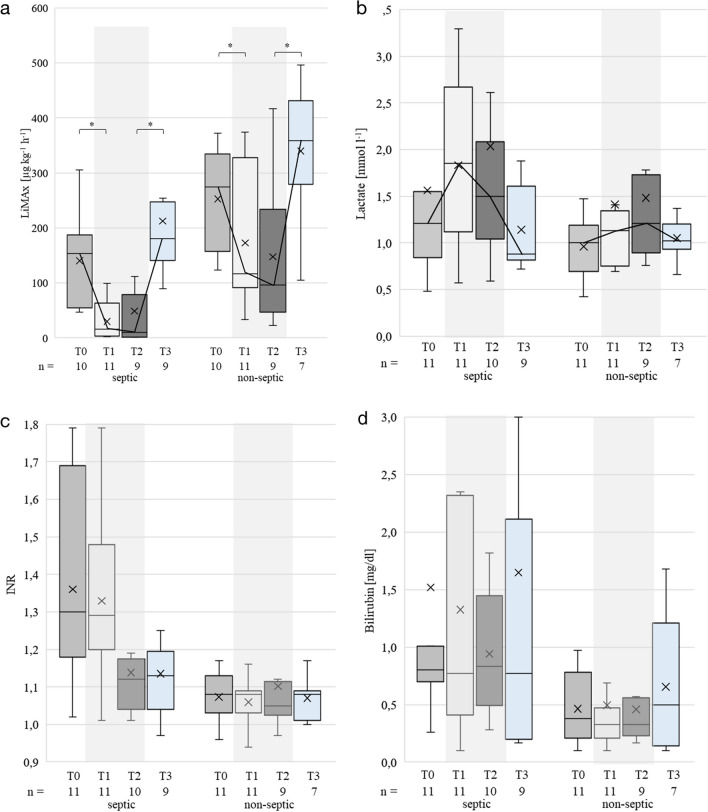 Figure 1
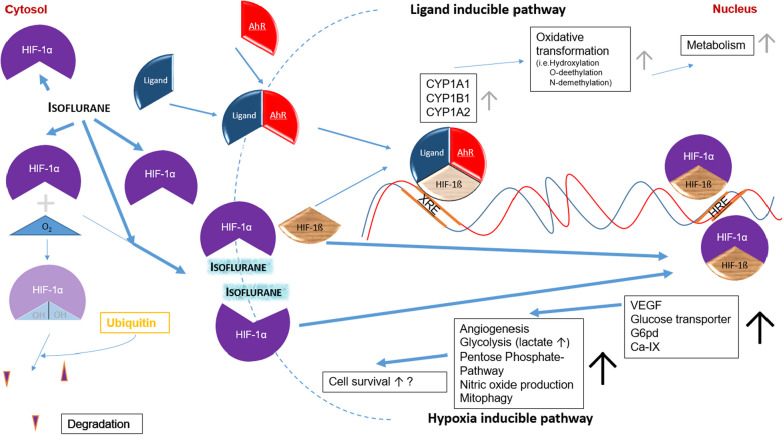 Figure 2
Peer Reviews
No public reviews on file for this paper yet. If you reviewed it on a platform where reviews are public (OpenReview, ICLR, NeurIPS, ICML), you can paste yours below so the community can read it here.
Videos
No videos yet. Explain this paper in a talk, walkthrough, or lecture? Add one.
Taxonomy
TopicsIntensive Care Unit Cognitive Disorders · Anesthesia and Sedative Agents · Anesthesia and Neurotoxicity Research