Nodal staging score for adequacy of nodal staging in cervical cancer
Rui Jiang, Xiaoqi Li, Siyu Cao, Yong Wu, Wei Zhang, Yan Huang

TL;DR
This study creates a nodal staging score to determine how many lymph nodes should be examined in cervical cancer patients to ensure accurate diagnosis and better prognosis.
Contribution
The study introduces a nodal staging score (NSS) to guide the adequacy of lymph node examination in cervical cancer based on histological type.
Findings
The number of lymph nodes required to reach a 0.05 false negative probability varies by histological type, ranging from 12 to 18 nodes.
The NSS reaches 0.95 with fewer nodes in adenocarcinoma (6) compared to squamous cell carcinoma (10).
NSS quartiles showed significant prognostic value across all four histological types of cervical cancer.
Abstract
Cervical cancer remains the fourth most common female malignancy with increasing newly cases around the world. It is of clinical value to precisely evaluate whether false negative nodal existed and develop a nodal staging model in cervical cancer. Clinical data of cervical cancer patients was retrieved from the Surveillance, Epidemiology, and End Results database. Probability of missing nodal disease and nodal staging score (NSS) was computed to assess the nodal status of each individual.Prognostic value of NSS was assessed. A total of 9056 individuals were in this study, with 5115 squamous cell carcinoma, 2791 adenocarcinoma, 512 adenosquamous carcinoma, and 638 other type individuals. A beta-binomial model was used to compute the probability of nodal disease in four histological types, respectively. False negative probability drastically decreased as more nodes examined. To reach…
Genes, proteins, chemicals, diseases, species, mutations and cell lines named across the full text — each resolved to its canonical identifier and authoritative record.
Click any figure to enlarge with its caption.
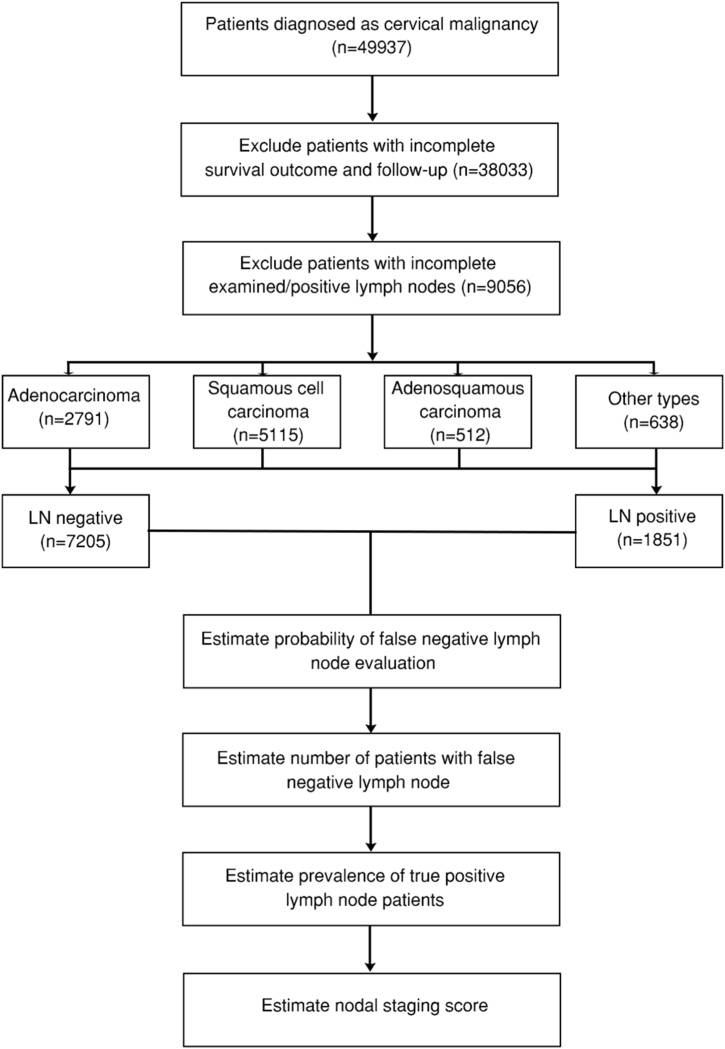 Figure 1
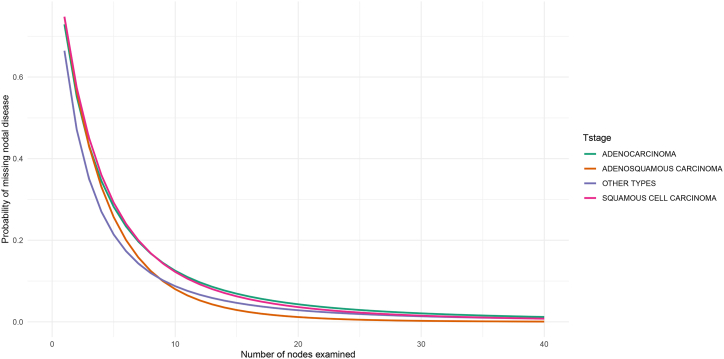 Figure 2
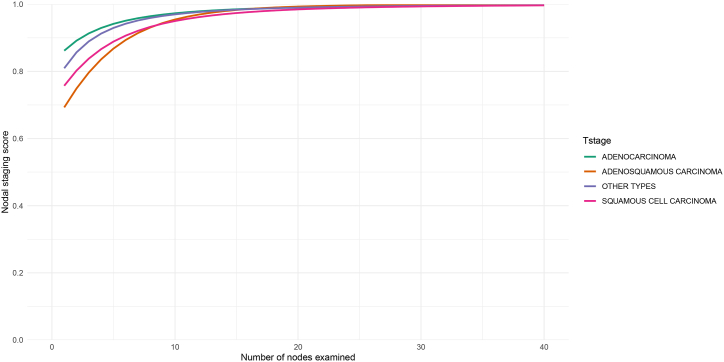 Figure 3
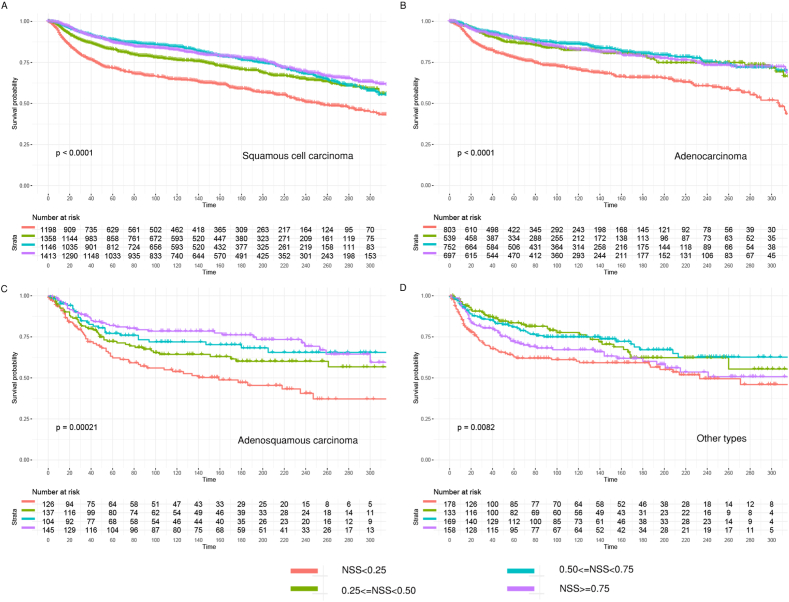 Figure 4
Peer Reviews
No public reviews on file for this paper yet. If you reviewed it on a platform where reviews are public (OpenReview, ICLR, NeurIPS, ICML), you can paste yours below so the community can read it here.
Videos
No videos yet. Explain this paper in a talk, walkthrough, or lecture? Add one.
Taxonomy
TopicsEndometrial and Cervical Cancer Treatments · Cervical Cancer and HPV Research · Ovarian cancer diagnosis and treatment