The roles of pyroptosis in genitourinary diseases
Haopeng Liu, Haoran Liu, Guoshuai Huang, Hexing Yuan, Xuefeng Zhang

TL;DR
This review explores how pyroptosis, a type of cell death, contributes to urinary diseases and suggests it could be a new target for treatment.
Contribution
The paper provides a comprehensive review of pyroptosis's role in genitourinary diseases, highlighting its potential as a therapeutic target.
Findings
Pyroptosis is linked to the development of both benign and malignant urinary diseases.
The review identifies pyroptosis as a potential therapeutic target for treating urinary conditions.
Current research suggests pyroptosis plays a key role in disease progression.
Abstract
Pyroptosis, a form of programmed cell death distinct from apoptosis and necrosis, is thought to be closely associated with the pathogenesis of diseases. Recently, the association between pyroptosis and urinary diseases has attracted considerable attention, and a comprehensive review focusing on this issue is not available. In this study, we reviewed the role of pyroptosis in the development and progression of benign urinary diseases and urinary malignancies. Based on this, pyroptosis has been implicated in the development of urinary diseases. In summary, this review sheds light on future research directions and provides novel ideas for using pyroptosis as a powerful tool to fight urinary diseases.
Genes, proteins, chemicals, diseases, species, mutations and cell lines named across the full text — each resolved to its canonical identifier and authoritative record.
Click any figure to enlarge with its caption.
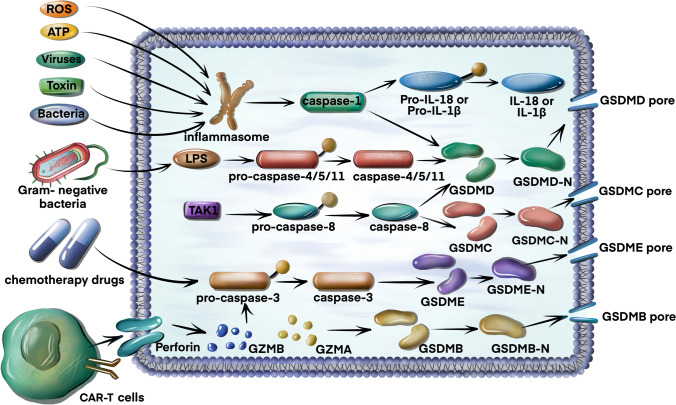 Figure 1
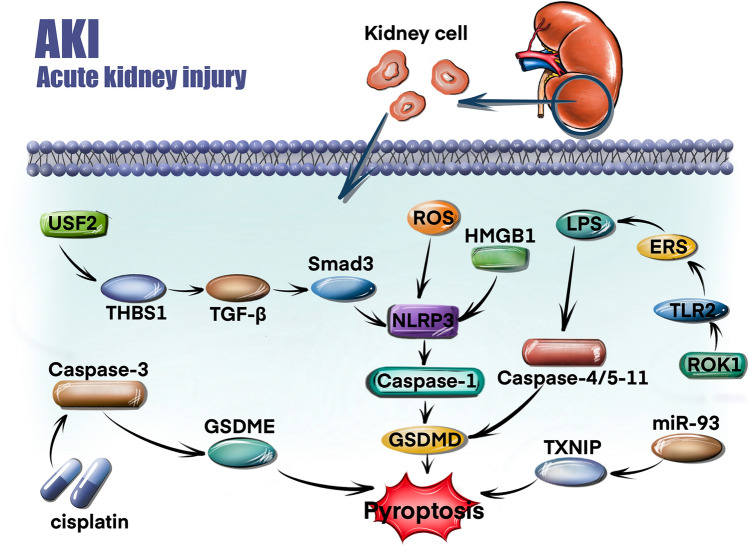 Figure 2
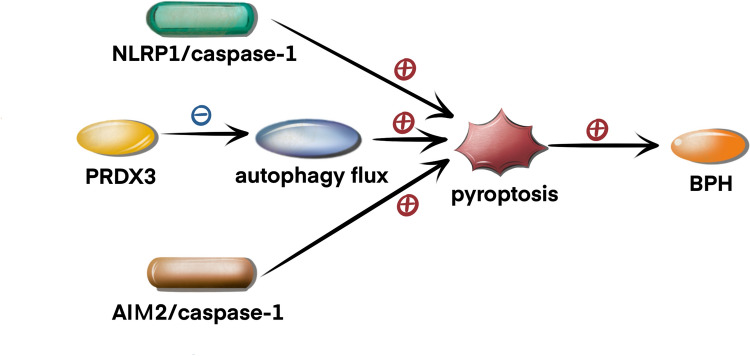 Figure 3
Peer Reviews
No public reviews on file for this paper yet. If you reviewed it on a platform where reviews are public (OpenReview, ICLR, NeurIPS, ICML), you can paste yours below so the community can read it here.
Videos
No videos yet. Explain this paper in a talk, walkthrough, or lecture? Add one.
Taxonomy
TopicsInflammasome and immune disorders · Gout, Hyperuricemia, Uric Acid · Heme Oxygenase-1 and Carbon Monoxide