Selective concentration of iron, titanium, and zirconium substrate minerals within Gregory’s diverticulum, an organ unique to derived sand dollars (Echinoidea: Scutelliformes)
Louis G. Zachos, Alexander Ziegler

TL;DR
Sand dollars selectively concentrate heavy minerals like iron, titanium, and zirconium in a unique organ called Gregory’s diverticulum, which may play a role in digestion or mineral processing.
Contribution
The study identifies the specific heavy minerals concentrated in Gregory’s diverticulum and suggests electro-chemical surface properties influence their selection.
Findings
Sand dollars prefer minerals with a specific gravity >4.0 g/cm³, including magnetite, hematite, ilmenite, rutile, and zircon.
Mineral grain size preference is between 50 to 150 μm and remains consistent throughout the animal’s life.
Micro-computed tomography is a reliable non-destructive method for quantifying heavy minerals in the diverticulum.
Abstract
Gregory’s diverticulum, a digestive tract structure unique to a derived group of sand dollars (Echinoidea: Scutelliformes), is filled with sand grains obtained from the substrate the animals inhabit. The simple methods of shining a bright light through a specimen or testing response to a magnet can reveal the presence of a mineral-filled diverticulum. Heavy minerals with a specific gravity of >2.9 g/cm3 are selectively concentrated inside the organ, usually at concentrations one order of magnitude, or more, greater than found in the substrate. Analyses of diverticulum content for thirteen species from nine genera, using optical mineralogy, powder X-ray diffraction, scanning electron microscopy and energy dispersive X-ray spectroscopy, as well as micro-computed tomography shows the preference for selection of five major heavy minerals: magnetite (Fe3O4), hematite (Fe2O3), ilmenite…
Genes, proteins, chemicals, diseases, species, mutations and cell lines named across the full text — each resolved to its canonical identifier and authoritative record.
Click any figure to enlarge with its caption.
 Figure 1
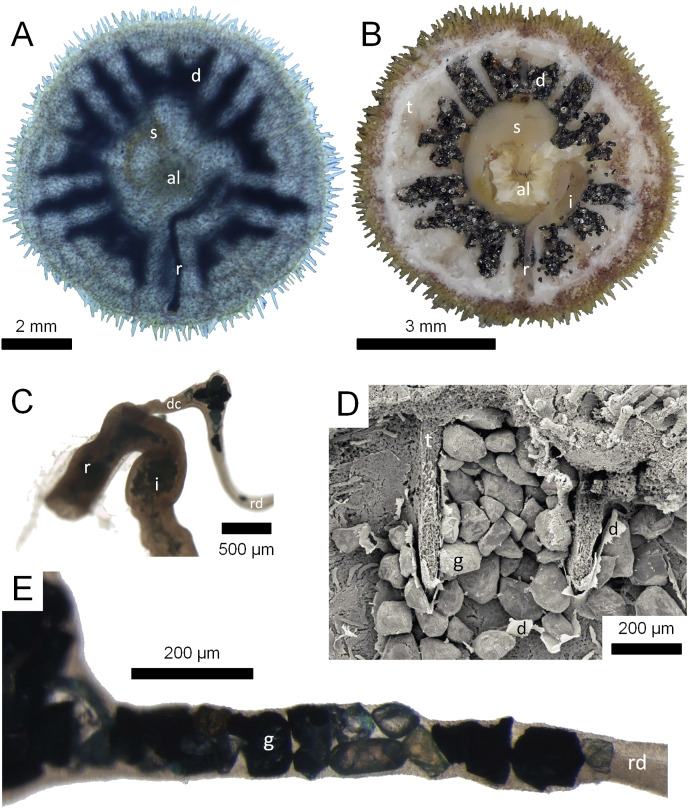 Figure 2
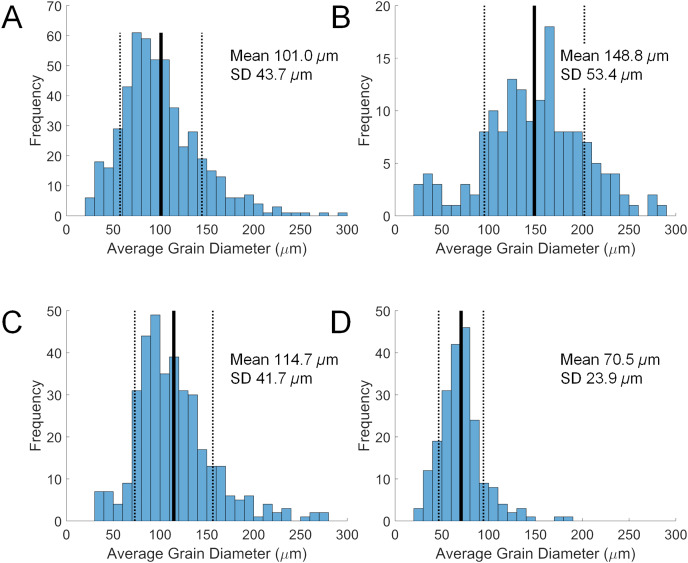 Figure 3
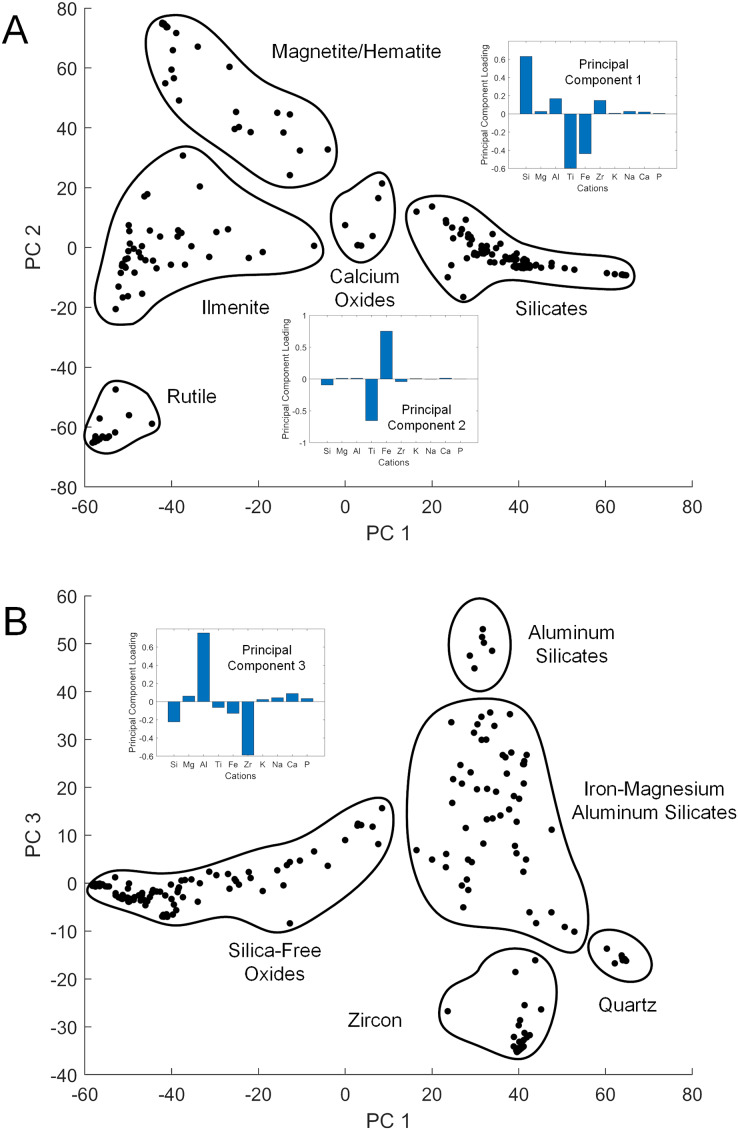 Figure 4
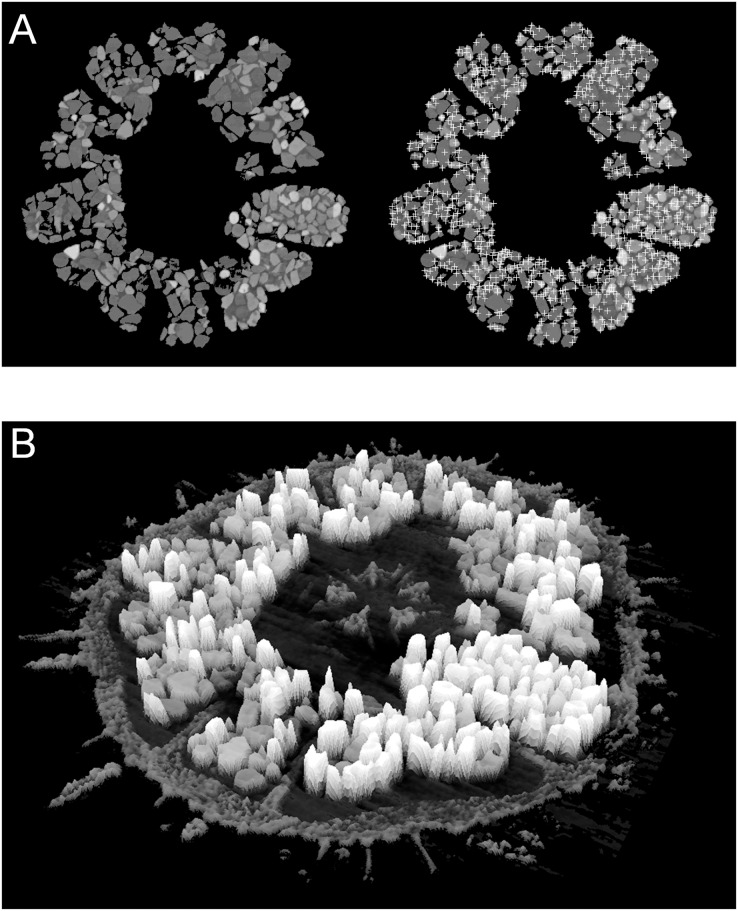 Figure 5
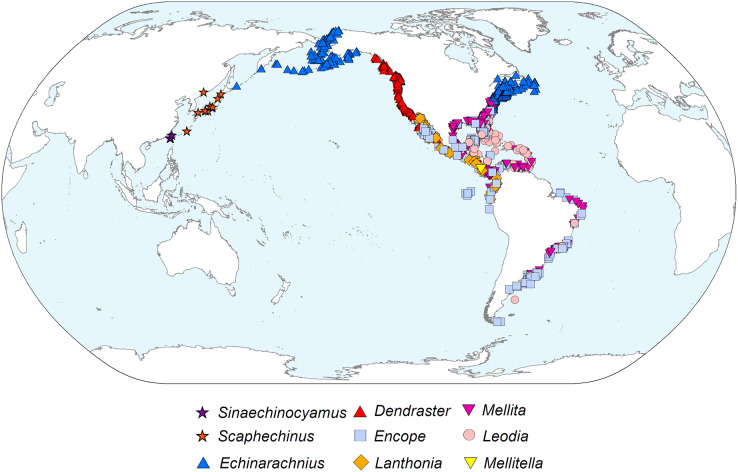 Figure 6
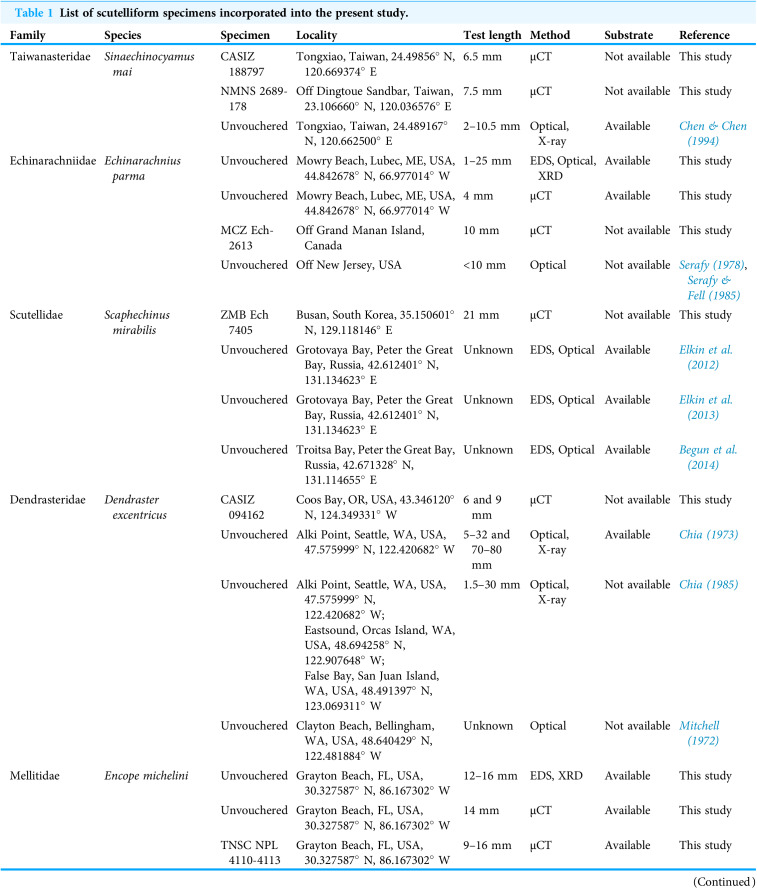 Figure 7
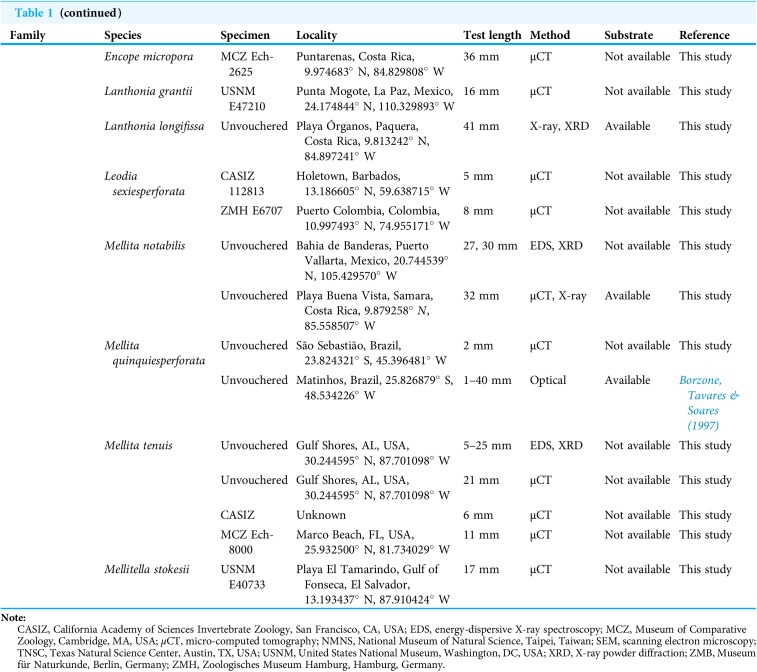 Figure 8
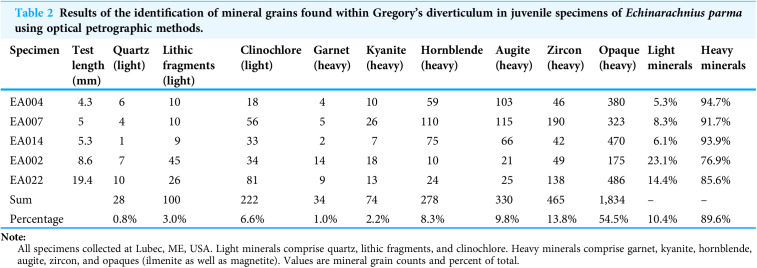 Figure 9
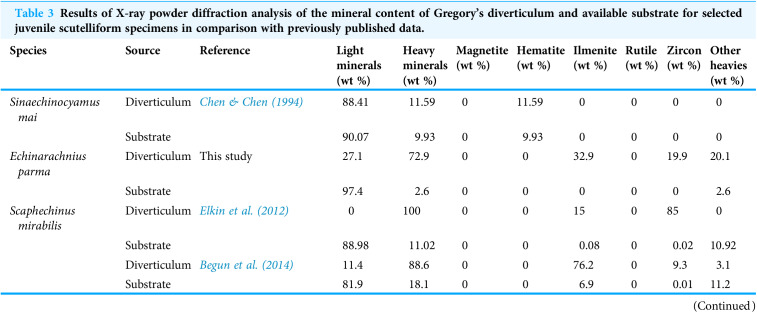 Figure 10
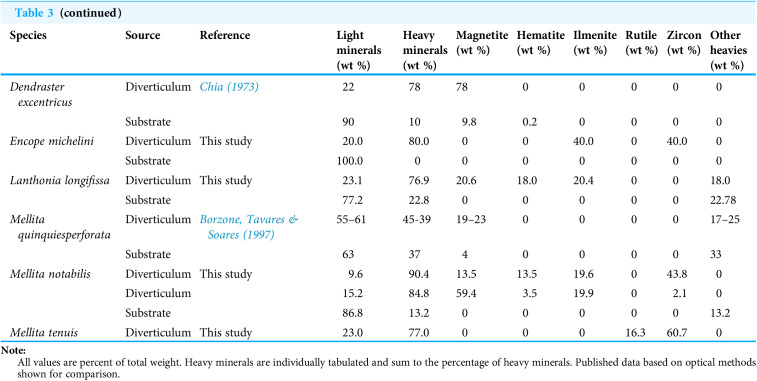 Figure 11
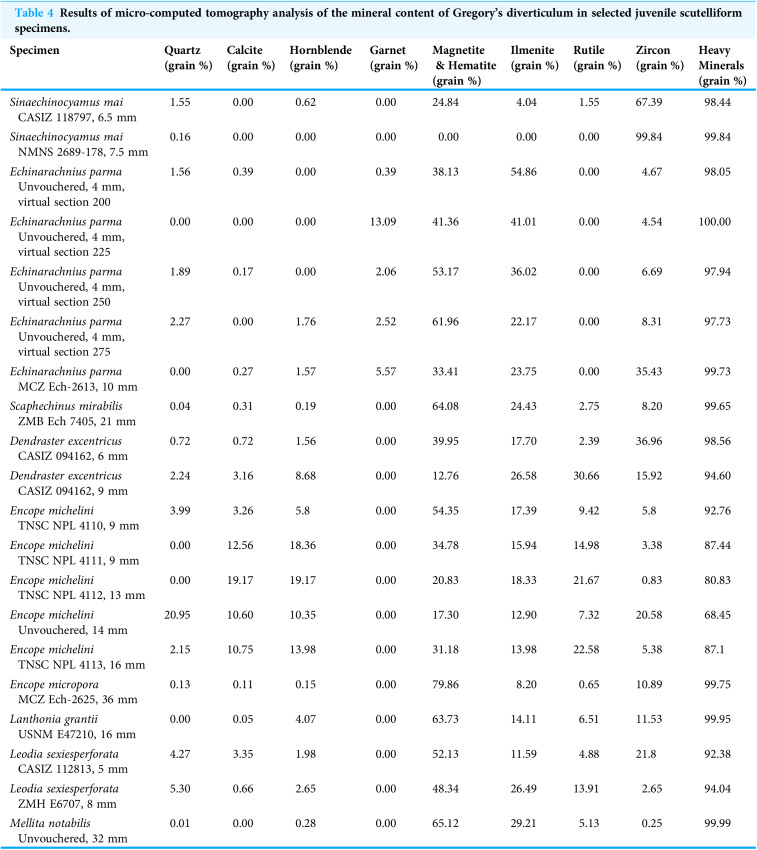 Figure 12
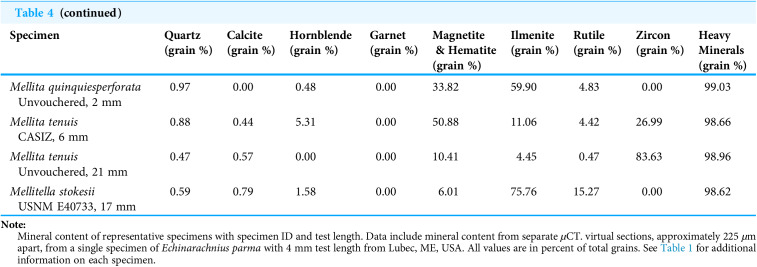 Figure 13
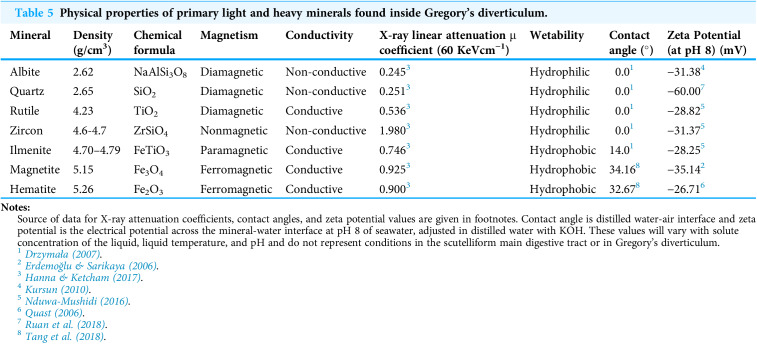 Figure 14
 Figure 15
Peer Reviews
No public reviews on file for this paper yet. If you reviewed it on a platform where reviews are public (OpenReview, ICLR, NeurIPS, ICML), you can paste yours below so the community can read it here.
Videos
No videos yet. Explain this paper in a talk, walkthrough, or lecture? Add one.
Taxonomy
TopicsEchinoderm biology and ecology · Marine Biology and Ecology Research · Methane Hydrates and Related Phenomena