Progesterone therapy for prevention of recurrent spontaneous preterm birth in a minority patient population: a retrospective study
Genevieve R. Mazza, Emi Komatsu, Madeline Ponzio, Claire Bai, Victoria K. Cortessis, Elizabeth B. Sasso

TL;DR
This study examines whether progesterone treatments can prevent early births in high-risk minority patients, but finds no significant benefit.
Contribution
The study evaluates progesterone therapy's effectiveness in a minority population for preventing recurrent preterm births, revealing no significant risk reduction.
Findings
Neither intramuscular 17-OHPC nor vaginal progesterone significantly reduced recurrent spontaneous preterm birth before 37 weeks.
Among patients with a short cervix, intramuscular 17-OHPC was associated with increased risk of preterm birth before 37 weeks.
Vaginal progesterone showed no significant association with preventing preterm birth at any gestational age.
Abstract
Preterm birth is a leading cause of infant morbidity and mortality worldwide. The burden of prematurity underscores the need for effective risk reduction strategies. The purpose of this study is to evaluate the efficacy of progesterone therapy, both intramuscular 17-α-hydroxyprogesterone caproate (IM 17-OHPC) and vaginal progesterone, in the prevention of recurrent spontaneous preterm birth (sPTB). The co-primary outcomes included: recurrent spontaneous PTB < 37 and < 34 weeks’ gestation. This retrospective cohort study included 637 pregnant patients that delivered at any of the three hospitals within the Los Angeles County healthcare system between October 2015 and June 2021. We compared frequencies of measured variables between each of the progesterone treated groups to no treatment using Pearson chi-squared tests and independent t-tests for categorical and continuous variables,…
Genes, proteins, chemicals, diseases, species, mutations and cell lines named across the full text — each resolved to its canonical identifier and authoritative record.
Click any figure to enlarge with its caption.
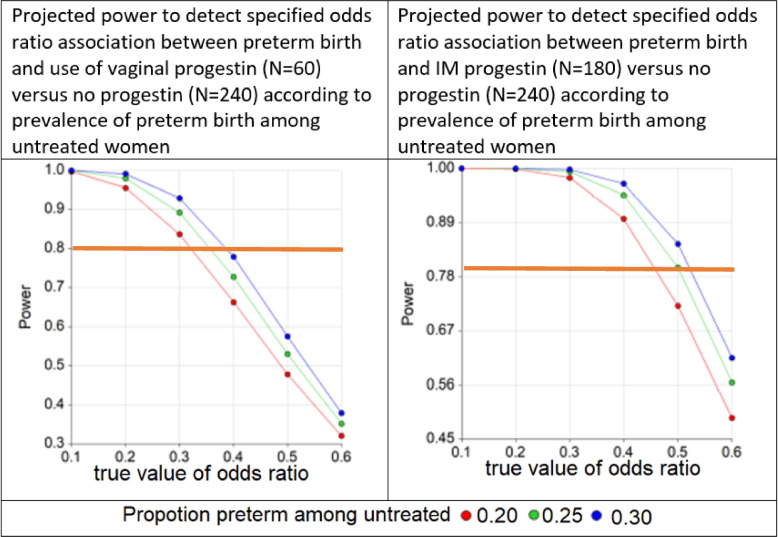 Figure 1
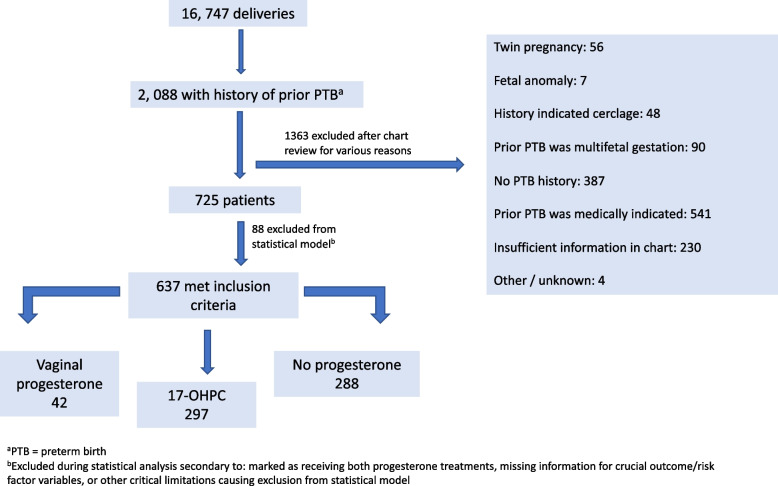 Figure 2
Peer Reviews
No public reviews on file for this paper yet. If you reviewed it on a platform where reviews are public (OpenReview, ICLR, NeurIPS, ICML), you can paste yours below so the community can read it here.
Videos
No videos yet. Explain this paper in a talk, walkthrough, or lecture? Add one.
Taxonomy
TopicsPreterm Birth and Chorioamnionitis · Pregnancy-related medical research · Maternal and Perinatal Health Interventions