Access restrictions to forest resources, rather than COVID-19 bans, drive the selection of firewood species for bonfires during Festas Juninas in northeastern Brazil
Iara Vitória de Oliveira Araújo, Diego Centeno-Alvarado, Marcelo Alves Ramos

TL;DR
This study shows that access to forest resources, not COVID-19 restrictions, affects which firewood species are used for cultural bonfires in northeastern Brazil.
Contribution
The study identifies access restrictions, not pandemic bans, as the main driver of firewood species selection in cultural rituals.
Findings
Populations with unrestricted access used more native firewood species for bonfires.
Restricted access led to increased use of exotic firewood species.
Cultural practices remained strong despite health-related bans.
Abstract
The complex interplay of social and environmental factors shapes ecosystems, potentially leading to harmony or conflict, highlighting the importance of understanding these dynamics for coexistence. In developing countries, firewood serves as a primary energy source and plays a role in cultural-religious rituals and festivities. However, the specific patterns of woody species used for the latter remain poorly understood, including the impact of access restrictions to resources and local bans on practices. Therefore, our research focuses on examining how access restrictions to forest resources and bonfire bans due to the coronavirus disease 2019 (COVID-19) impact the cultural-religious tradition of bonfire making during Festas Juninas (June festivities) in northeastern Brazil. Ethnobotanical fieldwork was conducted in two rural populations in northeastern Brazil between 2021 and 2022.…
Genes, proteins, chemicals, diseases, species, mutations and cell lines named across the full text — each resolved to its canonical identifier and authoritative record.
Click any figure to enlarge with its caption.
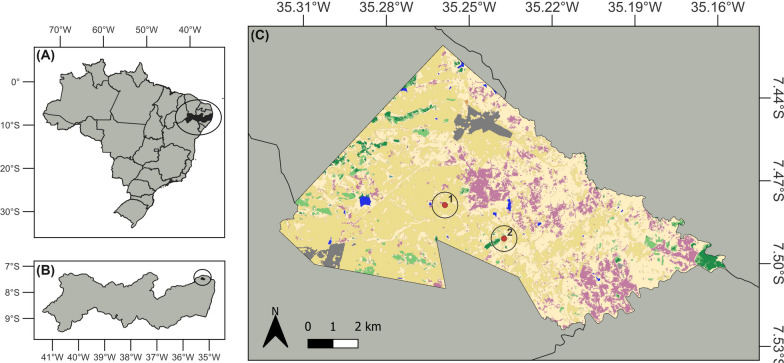 Figure 1
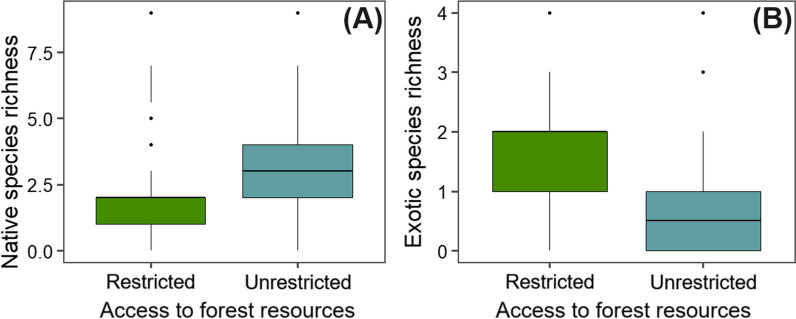 Figure 2
- —http://dx.doi.org/10.13039/501100002322Coordenação de Aperfeiçoamento de Pessoal de Nível Superior
- —http://dx.doi.org/10.13039/501100006162Fundação de Amparo à Ciência e Tecnologia do Estado de Pernambuco
- —http://dx.doi.org/10.13039/501100003593Conselho Nacional de Desenvolvimento Científico e Tecnológico
Peer Reviews
No public reviews on file for this paper yet. If you reviewed it on a platform where reviews are public (OpenReview, ICLR, NeurIPS, ICML), you can paste yours below so the community can read it here.
Videos
No videos yet. Explain this paper in a talk, walkthrough, or lecture? Add one.
Taxonomy
TopicsEthnobotanical and Medicinal Plants Studies · Conservation, Biodiversity, and Resource Management · Essential Oils and Antimicrobial Activity
Background
Ecosystems worldwide are confronted with imminent threats arising from various anthropogenic disturbances, such as deforestation, resource extraction, rapid urbanization, and climate change [1, 2]. These disruptions not only destabilize ecosystem functioning but also pose significant risks to biodiversity conservation. Biodiversity forms the cornerstone of numerous ecosystem services crucial for human survival and well-being [3]. The intricate interplay between well-being, economic activities, and environmental conditions shapes ecosystems [4]. Such interactions occurring between social and ecological systems can either harmonize for mutual benefit or result in conflict, as illustrated by instances where social well-being thrives at the expense of the environment or vice versa [5, 6]. Therefore, understanding these dynamics is crucial for fostering coexistence between the social and environmental spheres [5].
In developing countries, the extraction of resources from woody species plays an essential role in the social well-being and survival of many human populations. These populations depend on woody species as a primary source of energy and for the construction of houses, fences, as well as in the production of crafts and work tools [7–11]. Additionally, woody species play a significant role in rituals and festivities associated with religiosity, strengthening cultural traditions that represent faith and satisfy spirituality and emotional well-being [12, 13]. Scientific data on the patterns of woody species use in cultural-religious manifestations remain scarce [12]. This scarcity is attributed to the tendency of most research to approach the subject superficially, integrating it into broader scientific objectives [13]. Additionally, some authors highlight similarities with other uses, such as the use of firewood for cooking food and heating or for constructing fences to delineate spaces [12, 14]. This confusion has led to the cultural-religious use of firewood being inaccurately categorized in studies as fuel or construction material [12, 14].
In northeastern Brazil, rural populations collect firewood for cultural-religious purposes during the Festas Juninas (June festivities) [12, 14–16]. The Festas Juninas represent a strong cultural-religious tradition that occurs annually from the beginning of June and lasts until mid-July, aiming to honor the Catholic saints: Saint Anthony, Saint John and Saint Peter [17, 18]. It is estimated that the festivity originated in Ancient Europe as a way to honor the goddess Juno and celebrate the beginning of the harvest [12]. One of the primary features of these festivities is the tradition of bonfire making, in front of the residences of individuals, using firewood sourced from native species in the region [12, 14–16]. During the bonfire burning, people take advantage of the fire to make typical foods of this festivity, such as roasted corn. Despite the significance of this bonfire making during Festas Juninas in the northeast region of Brazil, to the best of our knowledge, no studies have investigated the adaptive strategies adopted by human populations to address: (a) access restrictions to forest resources; and (b) bans on bonfire making due to the coronavirus disease 2019 (COVID-19) pandemic. In the former case, studies on various firewood uses, rather than cultural-religious, have shown that restrictions on access and prohibitions on practices involving its utilization have led to the adoption of adaptive strategies to maintain the social reproduction of these practices [17, 19–21]. This includes the gathering of firewood in anthropized areas, increased use of exotic woody species, and the cultivation of native species in environments close to residences, such as backyard gardens [17, 19–21]. In the latter case, bonfire making was banned due to the release of pollutants harmful to human health through smoke, prompted by highly contagious nature of COVID-19 and its severe impact on the respiratory system [22–24].
Thus, we aimed to investigate how local access restrictions to forest resources influence the cultural-religious practice of bonfire making during the Festas Juninas. Additionally, we aimed to explore the impact of local bans resulting from the COVID-19 pandemic on this tradition. To do so, we tested the hypothesis that access restrictions to forest resource and bans on bonfire making shape the composition of firewood species (native or exotic), the volume of firewood collected, and the number of bonfires in this cultural-religious practice. We anticipate discovering lower firewood species richness, reduced volume of firewood collected, and fewer bonfires made in human populations living in area with restricted access to forest resources, compared to those living in areas with unrestricted access. Additionally, we anticipate that the local bans implemented during the COVID-19 pandemic will result in lower firewood species richness, decreased volume of firewood collected, and a decrease in the number of bonfires during the year with such bans on bonfire making, compared to the year without such bans.
Methods
Study site
Our study was conducted in Ferreiros, Pernambuco, northeastern Brazil, situated within the humid tropical forest region known as the Atlantic Forest (7° 26′ 49″ S, 35° 14′ 27″ W). This area is highly fragmented, retaining some remaining fragments of natural forest [25, 26]. The landscape is predominantly characterized by vast sugar cane plantations (Saccharum officinarum L.), which constitute the main economic activity in the region. These plantations coexist with subsistence agricultural practices, primarily involving the cultivation of cassava (Manihot esculenta Crantz), yam (Dioscorea cayennensis Lam.) and sweet potato (Ipomoea batatas (L.) Lam.). The municipality covers an area of 88.647 km^2^ and has an estimated population of approximately 12,057 inhabitants, with approximately 19.7% residing in rural areas [27]. The study was conducted in two rural populations, Sítio Barra and Sítio Cutia, which differ in access restrictions to forest resources and are located approximately 10 km apart from each other (Fig. 1).Fig. 1. Map of Pernambuco, Brazil, indicated in black (A), and the municipality of Ferreiros, also indicated in black (B), along with the two human populations studied (C) (1: Sítio Cutia; 2: Sítio Barra). Green areas highlight regions with greater coverage of natural forest vegetation. Source of Shapefiles: Brazil and Ferreiros: INPE-National Institute for Space Research, Brazil (public domain); land cover and use: MapBiomas Project, 2022
Populations studied
Sítio Barra
Sítio Barra has a population of 115 inhabitants, distributed across approximately 40 residences. The exclusive ownership of the sole fragment of Atlantic Forest in this region lies with the Olho D'água sugarcane processing plant, inherited from its predecessors since the late nineteenth century, around 1889 [28]. As a result, the local population is restricted from accessing these forest resources. Faced with this restriction, the population has been developing several strategies to obtain firewood, including pruning trees in the backyards of their homes and planting native species in agroforestry backyards and less productive agricultural areas.
Sítio Cutia
The area of Sítio Cutia is inhabited by a population of 213 people, distributed across approximately 60 residences. Unlike Sítio Barra, the site contains small fragments of Atlantic forest situated on private land owned by local residents. Access to forest resources is unrestricted, both for the landowners and for other individuals residing in the Cutia site, primarily for harvesting firewood for cooking purposes.
Bans on bonfire making due to the COVID-19 pandemic
Bans on bonfire making due to the COVID-19 pandemic occurred during the sampling period. In 2021, marked by the COVID-19 pandemic and in accordance with the recommendation of the Office of the Attorney General (PGJ) No. 29/2020 [23], the city of Ferreiros, state of Pernambuco, issued Decree No. 28 on June 7, 2021, aligning with state Decree No. 50.778 on June 2, 2021, which established a ban on bonfire making during the Festas Juninas throughout the municipal territory. The populations studied were subject to this cultural-religious practice ban. However, on April 22, 2022, the bans were lifted due to the reduction in COVID-19 cases [29]. It is noteworthy that our study specifically evaluates the impact of this ban (i.e., bans implemented in 2021 versus lifted bans in 2022), rather than focusing on periods preceding or during the pandemic.
Ethnobotanical data collection
Data collection encompassed the Festas Juninas of 2021 and 2022 (on the 13th, 23rd and 28th of June), during which we conducted semi-structured interviews with heads of households from both study populations, carried out in Portuguese, their native language (Table 1). In Sítio Cutia, we interviewed 52 out of 61 families (21 women and 30 men), while in Sítio Barra, we interviewed 38 out of 41 families (28 women and 30 men). In addition to the interviews, we adopted observation and measurement of bonfires in each area studied. We also employed the guided tour technique [30] to validate the names of plants mentioned in the interviews. These additional practices provided support for collecting botanical material intended for identification, later incorporated into the herbarium of the Agronomic Institute of Pernambuco. Based on the interviews and observations, we collected:
- Firewood species used in bonfire making were categorized according to their nature (i.e., native or exotic) and access to forest resources (i.e., restricted or unrestricted), in accordance with the bans on bonfire making in 2021 or 2022.
- We calculated the number of bonfires per household and the volume of firewood collected in the residences of both areas during the years 2021 and 2022. We used the formula V = w × l × h, where V denotes the volume of the stack, and w, l, and h represent the width, length, and height of the pile, respectively. Table 1. Form for data collection through semi-structured interviews and measured observations in Sítio Cutia and Sítio Barra during the years 2021 and 2022Socioeconomic data about the individual responsible for bonfire making(1)Full name–(2)Age–(3)GenderMaleFemaleOther(4)Educational levelNot literate or just literateElementary school I (years 1–5)Elementary school II (years 6–9)High school (years 10–12)Higher education(5)Length of residency in the community*–(6)Occupation of the organizer of the bonfire–(7)Household income–Data on the woody plant species present in the bonfires(8)Plant name (e.g., common name)–(9)Location of collection–(10)Date of collection–(11)State of collectionGreen woodDry woodBonfire information*(12)Width of the pile (w)–(13)Length of the pile (l)–(14)Height of the pile (h)–
Data analyses
We investigated possible differences in the cultural-religious practice of bonfire making (i.e., native and exotic firewood species richness, firewood volume, and number of bonfires) due to access restrictions to forest resources (i.e., Sítio Cutia vs. Sítio Barra) and the bans due to the COVID-19 pandemic (i.e., year 2021 vs. 2022), using the Mann–Whitney U test, with a significance level of 0.05. The statistical analyses were performed using the stats package [31] in R [32].
Results
A total of 234 bonfires were analyzed, with 94 occurring in the population with restricted access to forest resources and 140 in the population with unrestricted access. In the population with restricted access, a total of 27 ethnospecies (Table 2) were utilized for bonfire making. The most frequently observed species were manga (Mangifera indica L.; 45.74%), angico (Anadenanthera colubrina var. cebil (Griseb.) Altschul; 42.55%), mermeleiro (Croton blanchetianus Baill.; 41.49%), and sabiá (Mimosa caesalpiniifolia Benth.; 39.36%). Conversely, in the population with unrestricted access, we documented 44 ethnospecies (Table 2) used for bonfire making. The most prevalent species included sabiá (60.71%), mermeleiro (42.14%), angico (40.00%), pau d'arco (Handroanthus sp.; 20.00%) and cajá (Spondias mombin L.; 20.00%).Table 2. Firewood species used for bonfire-making in Sítio Cutia and Sítio Barra during the years 2021 and 2022Botanical familySpeciesPopular nameStatusFrequency (%)Restrictions due to the COVID-19 pandemicCutiaBarraBannedLiftedAnacardiaceaeMangifera indica LMangaExotic16.4245.7411Spondias mombin LCajáNative203.1911Astronium urundeuva (M.Allemão) EnglAroeiraNative2.14–01Anacardium occidentale LCajuNative5–11Spondias dulcis G. ForstCajaranaExotic2.14–11Spondias cf. bahiensisCajá-umbuNative2.85–10AnnonaceaeAnnona sp.GraviolaExotic–3.1910ArecaceaeCocos nucifera LCocoExotic15.71–11BignoniaceaeHandroanthus sp.Pau d’arcoNative2023.411BixaceaeBixa orellana LAçafrãoNative1.42–10BoraginaceaeCordia trichotoma (Vell.) Arráb. ex SteudFrei-jorgeNative3.57–11CapparaceaeCynophalla flexuosa (L.) J.PreslFeijão de boiNative2.14–01CombretaceaeTerminalia catappa LCastanholaExotic–15.9511Combretum leprosum MartSipaúbaNative5–10CecropiaceaeCecropia palmata WilldImbaúbaNative–2.1201EuphorbiaceaeCroton blanchetianus BaillMermeleiroNative42.1441.4911Sapium argutum (Müll.Arg.) HuberLeiteiraNative1.42–10LauraceaePersea americana MillAbacateExotic0.71–01Leguminosae: CaesalpinioideaeBauhinia cheilantha (Bong.) SteudMororóNative2.85–11Leguminosae: MimosoideaePiptadenia retusa (Jacq.) P.G.Ribeiro, Seigler & EbingerJurema-brancaNative0.71–01Anadenanthera colubrina var. cebil (Griseb.) AltschulAngicoNative4042.5511Enterolobium sp.TamborNative2.85–11Albizia polycephala (Benth.)Camudongo / CamuzéNative3.57–11Mimosa caesalpiniifolia BenthSabiáNative60.7139.3611Parkia pendula (Willd.) Benth. ex WalpAlucenaExotic0.716.3811Senegalia tenuifolia (L.) Britton & RoseCalombiNative3.576.3811Prosopis juliflora (Sw.) DCAlgarobaExotic4.28–10Samanea saman (Jacq.) MerrBordão de velhoNative5–11Caesalpinia pulcherrima (L.) SwSombriãoExotic–9.5711Leguminosae: PapilionataeGeoffroea spinosa JacqMariNative2.14–01Machaerium aculeatum RaddiEspinho-de-judeu/EspinheiroNative12.85–11Libidibia ferrea (Mart. ex Tul.) L.P.QueirozJucáNative17.14–11MalvaceaeGuazuma ulmifolia LamMutambaNative4.28–01MeliaceaeAzadirachta indica A.JussNinExotic–3.1910MoraceaeFicus benjamina LFigoExotic5–11Artocarpus integrifolia LJacaExotic7.44–11MyrtaceaePsidium guajava LGoiabaExotic3.5710.6311Syzygium cumini (L.) SkeelsAzeitonaExotic1.4217.0211Eucalyptus globulus LabillEucaliptoExotic–4.2511MusaceaeMusa paradisiaca LBananeiraExotic–4.2511NyctaginaceaeGuapira cf. noxia (Netto) LundellJoão-moleNative5–11RubiaceaeGenipa americana LJenipapoNative5–01RutaceaeCitrus aurantium LLaranjaExotic4.2820.2111SapindaceaeTalisia esculenta (Cambess.) RadlkPitombaNative4.28–11Allophylus puberulus (Cambess.) RadlkEstraladeiraNative0.71–01PoaceaeBambusa sp.BambuNative2.85–11RhamnaceaeZiziphus joazeiro MartJuáNative7.14–11VochysiaceaeCallisthene fasciculata MartCampineiroNative2.145.3111Unidentified–Canafista–3.57–11–Coração-negro––1.0601–Piaca–0.71–10–Sete-casca–1.422.1201–Ameixa–2.14–01Regarding bans due to COVID-19, 0 represents absence, and 1 represents presence
Impacts of access restrictions to forest resources and bans on bonfire making due to the COVID-19 pandemic on the cultural-religious practice of bonfire making
Mann–Whitney U tests revealed significant differences in native and exotic firewood species richness for bonfire making between populations with different access restrictions to forest resources (unrestricted vs. restricted) (Table 3). The number of native species used was higher in the population with unrestricted access than in the population with restricted access (Fig. 2A), while a greater number of exotic species were used by the population residing in the area with restricted access (Fig. 2B). The rest of the variables were not influenced by access restrictions.Table 3. Components of the cultural-religious practice of bonfire making (mean ± standard deviation (SD) and coefficient of variation (CV) (%), through the Mann–Whitney U testVariableAccess to forest resourcesp valueRestrictedUnrestrictedNative species richness1.82 ± 1.24; 0.682.92 ± 1.98; 0.680.001*Exotic species richness1.48 ± 1.05; 0.710.66 ± 0.82; 1.238.08 × 10^–6^Firewood volume1.89 ± 1.26; 0.671.69 ± 1.48; 0.870.28Number of bonfires1.88 ± 0.96; 0.511.89 ± 1.08; 0.570.80Bans due to the COVID-19 pandemicBannedLiftedNative species richness2.66 ± 1.61; 0.602.29 ± 1.97; 0.860.16Exotic species richness1.06 ± 1.01; 0.950.92 ± 1; 1.080.38Firewood volume1.89 ± 1.22; 0.641.66 ± 1.55; 0.930.18Number of bonfires2 ± 0.91; 0.451.77 ± 1.14; 0.640.36Statistical significanceFig. 2Significant effects of access restrictions to forest resources on the richness of native (A) and exotic (B) firewood species in the cultural-religious practice of bonfire making in human populations in Ferreiros, Pernambuco, Northeast Brazil. In the graphical representation, the box on the graph represents the interquartile range; the line inside the box represents the median; the whiskers represent the range of non-outlier data; individual points represent outliers
The analyses also revealed no differences in native and exotic firewood species richness, volume of firewood collected, or the total number of bonfires between the year when bonfire making was banned due to the COVID-19 pandemic (2021) and the year when bans were lifted (2022) (Table 3).
Discussion
The present study investigated the role of access restrictions to forest resources and the local ban on bonfire making during the COVID-19 pandemic, in the cultural-religious practice of bonfire making during the Festas Juninas in two human populations in northeastern Brazil. The results revealed that access restrictions had a significant impact on the investigated cultural-religious practice, influencing the selection of a greater number of exotic species when access to forest resources is restricted, as opposed to a predominance of native species when access is unrestricted. Conversely, the bans on bonfire making during the COVID-19 pandemic did not influence the selection of species, firewood volume collected, or the number of bonfires.
In a study exploring alternative forms of resource usage, such as firewood consumption for cooking, conducted in two protected forest areas (i.e., where access to forest resources is restricted) in Madagascar, it was observed that after the implementation of a ban on firewood extraction, local populations adapted their collection practices [33]. Specifically, they transitioned from preferring specific groups of plants (expert standard) to collecting any dry and available plants without regard to quality (generalist standard). Additionally, the study observed a shift from native to exotic species sourced from anthropogenic environments, along with a decrease in the firewood volume used. The effects of restricted access to forest resources were also observed concerning medicinal and construction use [34]. According to the study [34], restricted access led to changes in disease treatment strategies in the region. People reduced their use of medicinal plants and began relying on biomedical medicines purchased from pharmacies. In terms of construction use, the challenge of accessing mature plants in the forest forced individuals to gather plant species at younger stages from non-forest environments. This directly affected the resistance and quality of the produced pieces. Furthermore, when considering the utilization of wood for crafting musical instruments, it was noted changes in popular culture manifestations due to access restrictions to forest resources [11]. For instance, rather than crafting and using traditional musical instruments, individuals adopted more classical and globalized recognized instruments.
Taken into consideration the previous patterns, the findings of our study indicate the adaptive path followed by the investigated local populations when they are subject to situations of restricted access to forest resources. Cultural adaptations are a common phenomenon for all human groups, occurring when a certain population needs to adjust its knowledge and practices to the limitations imposed by the surrounding environment to maintain a resilient socio-ecological system [35, 36]. Studies in areas with similar prohibitions also highlight cultural adaptation as the main strategy adopted by populations in response to disturbances. [37–40]. In recent years, the concept of resilience has become one of the main conceptual tools in the environmental literature for dealing with change at various levels of organization, from local to global scales [41]. In a resilient socio-ecological system, disruption has the potential to create opportunities for new actions, innovation and development [33, 42].
The finding that bans during the COVID-19 pandemic did not result in significant changes in cultural-religious practices associated with bonfire making indicates a phenomenon of cultural resistance. On the one hand, bonfires have deep cultural and religious significance in the Brazilian northeast region, becoming intrinsically entrenched and challenging practices to be abandoned by the population [43, 44]. On the other hand, the absence of strict supervision, as perceived by residents, encouraged the continuity of bonfire making in 2021, even after the ban, and contributed to the ongoing engagement of people in risky behaviors. This cultural resistance, in the face of prohibitions, highlights the complexity of the interactions between regulatory measures, cultural values, and human behavior. This observation underscores the significant influence of deeply entrenched cultural practices on populations’ responses to temporary bans imposed by health crises.
Conclusions
Our findings highlight the importance of understanding and incorporating the dynamics of cultural adaptation into management strategies of socio-ecological systems. The ability of human populations to adjust their cultural-religious practices in the face of disturbances, such as access restrictions to forest resources and bans due to the COVID-19 pandemic, points to the need for culturally sensitive environmental policies. Fostering socio-ecological resilience demands a comprehensive approach, that encompasses not only environmental factors but also cultural dimensions, which wield a pivotal influence on long-term sustainability.
The reference list from the paper itself. Each links out to its DOI / PubMed record.
- 1Young OR Berkhout F Gallopin GC Janssen MA Ostrom E Leeuw S The globalization of socio-ecological systems: an agenda for scientific research Glob Environ Change 20061630431610.1016/j.gloenvcha.2006.03.004 · doi ↗
- 2Roy PS Ramachandran RM Paul O Thakur PK Ravan S Behera MD Anthropogenic land use and land cover changes—a review on its environmental consequences and climate change J Indian Soc Remote Sens 2022501615164010.1007/s 12524-022-01569-w · doi ↗
- 3Mooney H Larigauderie A Cesario M Elmquist T Hoegh-Guldberg O Lavorel S Biodiversity, climate change, and ecosystem services Curr Opin Environ Sustain 20091465410.1016/j.cosust.2009.07.006 · doi ↗
- 4Adger WN Social and ecological resilience: are they related?Prog Hum Geogr 20002434736410.1191/030913200701540465 · doi ↗
- 5Cretney R Resilience for whom? Emerging critical geographies of socio-ecological resilience Geogr Compass 2014962764010.1111/gec 3.12154 · doi ↗
- 6Folke C Colding J Berkes F Berkes F Colding J Folke C Synthesis: building resilience and adaptive capacity in social-ecological systems Navigating social–ecological systems: building resilience for complexity and change 2003 Cambridge Cambridge University Press 352383
- 7Ghilardi A Guerrero G Masera O Spatial analysis of residential fuelwood supply and demand patterns in Mexico using WISDOM approach Biomass Bioenergy 20073147549110.1016/j.biombioe.2007.02.003 · doi ↗
- 8Ramos MA Medeiros PM Almeida ALS Feliciano ALP Albuquerque UP Can wood quality justify local preferences for firewood in an area of caatinga (dryland) vegetation?Biomass Bioenergy 20083250350910.1016/j.biombioe.2007.11.010 · doi ↗