Selective Growth of GaP Crystals on CMOS-Compatible Si Nanotip Wafers by Gas Source Molecular Beam Epitaxy
Navid Kafi, Songdan Kang, Christian Golz, Adriana Rodrigues-Weisensee, Luca Persichetti, Diana Ryzhak, Giovanni Capellini, Davide Spirito, Martin Schmidbauer, Albert Kwasniewski, Carsten Netzel, Oliver Skibitzki, Fariba Hatami

TL;DR
Researchers developed a method to grow gallium phosphide (GaP) crystals on silicon wafers using a technique compatible with standard chip manufacturing.
Contribution
A nanoheteroepitaxy approach for selective GaP growth on CMOS-compatible Si nanotips using gas-source molecular beam epitaxy.
Findings
GaP islands of hundreds of nanometers were successfully grown on CMOS-compatible wafers.
The GaP islands exhibit a zinc-blende phase and optoelectronic properties similar to high-quality GaP layers.
This method enables scalable integration of GaP-based devices into silicon nanotechnology.
Abstract
Gallium phosphide (GaP) is a III–V semiconductor with remarkable optoelectronic properties, and it has almost the same lattice constant as silicon (Si). However, to date, the monolithic and large-scale integration of GaP devices with silicon remains challenging. In this study, we present a nanoheteroepitaxy approach using gas-source molecular-beam epitaxy for selective growth of GaP islands on Si nanotips, which were fabricated using complementary metal–oxide semiconductor (CMOS) technology on a 200 mm n-type Si(001) wafer. Our results show that GaP islands with sizes on the order of hundreds of nanometers can be successfully grown on CMOS-compatible wafers. These islands exhibit a zinc-blende phase and possess optoelectronic properties similar to those of a high-quality epitaxial GaP layer. This result marks a notable advancement in the seamless integration of GaP-based devices with…
Genes, proteins, chemicals, diseases, species, mutations and cell lines named across the full text — each resolved to its canonical identifier and authoritative record.
Click any figure to enlarge with its caption.
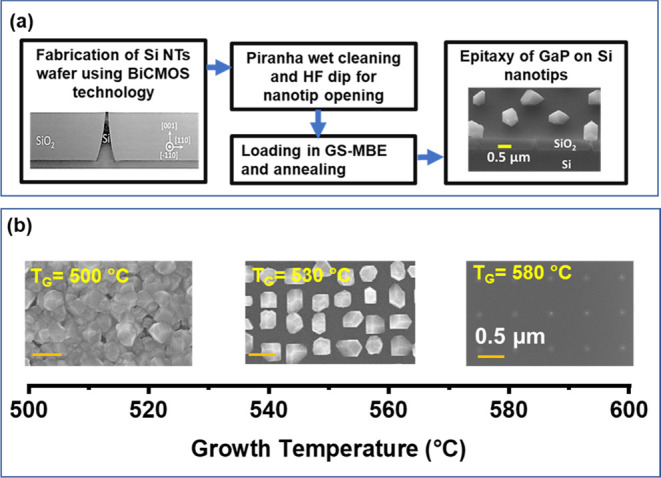 Figure 1
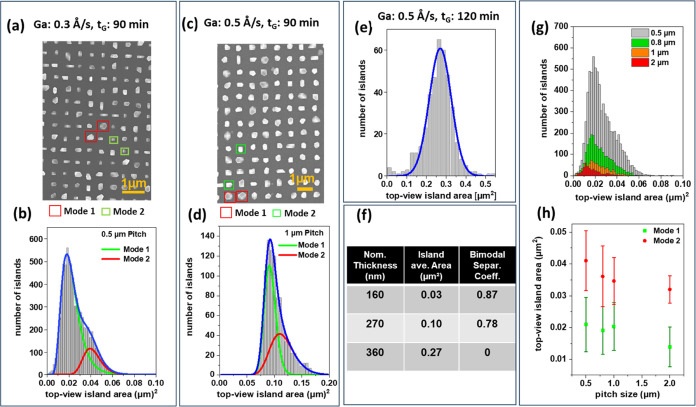 Figure 2
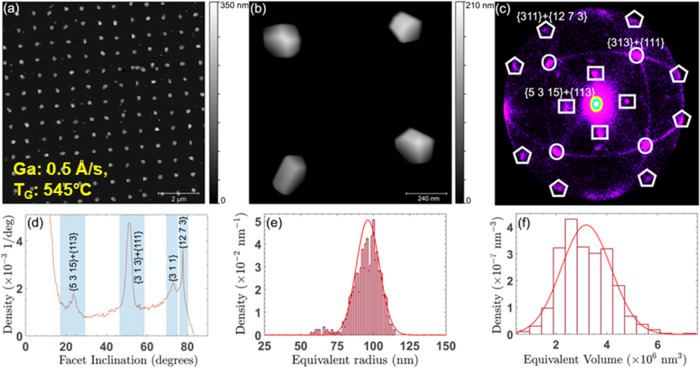 Figure 3
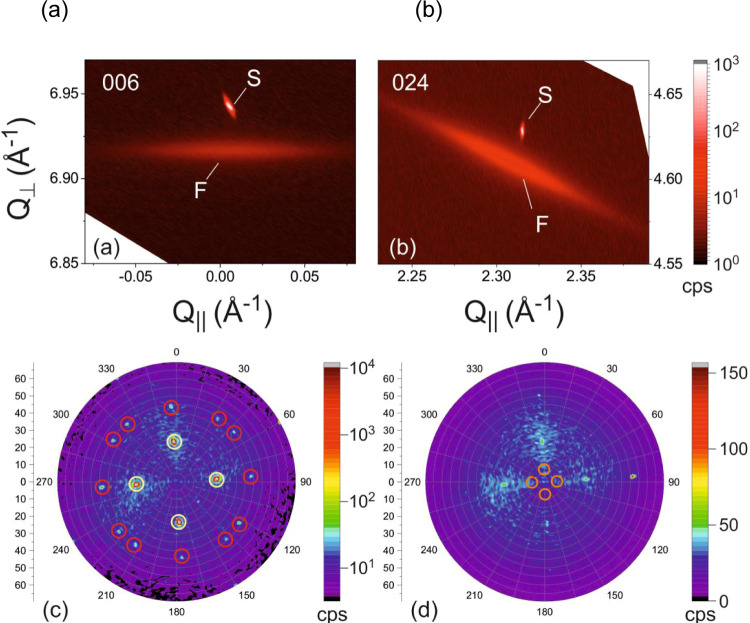 Figure 4
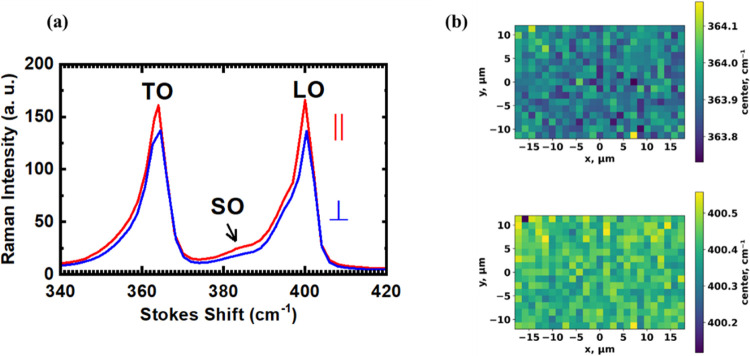 Figure 5
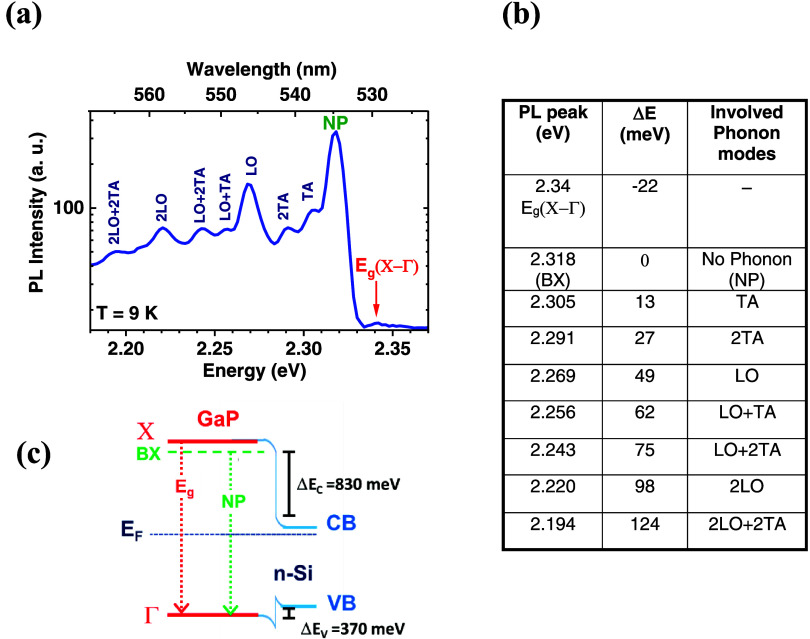 Figure 6
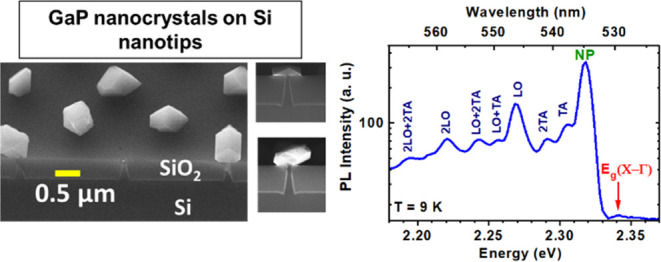 Figure 7
Peer Reviews
No public reviews on file for this paper yet. If you reviewed it on a platform where reviews are public (OpenReview, ICLR, NeurIPS, ICML), you can paste yours below so the community can read it here.
Videos
No videos yet. Explain this paper in a talk, walkthrough, or lecture? Add one.
Taxonomy
TopicsAgricultural and Biological Research · Agriculture and Agroindustry Studies