Safety and efficacy of a feed additive consisting of l‐isoleucine produced with Corynebacterium glutamicum CGMCC 20437 for all animal species (Eppen Europe SAS)
Vasileios Bampidis, Giovanna Azimonti, Maria de Lourdes Bastos, Henrik Christensen, Mojca Durjava, Birgit Dusemund, Maryline Kouba, Marta López‐Alonso, Secundino López Puente, Francesca Marcon, Baltasar Mayo, Alena Pechová, Mariana Petkova, Fernando Ramos, Roberto Edoardo Villa

TL;DR
This paper evaluates the safety and effectiveness of l-isoleucine, produced using a specific bacteria, as a feed additive for all animal species.
Contribution
The study confirms the safety of l-isoleucine for animals, consumers, and the environment, and its efficacy for non-ruminant species.
Findings
l-Isoleucine is safe for target species, consumers, and the environment.
l-Isoleucine is an efficacious source of essential amino acid for non-ruminant animals.
l-Isoleucine requires protection in ruminants to prevent rumen degradation.
Abstract
Following a request from the European Commission, EFSA was asked to deliver a scientific opinion on the safety and efficacy of l‐isoleucine produced by fermentation with Corynebacterium glutamicum CGMCC 20437 as a nutritional feed additive for use in feed and in water for drinking for all animal species. The production strain is non‐genetically modified, qualifies for the QPS approach to safety assessment when used for production purposes, is susceptible to the relevant antibiotics and contains no antimicrobial resistance genes of concern. No viable cells of the production strain were detected in the final product. The additive does not give rise to any safety concern regarding the production strain. l‐Isoleucine produced by fermentation with Corynebacterium glutamicum CGMCC 20437 is considered safe for the target species, the consumer and the environment. Regarding the use in water,…
Genes, proteins, chemicals, diseases, species, mutations and cell lines named across the full text — each resolved to its canonical identifier and authoritative record.
Click any figure to enlarge with its caption.
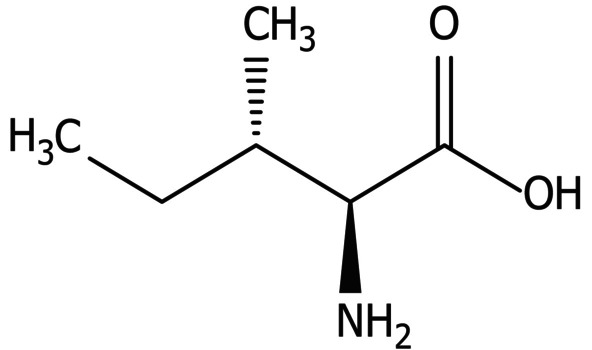 Figure 1
Peer Reviews
No public reviews on file for this paper yet. If you reviewed it on a platform where reviews are public (OpenReview, ICLR, NeurIPS, ICML), you can paste yours below so the community can read it here.
Videos
No videos yet. Explain this paper in a talk, walkthrough, or lecture? Add one.
Taxonomy
TopicsAgricultural safety and regulations · Pesticide Residue Analysis and Safety · Pharmaceutical studies and practices