Celiac Disease: A Review from Genetic to Treatment
Erfaneh Jafari, Niloufar Soleymani, Masoud Hamidi, Azar Rahi, Akram Rezaei, Reza Azizian

TL;DR
Celiac disease is a genetic and environmentally influenced condition that causes intestinal inflammation when gluten is consumed, and can be managed by avoiding gluten and using probiotics.
Contribution
This paper reviews the genetic, immunological, and microbial factors involved in celiac disease and suggests probiotics as a complementary treatment.
Findings
Celiac disease is strongly associated with HLA-DQ2 and HLA-DQ8 alleles.
Gut microbes influence immune and metabolic health in celiac disease.
Probiotics may support treatment by promoting beneficial gut bacteria.
Abstract
Celiac disease is a complex disorder influenced by genetic and environmental factors. When people with a genetic predisposition to CD consume gluten, an inflammatory response is triggered in the small intestine, and this reaction can be alleviated by the elimination of gluten from the diet. The clinical manifestations of CD vary greatly from person to person and begin at a young age or in adulthood. Influence of genetic factors on CD development is evident in carriers of the DQ2 and/or DQ8 allele. HLA genotypes are associated with gut colonization by bacteria, particularly in individuals suffering from CD. In addition, beneficial gut microbes are crucial for the production of DPP-4, which plays a key role in immune function, as well as metabolic and intestinal health. Therefore, probiotics have been recommended as a complementary food supplement in CD.
Genes, proteins, chemicals, diseases, species, mutations and cell lines named across the full text — each resolved to its canonical identifier and authoritative record.
Click any figure to enlarge with its caption.
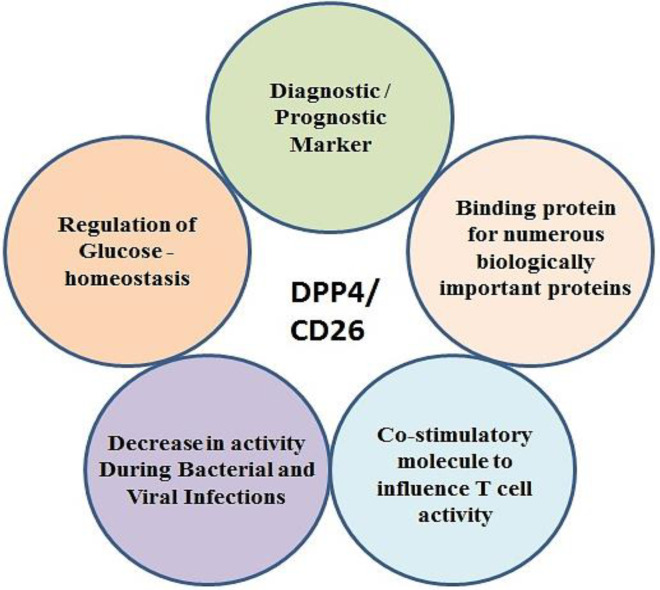 Figure 1
Peer Reviews
No public reviews on file for this paper yet. If you reviewed it on a platform where reviews are public (OpenReview, ICLR, NeurIPS, ICML), you can paste yours below so the community can read it here.
Videos
No videos yet. Explain this paper in a talk, walkthrough, or lecture? Add one.
Taxonomy
TopicsMedieval Iberian Studies · Comparative Literary Analysis and Criticism · Medieval European Literature and History