Valsalva purpura on the face of a 7-year-old child
Alia Ali Galadari, Moteb Al Otaibi

TL;DR
A 7-year-old child developed facial purpura after performing a Valsalva maneuver during swimming.
Contribution
This case adds to the limited understanding of Valsalva purpura in children, particularly on the cheeks.
Findings
Valsalva purpura occurred on the cheeks of a 7-year-old child after underwater breath-holding.
The condition is linked to the Valsalva maneuver performed during swimming exercises.
Abstract
Valsalva purpura refers to purpura resulting from performing the Valsalva maneuver, a forced expiratory effort against a closed glottis. There are limited reported cases of Valsalva purpura in children, specifically on the cheeks. We present the case of a 7-year-old child who developed Valsalva purpura on his cheeks after performing the Valsalva maneuver during deep breathing exercises by holding his breath underwater during his swimming sessions. This article overviews the relationship between the Valsalva maneuver, purpura, and similar cases.
Genes, proteins, chemicals, diseases, species, mutations and cell lines named across the full text — each resolved to its canonical identifier and authoritative record.
Click any figure to enlarge with its caption.
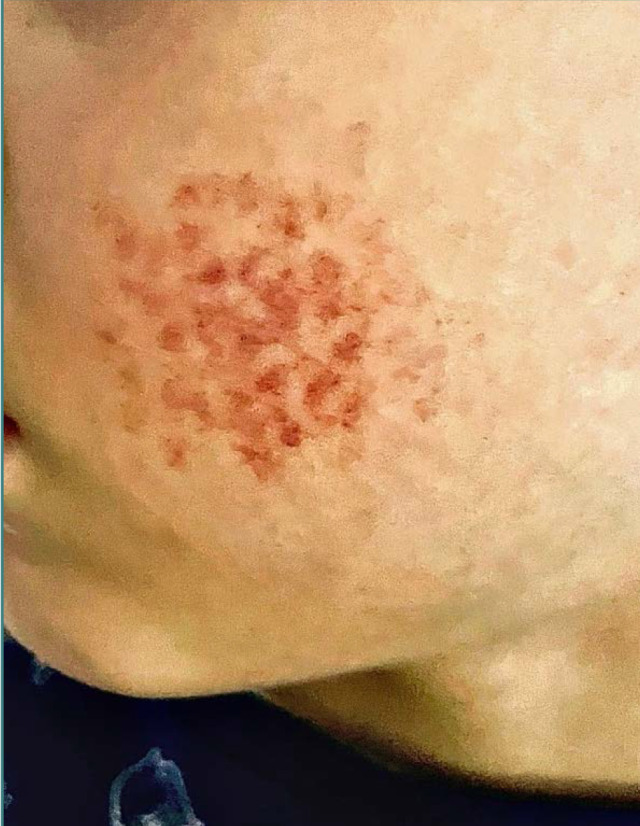 Figure 1
Peer Reviews
No public reviews on file for this paper yet. If you reviewed it on a platform where reviews are public (OpenReview, ICLR, NeurIPS, ICML), you can paste yours below so the community can read it here.
Videos
No videos yet. Explain this paper in a talk, walkthrough, or lecture? Add one.
Taxonomy
TopicsChild Abuse and Related Trauma · Infectious Encephalopathies and Encephalitis · Heparin-Induced Thrombocytopenia and Thrombosis