Assessment of the Knowledge, Attitudes, and Practices of Indian Medical Students Towards Coronavirus Disease 2019 (COVID-19) After Two Doses of Vaccination and Their Approach Towards the Third (Booster) Dose
Saptarshi Banerjee, Kumar Sarvottam, Ashish Kumar Gupta

TL;DR
This study examines how vaccinated Indian medical students understand and behave regarding COVID-19, including their views on booster doses.
Contribution
The study provides insights into medical students' knowledge, attitudes, and practices post-vaccination and their stance on booster doses.
Findings
Medical students showed moderate knowledge and practices but low attitudes toward COVID-19.
Most students acknowledged vaccine effectiveness but had mixed views on pre-market testing and government policies.
Positive attitudes toward booster doses were observed despite concerns about adverse effects.
Abstract
Background and objectives Medical students not only directly impact coronavirus disease 2019 (COVID-19) transmission due to their behavior and perceptions but also play an important role in influencing the behavior and vaccine intentions of their families and the community at large. The study's objective was to assess the knowledge, attitudes, and practices of medical students who have completed two doses of the COVID-19 vaccine towards the disease and their approach towards the third (booster) dose. Methods A total of 705 individual responses were obtained from a cross-sectional web-based study deployed using Google Forms. After getting consent and basic information, data was obtained regarding knowledge of the disease, attitudes towards the disease, and practices regarding the same. The mean score was calculated for the above different categories and compared with their respective…
Genes, proteins, chemicals, diseases, species, mutations and cell lines named across the full text — each resolved to its canonical identifier and authoritative record.
Click any figure to enlarge with its caption.
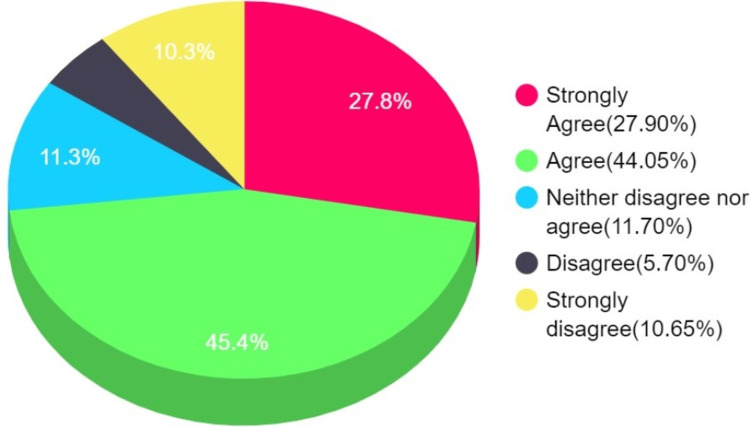 Figure 1
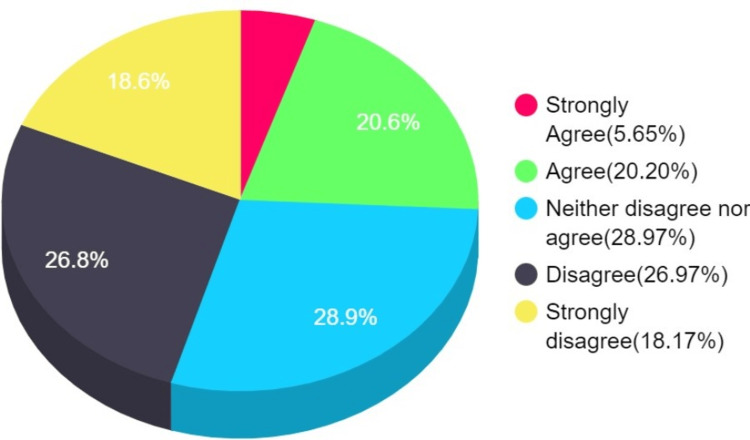 Figure 2
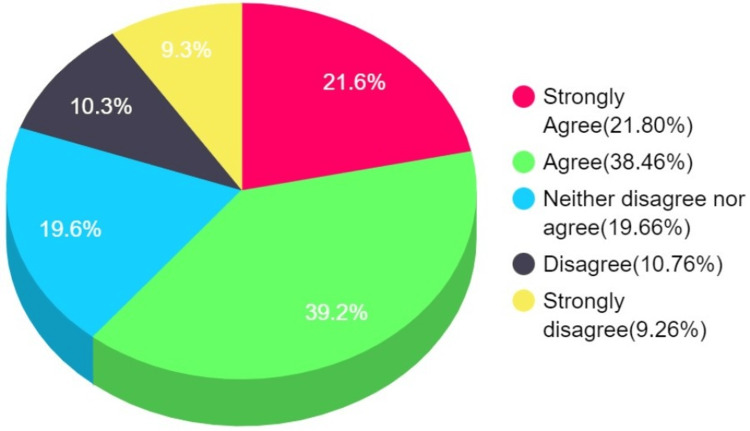 Figure 3
| Parameter | Category | Number of responses (out of 705) | Percentage of responses |
| KF | Low knowledge | 212 | 30.1% |
| Moderate knowledge | 341 | 48.3% | |
| High knowledge | 152 | 21.5% | |
| KS | Low knowledge | 24 | 3.4% |
| Moderate knowledge | 477 | 67.6% | |
| High knowledge | 204 | 28.9% | |
| A | Low attitude | 235 | 33.3% |
| Moderate attitude | 415 | 58.8% | |
| High attitude | 55 | 7.8% | |
| P | Weak practice | 181 | 25.7% |
| Moderate practice | 484 | 68.6% | |
| High practice | 40 | 5.6% |
| KF (mean±standard deviation) | Cut-off values | |
| 46 | 50 | |
| 47.67±4.49 | t(704)=9.86, p=0.00 | t(704)=-13.74, p=0.00 |
| KS (mean±standard deviation) | Cut-off values | |
| 5 | 8 | |
| 6.96±1.10 | t(704)=47.24, p=0.00 | t(704)=-24.95, p=0.00 |
| A (mean±standard deviation) | Cut-off values | |
| 40 | 43 | |
| 39.79±4.07 | t(704)=-1.78, p=0.00 | t(704)=-21.34, p=0.00 |
| P (mean±standard deviation) | Cut-off values | |
| 29 | 34 | |
| 30.6±4.27 | t(704)=10.14, p=0.00 | t(704)=-20.90, p=0.00 |
Peer Reviews
No public reviews on file for this paper yet. If you reviewed it on a platform where reviews are public (OpenReview, ICLR, NeurIPS, ICML), you can paste yours below so the community can read it here.
Videos
No videos yet. Explain this paper in a talk, walkthrough, or lecture? Add one.
Taxonomy
TopicsVaccine Coverage and Hesitancy · SARS-CoV-2 and COVID-19 Research · COVID-19 Pandemic Impacts
Introduction
The coronavirus disease 2019 (COVID-19) has affected many spheres of human life, including health, education, and the economy, since its emergence [1]. On January 30, 2020, the World Health Organization (WHO) declared the outbreak a Public Health Emergency of International Concern, and on March 11, 2020, it was declared a pandemic. The response of any country to a pandemic is a complex process guided by several factors, and India, as a nation, has stood firmly to manage this challenge with both governmental and non-governmental support [2]. As part of control measures against COVID-19, two vaccines were approved and launched in India: Covishield and Covaxin [3]. An observed decline in humoral immunity after six months of vaccination with the second dose, along with a rise of several COVID-19 variants, called for a booster dose to mediate an increase in immunity and enhance the vaccine's effectiveness [4,5].
The transmission of COVID-19 is hugely dependent on human behavior and perception of the disease, so the study of knowledge, attitudes, and practices is essential [6]. Medical students play a critical role in this regard by influencing the vaccination intention and COVID-responsive behavior of their families and communities; hence, knowing their response to this pandemic is important [7]. Though a considerable number of studies were performed in many nations to assess the knowledge, attitudes, and practices of the general population towards this disease, little data is available for the same among medical students before the administration of vaccines.
It has been reported that 56.6% of healthcare workers and medical students had poor knowledge about COVID-19 and only 46% of the total study sample had positive perceptions of COVID-19. Around 81.7% of them prioritized hand hygiene, but only 73.4% wore masks to prevent COVID-19 [8]. However, a cross-sectional study conducted among medical students in Jordan showed good levels of knowledge, positive attitudes, and good precautionary measures in participants [9]. Similar results were observed in neighboring Asian countries like Iran and Pakistan [10,11].
In India, few studies have explored the knowledge, attitudes, and practices of medical students regarding COVID-19 before the vaccination drive. In a study conducted among medical students, participants were seen to have satisfactory knowledge regarding symptoms, mode of spread, manifestation, and precautions, but knowledge regarding WHO recommendations for the type of mask (31%) and breastfeeding by COVID-19-positive mothers (43%) has not been up to the mark. A high percentage of students showed a positive response in terms of attitude as well as practices, whereas another study showed 92.7% of participants had extensive knowledge, but half of the total participants agreed that ordinary residents can wear general medical masks to prevent infection transmission [12]. In addition, 80% of participants had a positive attitude, and a majority had health-seeking behavioral intentions and prevention practices [13]. Similar findings were obtained in another study, but 18% of them had partial knowledge about the symptoms of severe COVID-19 [14].
With the commencement of the vaccination campaign, over the period, it became evident that COVID-19 transmission can be interrupted by achieving herd immunity [15]. A decreasing trend in mortality, morbidity, and severity of the disease may lead to a change in behavior and perception towards the disease. However, there is a paucity of scientific information assessing the parameters of knowledge, attitudes, and practices in medical students after the completion of two doses of vaccination.
Vaccine hesitancy is perceived as an obstacle to curbing the COVID-19 pandemic, and limited data is available from studies from around the world to assess vaccine hesitancy for booster doses in medical students. Around 74.5% of participants were found to favor the COVID-19 booster dose, whereas 17.6% rejected it and 7.9% were uncertain, as observed in a study done in Poland [5]. A similar study in Japan showed the willingness of 84.5% of participants to receive a third dose [16]. There are no studies done in India aimed at assessing vaccine hesitancy in medical students towards the booster dose. So, in this study, we have conducted a questionnaire-based survey to assess knowledge, attitudes, and practices towards COVID-19 post-vaccination (two doses) and vaccine hesitancy towards the booster dose among undergraduate medical students enrolled in Bachelor of Medicine and Bachelor of Surgery (MBBS) courses at various medical colleges in India.
Materials and methods
A total of 705 individual responses were obtained from all over India for the study conducted over two months, from the end of June 2022 to September 2022. MBBS students (first year to fourth year) of age group 18-30, belonging to either gender, who had completed two doses of vaccination (Covishield or Covaxin) were included. In contrast, any MBBS student who had not completed two doses of vaccine or who did not wish to participate in the study was excluded.
For this cross-sectional web-based study, an anonymous online structured questionnaire was developed using the questionnaire of WHO training material for the detection, prevention, response, and control of COVID-19 and questionnaires based on COVID-19 vaccine hesitancy among medical students [3,17,18]. We have used a pre-validated questionnaire with good internal consistency for determining the knowledge, attitudes, and practices of the students (Cronbach alpha=0.73). To assess vaccine hesitancy, we developed a draft questionnaire which was pretested among 40 medical students (Cronbach alpha=0.71) for clarity and acceptability, and modifications were made accordingly in the final questionnaire. The questionnaire was deployed using Google Forms. Its link was shared within the social media network of medical students both individually and through email and WhatsApp groups, which was further circulated by the students, who could further click on the link to view and answer the questions.
English was chosen as the preferred language as it is the medium of instruction of medical courses throughout India, and changes were made as required to enable a better understanding of the questions. A consent form and information sheet (Appendix A) was included consisting of a short introduction regarding objectives, procedures, the voluntary nature of participation, declarations of confidentiality, and anonymity. It also contained questions regarding age, gender, name, and place of college.
The questionnaire (Appendix B) consisted of four sections: knowledge about COVID-19, attitudes towards COVID-19, practices regarding COVID-19, and approach towards booster dose of COVID-19 vaccine [3,17].
The knowledge section consisted of 26 questions in two parts: The first part of knowledge had 18 questions, of which three sets of six questions each were regarding characteristics, symptoms, and prevention or control of the disease, respectively. The questions were either in the form of multiple-choice single answers or in the form of true, false, or no opinion carrying individual scores (Appendix C). The score obtained in the first part of knowledge denoted as "KF" was ranged and categorized into low, moderate, and high knowledge (Appendix D). The second part of knowledge had eight questions with four each regarding the route of transmission and potentially high-risk groups. The questions were in the form of true or false with true response carrying 1 point and false carrying 0 point. The score obtained in the second part of knowledge denoted as "KS" was ranged and categorized as shown in Appendix E.
There were 15 questions to evaluate the attitudes of the medical students after taking two doses of vaccination. The questions were in the form of true, false, and no opinion with the scoring system the same as above. The score obtained in attitudes denoted as "A" was ranged and categorized as shown in Appendix F.
Regarding the practice of medical students after two doses of vaccination, 12 questions were asked (the scoring system the same as above) with the score obtained in practice denoted as "P" ranged and categorized as shown in Appendix G.
Regarding the approach of medical students towards the third (booster) dose of vaccine, nine questions were there, of which two questions were regarding the role of the vaccine in preventing severity and spread (H1-H2), four questions evaluated the concerns regarding the vaccine (H3-H6), and three questions were related to its effect on health worker/medical professional (H7-H9). The questions were in the form of multiple-choice single answers with options based on a 5-point Likert scale (strongly disagree, disagree, neither disagree nor agree, agree, strongly agree) (Appendix H and Appendix I).
The scores for each of the categories, namely, the first part of knowledge (KF), the second part of knowledge (KS), attitudes (A), and practice (P), were assigned using the abovementioned scoring system, and the percentage of responses corresponding to each category was calculated. The data obtained was compiled in a spreadsheet, and a one-sample t-test was performed to compare the mean score in "KF," "KS," "A," and "P" against their respective cut-offs. The percentage of responses for each option of the Likert scale in "Approach towards booster dose of COVID-19 vaccine" was tabulated and depicted in pie charts, to know the proportion of each response for each of the three categories of questions. All the data was analyzed by IBM SPSS Statistics for Windows, Version 23.0 (Released 2015; IBM Corp., Armonk, New York, United States).
The study was approved by the Ethical Committee of the Institute of Medical Sciences, Banaras Hindu University (approval number: Dean/2022/EC/3334), and recommendations of the Helsinki Declaration were followed while recording the data. No financial or in-kind reward was given to students who completed the survey.
Results
The percentage of responses corresponding to each category for different parameters of the knowledge, attitude, and practice study is compiled below (Table 1).
Participants had a mean score in the range of moderate knowledge in the section of the first part of knowledge with 493 of them (69.8%) having high to moderate knowledge (Table 2).
Six hundred and eighty-one of them (96.5%) had high to moderate knowledge in the section of the second part of knowledge with a mean score in the range of moderate knowledge (Table 3).
Around 92.1% of participants (650 responses) showed a low to moderate attitude towards COVID-19. The mean score of "A" was found in the range of low attitude (Table 4).
Around 74.2% of participants (524 responses) had moderate to high practices regarding COVID-19. The mean score of "P" for all participants was found to be in the category of moderate practice (Table 5).
Responses corresponding to each category of questions assessing the approach of medical students towards the third dose are compiled below.
The majority of participants (strongly agree and agree sections of Figure 1) think the vaccine has a role in preventing the severity and spread of the disease (Figure 1).
Concerns regarding the role of the vaccine in preventing the severity and spread of the disease (H1-H2)
Participants have mixed opinions for concerns regarding vaccines about their pre-market testing, their adverse effects, and the government's vaccination policy (Figure 2).
Concerns regarding the vaccine (H3-H6)
Participants have a majorly affirming response (strongly agree and agree sections of Figure 3) acknowledging the vaccine's effect on health workers and medical professionals (Figure 3).
Concerns regarding the vaccine's effect on health workers/medical professionals (H7-H9)
Discussion
The knowledge, attitudes, and practices for a particular disease are influenced by various factors, namely, the gravity of the illness, the severity of its spread, and the fatality rate [19]. This study was started with the assumption that the current decreasing trend in mortality, morbidity, and severity of COVID-19 along with the completion of two doses of vaccination might affect the knowledge, attitudes, and practices of medical students towards the disease. The majority of participants were found to have sufficient knowledge regarding the characteristics and symptoms of the disease as well as regarding the prevention and control of the disease. However, about 30% of them were found to have low knowledge about the same. Almost all of them had adequate knowledge regarding the route of transmission and higher-risk groups. More than 90% of them had a moderate to low attitude towards COVID-19. The mean score was in the range of low attitude. It was noteworthy that three-fourths of them were proactive regarding proper practices for the prevention of COVID-19.
The low mean score in attitude obtained can be explained by the fact that medical students up to their final year were not directly exposed to patient management and government awareness programs as they were not first-line healthcare workers. Their clinical postings started only when the situation was slightly under control and a majority of their knowledge was social media and print media driven, thereby misjudging the gravity of the problem [8,14].
In a similar study by Gohel et al., before the vaccination drive, it was shown that about 40% of participants had incorrect or partial knowledge regarding the symptomatology of COVID-19, while half of them couldn't correctly identify the modes of transmission. About 20% of participants did not agree that wearing a surgical mask could prevent COVID-19. The rest of them showed a positive perception towards COVID-19 prevention and control [14]. Another study done in Rajasthan showed students had insufficient knowledge regarding the type of mask advised by WHO (31%) and the indication of breastfeeding in COVID-19-positive mothers (43%) [12]. However, more than 90% of participants had requisite knowledge about the symptoms and mode of transmission, and only 11% opined not to wear a mask in our study. Around 83% of them had ample knowledge about the effect of COVID-19 on pregnant women.
A study done on students of the Government Doon Medical College showed adequate knowledge of the participants about the disease and similar attitudes and practices [13]. Similar results were also obtained in studies conducted in Jordan, Iran, and Pakistan [9,12,13]. No significant data was available to the best of our knowledge regarding the same parameters post-vaccination for us to compare.
According to the WHO Strategic Advisory Group of Experts (SAGE) group, "vaccine hesitancy refers to a delay in acceptance or refusal of vaccination despite the availability of vaccination services" [20]. In our study, the role of the vaccine in preventing the severity and spread of the disease was acknowledged by the majority (about 70%) of the participants, whereas about 12% were indecisive, and 16% disagreed with the fact. Regarding pre-market testing, adverse effects, and the government's vaccination policy, about 26% of them expressed negative concern, and about 45% of them disagreed with having any sort of concern, while 29% of them preferred to remain neutral. About 60% of them agreed with the fact that vaccination is essential for healthcare workers. Studies done in Poland and Japan revealed that 74.5% and 84.5% of medical students were willing to receive the third dose, respectively [5,16]. Studies in the general population to assess booster dose hesitancy revealed that only 50% of respondents were willing to take the booster dose [21].
The willingness of students to receive the booster dose is found to be greater than that of the normal population, suggesting their greater awareness regarding the disease. However, medical students in nations like Japan and Poland were more willing to receive the vaccine, thereby suggesting the role of government in initiating programs directed towards encouraging the general population, and particularly medical students, to receive the vaccine.
This study, however, did not explore the causes that could lead to a low attitude among medical students. The association among different knowledge, attitude, and practice parameters and between different knowledge, attitude, and practice parameters and socio-demographic characteristics are also not evaluated. In addition, online surveys could lead to bias in measurement as students had access to the internet all the time while responding to the questionnaire.
Thus, this study opens up a vast avenue for future research in terms of identifying the causes of low attitude and finding the association among different knowledge, attitude, and practice parameters and between different knowledge, attitude, and practice parameters and socio-demographic parameters. Causes leading to concerns about the vaccine among medical students can also be explored further.
Conclusions
The majority of the responses of medical students corresponding to knowledge and practices were positive and in line with similar studies done pre-vaccination, with noteworthy improvement in knowledge regarding symptoms, routes of transmission, high-risk groups, and mask-wearing practices. However, a low mean score in attitude asserts enforcement of the awareness program among medical students.
The participants were found to be majorly affirmative in terms of the use of the vaccine and the effectiveness of the booster dose, but concerns were noted regarding pre-market testing, adverse effects, and the government's vaccination policy. The willingness of the students to receive the booster dose was found to be greater than that of the general population. However, the willingness of medical students to receive the third dose in India was found to be lower than that of nations like Poland and Japan, and their concerns regarding the vaccine suggest the requirement of the government's positive endeavor to spread awareness and increase the willingness of people, especially medical students, regarding booster dose.
The reference list from the paper itself. Each links out to its DOI / PubMed record.
- 1The traumatic impact of job loss and job search in the aftermath of COVID-19Psychol Trauma Crayne MP 0212202010.1037/tra 000085232478539 · doi ↗ · pubmed ↗
- 2India's COVID-19 response: science first Lancet Radhakrishnan N Gupta DK 24642465397202110.1016/S 0140-6736(21)01241-1PMC 822527134175080 · doi ↗ · pubmed ↗
- 3COVID-19 vaccine hesitancy among medical students in India Epidemiol Infect Jain J Saurabh S Kumar P 0149202110.1017/S 0950268821001205 PMC 818541334011421 · doi ↗ · pubmed ↗
- 4Waning immune humoral response to BNT 162b 2 Covid-19 vaccine over 6 months N Engl J Med Levin EG Lustig Y Cohen C 0385202110.1056/NEJ Moa 2114583 PMC 852279734614326 · doi ↗ · pubmed ↗
- 5COVID-19 vaccine booster hesitancy (VBH) of healthcare professionals and students in Poland: cross-sectional survey-based study Front Public Health Dziedzic A Issa J Hussain S 9380671020223595884510.3389/fpubh.2022.938067 PMC 9359622 · doi ↗ · pubmed ↗
- 6Emerging pandemic diseases: how we got to COVID-19Cell Morens DM Fauci AS 1077109218220203284615710.1016/j.cell.2020.08.021PMC 7428724 · doi ↗ · pubmed ↗
- 7Factors influencing COVID-19 vaccination intentions among college students: a cross-sectional study in India Front Public Health Jain L Vij J Satapathy P 735902920213497691110.3389/fpubh.2021.735902 PMC 8714761 · doi ↗ · pubmed ↗
- 8Knowledge, attitude, perceptions and practice towards COVID-19: a systematic review and meta-analysis [PREPRINT]med Rxiv Bhagavathula AS Aldhaleei WA Rahmani J Khubchandani J 2020