Endoscopic hand-suturing training model
Taku Morita, Ken Ohata, Toshihiro Araki, Makoto Koda, Kazuta Fukumori, Yohei Minato, Takumi Kawaguchi

Abstract
Genes, proteins, chemicals, diseases, species, mutations and cell lines named across the full text — each resolved to its canonical identifier and authoritative record.
Click any figure to enlarge with its caption.
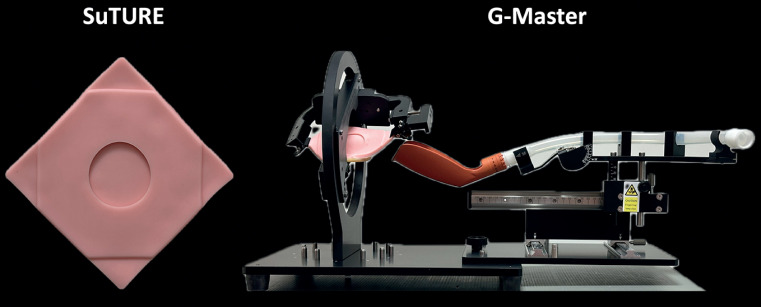 Fig. 1
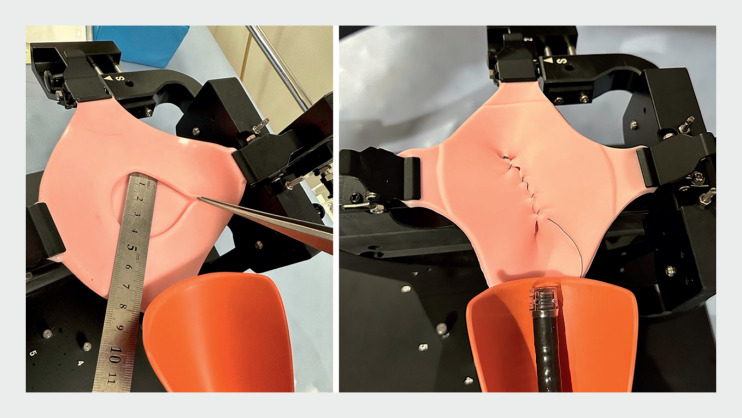 Fig. 2
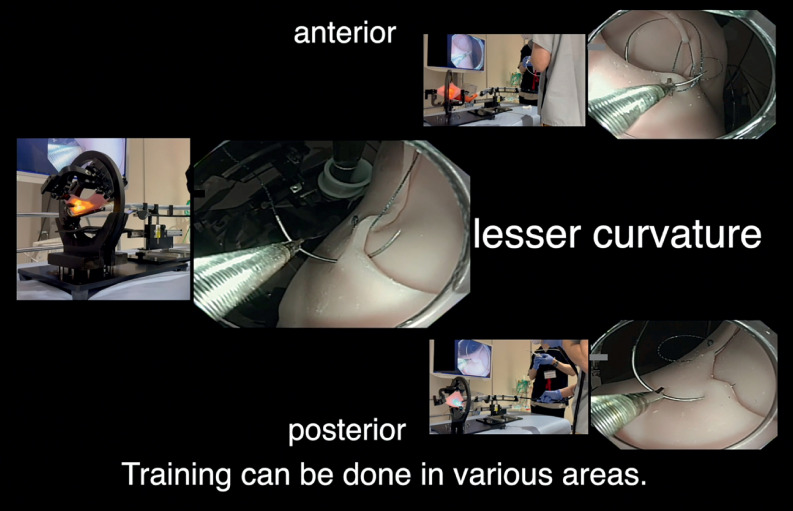 Fig. 3
Peer Reviews
No public reviews on file for this paper yet. If you reviewed it on a platform where reviews are public (OpenReview, ICLR, NeurIPS, ICML), you can paste yours below so the community can read it here.
Videos
No videos yet. Explain this paper in a talk, walkthrough, or lecture? Add one.
Taxonomy
TopicsGastrointestinal Tumor Research and Treatment · Gastrointestinal Bleeding Diagnosis and Treatment · Gastric Cancer Management and Outcomes
Endoscopic hand-suturing (EHS) is a novel suturing method that allows optimal and secure intraluminal suturing 1 2 . On the other hand, the procedure is reported to be complicated, difficult, and time-consuming 3 4 . At present, there is no appropriate training model for it and no established method for learning it.
We have developed a training sheet we called SuTURE (Suture Trainer Using Re-usable Elastomer; Kotobuki Medical Inc., Saitama, Japan) for EHS by applying the G-Master, which was initially developed as a training model for gastric endoscopic submucosal dissection (ESD) ( Fig. 1 ). SuTURE has a two-layer structure of elastomer, a polymer material that exhibits rubber-like elasticity, and has a virtual mucosal defect with a major diameter of 40 mm on the upper sheet and a gusset at the edge to reproduce the sensation of applying a needle similar to that of a real case ( Fig. 2 ).
Suture Trainer Using Re-usable Elastomer (SuTURE) & G-Master (training model for endoscopic submucosal dissection (ESD))
Two-layer sheet with gussets for 40-mm virtual post-ESD ulcer.
It is also strong enough to practice suture closure without tearing when pulled with a thread. The difficulty of the EHS operation depends on the angle at which the lesion is confronted. The G-Master is an ESD training model characterized by the ability to freely set the angle at which the scope faces the lesion. EHS training was performed by fixing the scope and SuTURE in various positions, such as perpendicular, anterior wall side, and superior wall side ( Fig. 3 , Video 1 ).
You can train with various body parts that can be set with G-Master.
Features of Suture Trainer Using Re-usable Elastomer (SuTURE) and actual training.Video 1
This virtual lesion does not use biological material and does not require a dedicated room or endoscope. It is easy to prepare and can be disposed of as regular trash after training.
At present, there is no EHS specialized training model, but EHS requires technical mastery. This training model could contribute to EHS proficiency.
Endoscopy_UCTN_Code_TTT_1AU_2AB
The reference list from the paper itself. Each links out to its DOI / PubMed record.
- 1Akimoto T Goto O Sasaki M Endoscopic hand suturing for mucosal defect closure after gastric endoscopic submucosal dissection may reduce the risk of postoperative bleeding in patients receiving antithrombotic therapy Dig Endosc 20223412313210.1111/den.1404534021512 · doi ↗ · pubmed ↗
- 2Goto O Oyama T Ono H Endoscopic hand-suturing is feasible, safe, and may reduce bleeding risk after gastric endoscopic submucosal dissection: a multicenter pilot study (with video)Gastrointest Endosc 2020911195120231923410 10.1016/j.gie.2019.12.046 · doi ↗ · pubmed ↗
- 3Goto O Sasaki M Akimoto T Endoscopic hand-suturing for defect closure after gastric endoscopic submucosal dissection: a pilot study in animals and in humans Endoscopy 20174979279710.1055/s-0043-11066828561197 · doi ↗ · pubmed ↗
- 4Abe S Saito Y Tanaka YA novel endoscopic hand-suturing technique for defect closure after colorectal endoscopic submucosal dissection: a pilot study Endoscopy 20205278078510.1055/a-1120-853332207119 · doi ↗ · pubmed ↗