Successful management of prolonged abdominal pregnancy in low-resource setting: a case report
Cátia Samajo Zita, Gonzalo Gonzáles Villa, Eduardo Matediana, Pita Tomás, Damiano Pizzol, Lee Smith

TL;DR
A woman in a low-resource area had a rare 41-week abdominal pregnancy and was successfully treated, highlighting the challenges of managing such cases in limited healthcare settings.
Contribution
This case report demonstrates successful management of a prolonged abdominal pregnancy in a low-resource setting.
Findings
A 33-year-old woman had a 41-week abdominal pregnancy successfully managed in a low-resource setting.
The case highlights the challenges of diagnosing and treating ectopic pregnancies in areas with limited healthcare access.
Abstract
Ectopic pregnancy is a life-threatening complication of pregnancy and represents the leading cause of maternal mortality in the first trimester. In developing countries early diagnosis, necessary for favorable outcomes, is often unavailable and women are often not aware of possible conditions and associated complications. Moreover, access to sexual and reproductive health services and antenatal care are limited in such settings. Finally, management options are restricted and often performed in emergency with higher risk of complications and mortality. We report here a 33-year-old woman presenting a 41 weeks abdominal pregnancy successfully managed in a low-resource setting.
Genes, proteins, chemicals, diseases, species, mutations and cell lines named across the full text — each resolved to its canonical identifier and authoritative record.
Click any figure to enlarge with its caption.
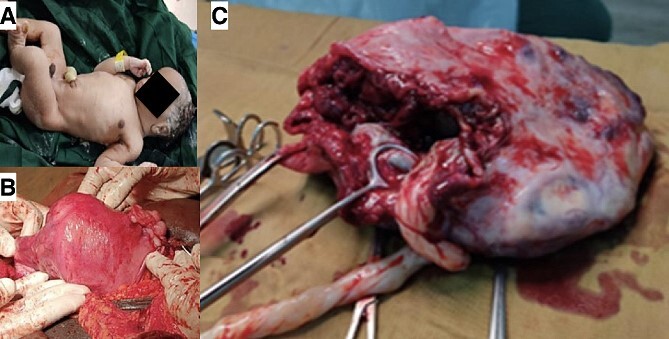 Figure 1
Peer Reviews
No public reviews on file for this paper yet. If you reviewed it on a platform where reviews are public (OpenReview, ICLR, NeurIPS, ICML), you can paste yours below so the community can read it here.
Videos
No videos yet. Explain this paper in a talk, walkthrough, or lecture? Add one.
Taxonomy
TopicsEctopic Pregnancy Diagnosis and Management · Maternal and fetal healthcare · Gestational Trophoblastic Disease Studies