Preliminary comparative study of lower extremity pressure measurements under the conditions using former models and new lithotomy stirrups in rectal cancer surgery
Takayuki Ochi, Hidetoshi Katsuno, Hiroyuki Kato, Shinya Takagi, Kenji Kikuchi, Kenichi Nakamura, Tomoyoshi Endo, Kazuhiro Matsuo, Hironobu Yasuoka, Akihiro Nishimura, Akihiko Horiguchi, Zenichi Morise

TL;DR
This study compares new and old surgical stirrups to see if the new design reduces pressure on lower limbs during rectal cancer surgery, potentially preventing complications.
Contribution
The study introduces and evaluates a new lithotomy stirrup design to reduce pressure on leg muscles during surgery.
Findings
New stirrups significantly reduced pressure on lower limb muscles compared to conventional ones.
Pressure shifted from the proximal to the distal soleus muscle with the new stirrups.
The new design may help prevent well-leg compartment syndrome and deep venous thrombosis.
Abstract
This study aimed to investigate the effect of the use of new lithotomy stirrups-2 on the pressure dispersal on lower limbs, which may lead to the prevention of well-leg compartment syndrome (WLCS) and deep venous thrombosis (DVT), which are the most commonly associated adverse events with laparoscopic and robot-assisted rectal surgery. A total of 30 healthy participants were included in this study. The pressure (mmHg) applied on various lower limb muscles when using conventional lithotomy stirrups-1 and new type stirrups-2 was recorded in various lithotomy positions; 1) neutral position, 2) Trendelenburg position (15°) with a 0° right inferior tilt, and 3) Trendelenburg position (15°) with a 10° right inferior tilt. Using a special sensor pad named Palm Q®, and the average values were compared between two types of stirrups. The use of new lithotomy stirrups-2 significantly reduced the…
Genes, proteins, chemicals, diseases, species, mutations and cell lines named across the full text — each resolved to its canonical identifier and authoritative record.
Click any figure to enlarge with its caption.
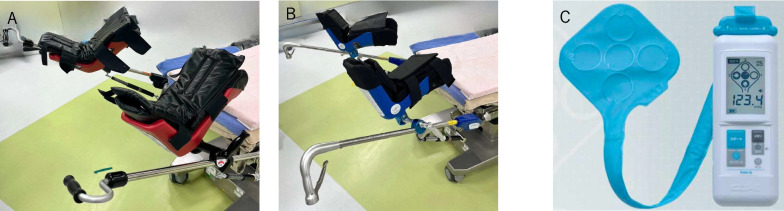 Figure 1
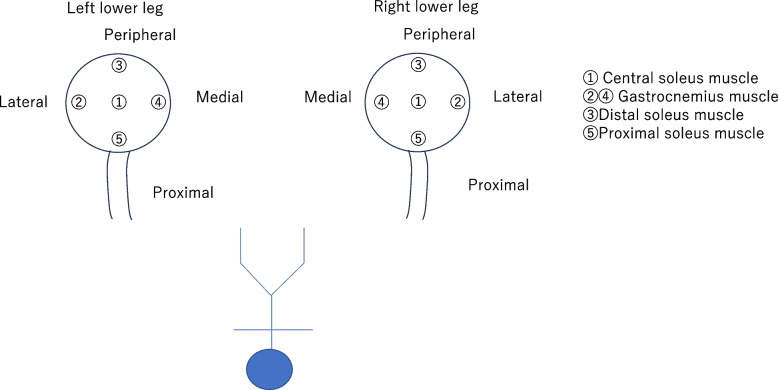 Figure 2
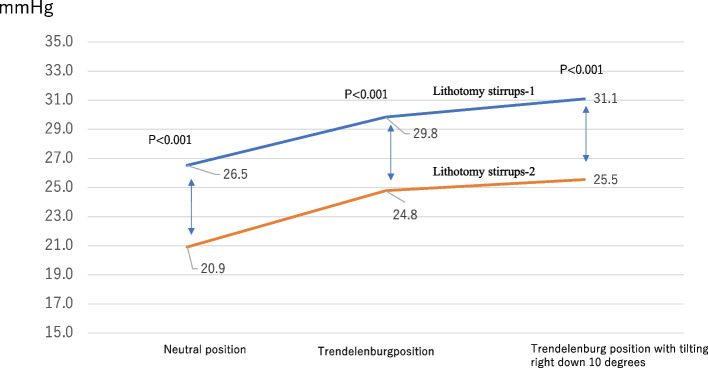 Figure 3
Peer Reviews
No public reviews on file for this paper yet. If you reviewed it on a platform where reviews are public (OpenReview, ICLR, NeurIPS, ICML), you can paste yours below so the community can read it here.
Videos
No videos yet. Explain this paper in a talk, walkthrough, or lecture? Add one.
Taxonomy
TopicsMuscle and Compartmental Disorders · Body Contouring and Surgery · Abdominal Surgery and Complications