CITEViz: interactively classify cell populations in CITE-Seq via a flow cytometry-like gating workflow using R-Shiny
Garth L. Kong, Thai T. Nguyen, Wesley K. Rosales, Anjali D. Panikar, John H. W. Cheney, Theresa A. Lusardi, William M. Yashar, Brittany M. Curtiss, Sarah A. Carratt, Theodore P. Braun, Julia E. Maxson

TL;DR
CITEViz is a tool that helps classify cell populations in CITE-Seq data using a flow cytometry-like gating workflow, making multi-omic single-cell analysis more efficient.
Contribution
CITEViz introduces an R-Shiny app for interactive gating in CITE-Seq data, streamlining multi-omic analysis and integrating quality control visualization.
Findings
CITEViz successfully gated major blood cell populations using surface protein markers in a CITE-Seq dataset.
The tool revealed cellular heterogeneity in monocyte subtypes and antibody detection differences across patient donors.
CITEViz provides a standardized workflow and user-friendly interface for multi-omic data analysis.
Abstract
The rapid advancement of new genomic sequencing technology has enabled the development of multi-omic single-cell sequencing assays. These assays profile multiple modalities in the same cell and can often yield new insights not revealed with a single modality. For example, Cellular Indexing of Transcriptomes and Epitopes by Sequencing (CITE-Seq) simultaneously profiles the RNA transcriptome and the surface protein expression. The surface protein markers in CITE-Seq can be used to identify cell populations similar to the iterative filtration process in flow cytometry, also called “gating”, and is an essential step for downstream analyses and data interpretation. While several packages allow users to interactively gate cells, they often do not process multi-omic sequencing datasets and may require writing redundant code to specify gate boundaries. To streamline the gating process, we…
Genes, proteins, chemicals, diseases, species, mutations and cell lines named across the full text — each resolved to its canonical identifier and authoritative record.
Click any figure to enlarge with its caption.
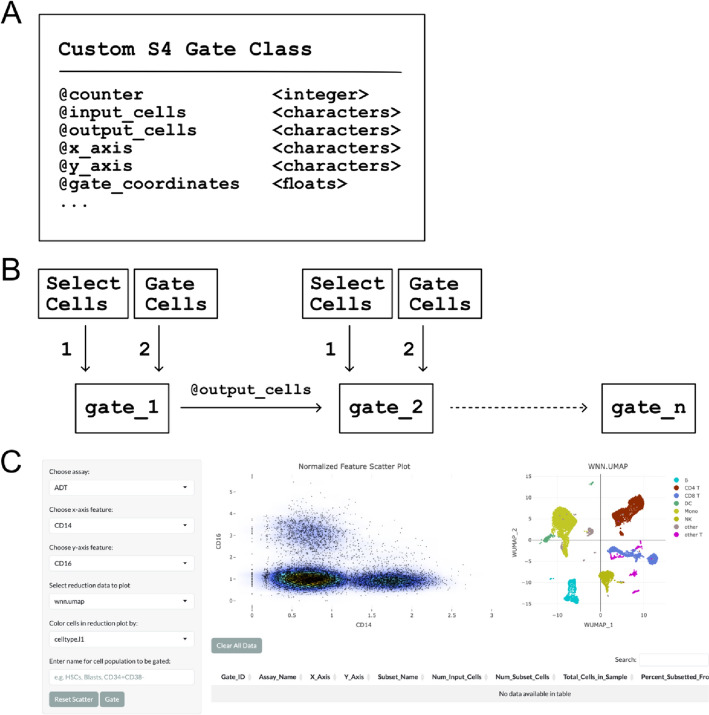 Figure 1
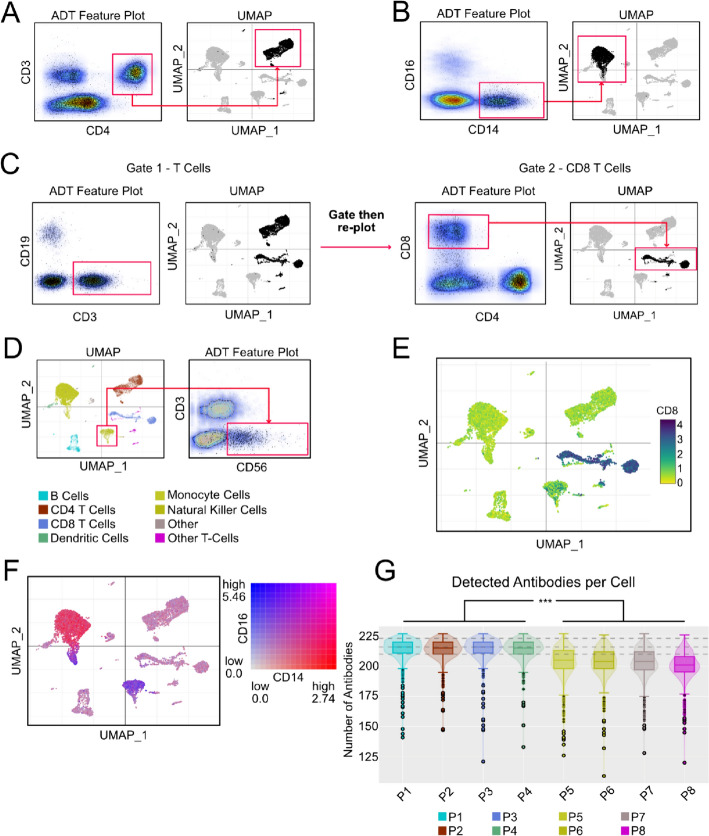 Figure 2
Peer Reviews
No public reviews on file for this paper yet. If you reviewed it on a platform where reviews are public (OpenReview, ICLR, NeurIPS, ICML), you can paste yours below so the community can read it here.
Videos
No videos yet. Explain this paper in a talk, walkthrough, or lecture? Add one.
Taxonomy
TopicsComparative Literary Analysis and Criticism · Cultural and Social Studies in Latin America