Teaching Medical Students Rapid Ultrasound for shock and hypotension (RUSH): learning outcomes and clinical performance in a proof-of-concept study
Lukas Martin Müller-Wirtz, William M. Patterson, Sascha Ott, Annika Brauchle, Andreas Meiser, Thomas Volk, Ulrich Berwanger, David Conrad

TL;DR
A single-day training in RUSH ultrasound improved medical students' knowledge and simulator skills, but applying these in real clinical settings was challenging.
Contribution
This study demonstrates the effectiveness and limitations of a single-day RUSH ultrasound training for medical students.
Findings
Students showed high performance in RUSH exam views and improved scanning times.
Written exam scores significantly improved after training, indicating knowledge gain.
Students performed better on simulators than on live patients, highlighting challenges in clinical application.
Abstract
Point-of-care ultrasound (POCUS) is a critical diagnostic tool in various medical settings, yet its instruction in medical education is inconsistent. The Rapid Ultrasound for Shock and Hypotension (RUSH) protocol is a comprehensive diagnostic tool, but its complexity poses challenges for teaching and learning. This study evaluates the effectiveness of a single-day training in RUSH for medical students by assessing their performance in clinical scenarios. In this prospective single-center observational proof-of-concept study, 16 medical students from Saarland University Medical Center underwent a single-day training in RUSH, followed by evaluations in clinical settings and on a high-fidelity simulator. Performance was assessed using a standardized scoring tool and time to complete the RUSH exam. Knowledge gain was measured with pre- and post-training written exams, and diagnostic…
Genes, proteins, chemicals, diseases, species, mutations and cell lines named across the full text — each resolved to its canonical identifier and authoritative record.
Click any figure to enlarge with its caption.
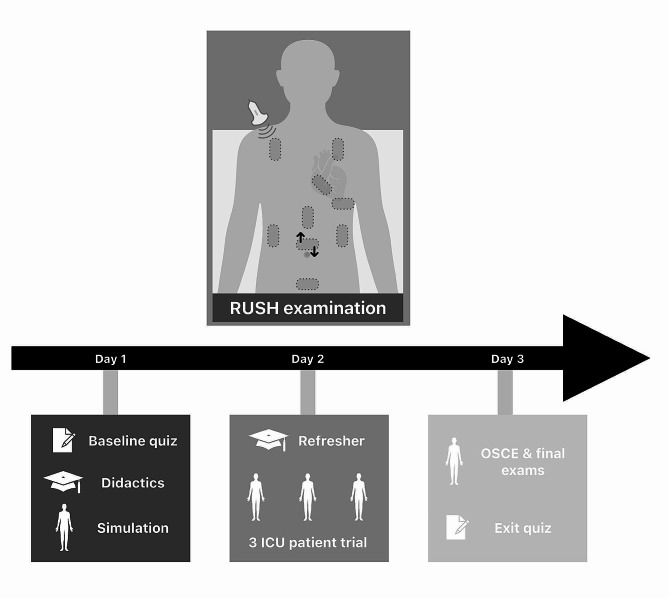 Figure 1
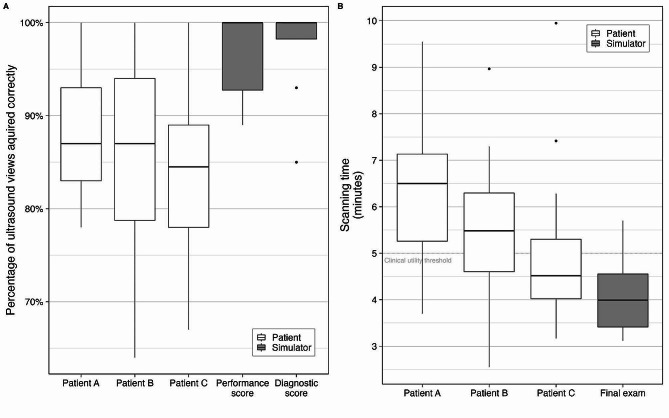 Figure 2
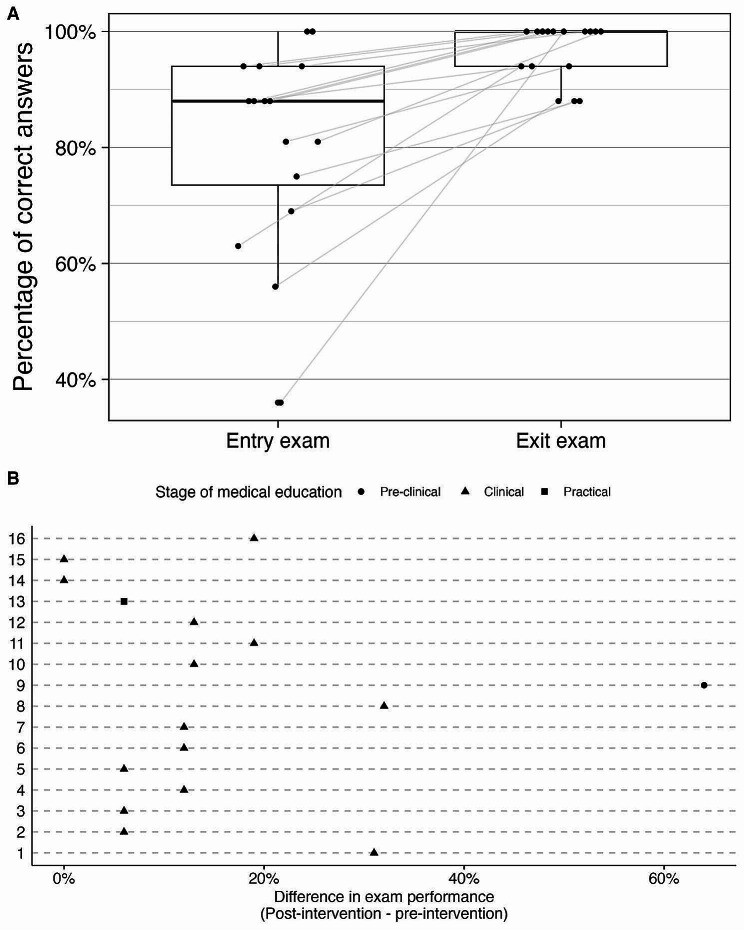 Figure 3
Peer Reviews
No public reviews on file for this paper yet. If you reviewed it on a platform where reviews are public (OpenReview, ICLR, NeurIPS, ICML), you can paste yours below so the community can read it here.
Videos
No videos yet. Explain this paper in a talk, walkthrough, or lecture? Add one.
Taxonomy
TopicsSimulation-Based Education in Healthcare · Surgical Simulation and Training · Innovations in Medical Education