The automatic activity of abdominal muscles during stable and unstable standing postural tasks in older adults with and without low back pain- A cross-sectional study
Mohammad Kalantari, Shabnam ShahAli, Mehdi Dadgoo, Abbas Tabatabaei

TL;DR
This study examines how older adults with and without back pain use their abdominal muscles during stable and unstable standing tasks.
Contribution
It explores automatic abdominal muscle activity in older adults with low back pain during dynamic standing postural tasks.
Findings
Task dynamicity significantly affected thickness change only in the TrA muscle in participants without LBP.
Standing on a dynamic surface increased TrA muscle activity in the control group compared to static standing.
No significant effects were found for the IO and EO muscles in either group.
Abstract
The postural control and abdominal muscles’ automatic activity were found to be impaired in subjects with low back pain (LBP) during static activities. However, the studies are predominantly conducted on younger adults and a limited number of studies have evaluated abdominal muscles’ automatic activity during dynamic standing activities in subjects with LBP. The present study investigated the automatic activity of abdominal muscles during stable and unstable standing postural tasks in older adults with and without LBP. Twenty subjects with and 20 subjects without LBP were included. The thickness of the transversus abdominis (TrA), internal oblique (IO), and external oblique (EO) muscles was measured during rest (in supine), static, and dynamic standing postural tasks. To estimate automatic muscle activity, each muscle’s thickness during a standing task was normalized to its thickness…
Genes, proteins, chemicals, diseases, species, mutations and cell lines named across the full text — each resolved to its canonical identifier and authoritative record.
Click any figure to enlarge with its caption.
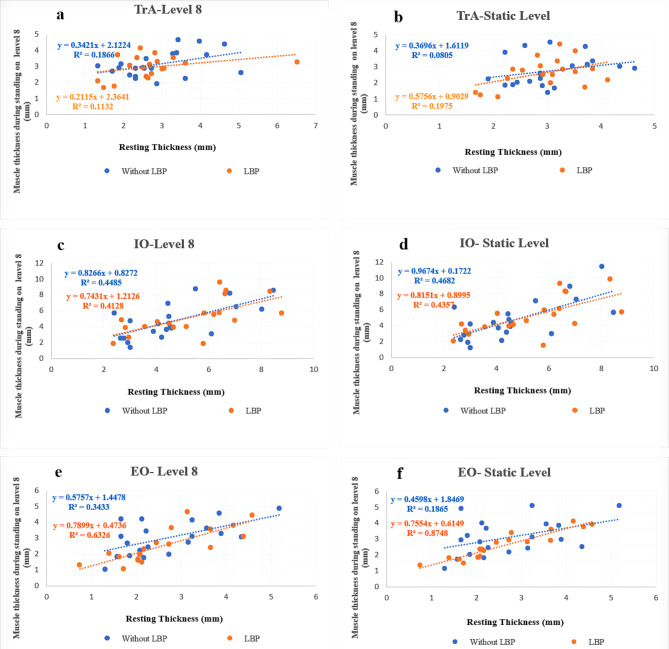 Figure 1
Peer Reviews
No public reviews on file for this paper yet. If you reviewed it on a platform where reviews are public (OpenReview, ICLR, NeurIPS, ICML), you can paste yours below so the community can read it here.
Videos
No videos yet. Explain this paper in a talk, walkthrough, or lecture? Add one.
Taxonomy
TopicsBalance, Gait, and Falls Prevention · Botulinum Toxin and Related Neurological Disorders · Motor Control and Adaptation