Structural enzymology studies with the substrate 3S‐hydroxybutanoyl‐CoA: bifunctional MFE1 is a less efficient dehydrogenase than monofunctional HAD
Shruthi Sridhar, Tiila‐Riikka Kiema, Werner Schmitz, Mikael Widersten, Rik K. Wierenga

TL;DR
This study compares the efficiency of two enzymes involved in fatty acid breakdown, finding that a multifunctional enzyme is less efficient at a specific reaction than a single-function enzyme.
Contribution
The paper reveals that the bifunctional enzyme MFE1 is a less efficient dehydrogenase than the monofunctional HAD enzyme, despite similar NAD+ binding properties.
Findings
RnMFE1 and its variants have 10-fold lower k_cat and k_chem rate constants for dehydrogenation compared to HsHAD.
Structural complexity of RnMFE1 correlates with reduced catalytic efficiency in the HAD reaction.
NAD+ binding kinetics are similar between RnMFE1 and HsHAD, but not the reaction efficiency.
Abstract
Multifunctional enzyme, type‐1 (MFE1) catalyzes the second and third step of the β‐oxidation cycle, being, respectively, the 2E‐enoyl‐CoA hydratase (ECH) reaction (N‐terminal part, crotonase fold) and the NAD+‐dependent, 3S‐hydroxyacyl‐CoA dehydrogenase (HAD) reaction (C‐terminal part, HAD fold). Structural enzymological properties of rat MFE1 (RnMFE1) as well as of two of its variants, namely the E123A variant (a glutamate of the ECH active site is mutated into alanine) and the BCDE variant (without domain A of the ECH part), were studied, using as substrate 3S‐hydroxybutanoyl‐CoA. Protein crystallographic binding studies show the hydrogen bond interactions of 3S‐hydroxybutanoyl‐CoA as well as of its 3‐keto, oxidized form, acetoacetyl‐CoA, with the catalytic glutamates in the ECH active site. Pre‐steady state binding experiments with NAD+ and NADH show that the k on and k off rate…
Genes, proteins, chemicals, diseases, species, mutations and cell lines named across the full text — each resolved to its canonical identifier and authoritative record.
Click any figure to enlarge with its caption.
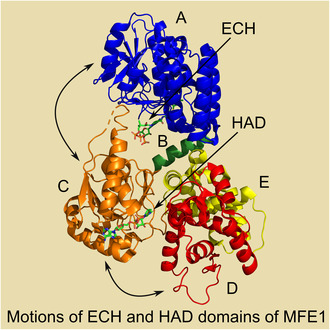 Figure 1
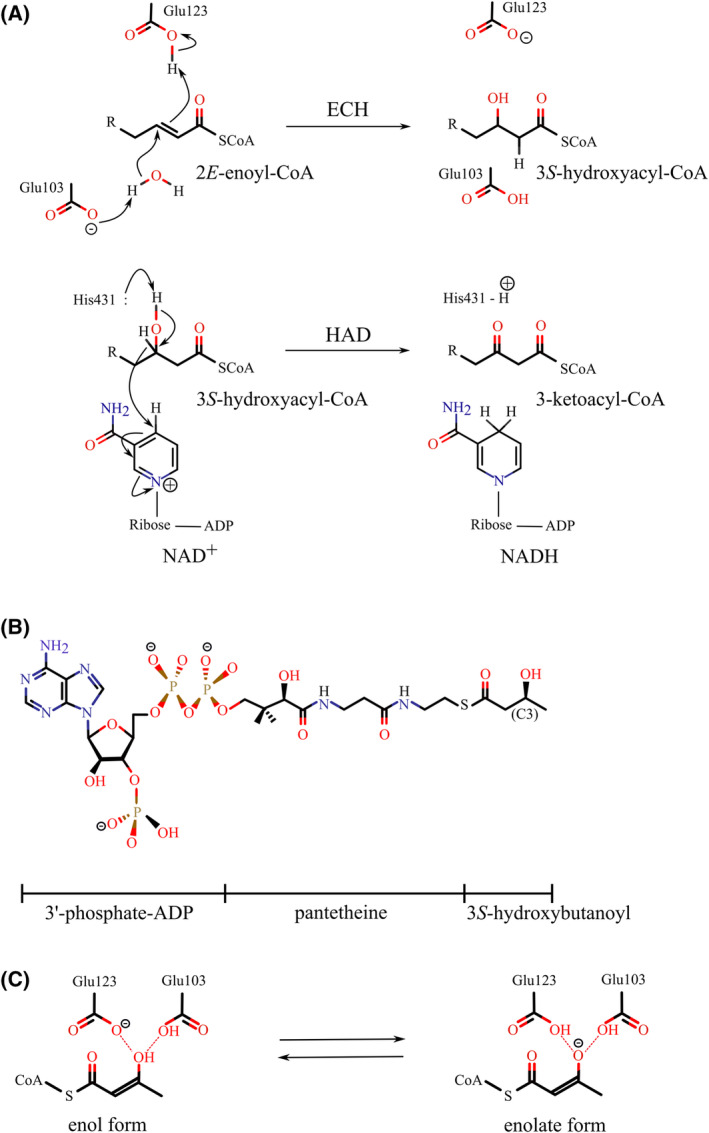 Figure 2
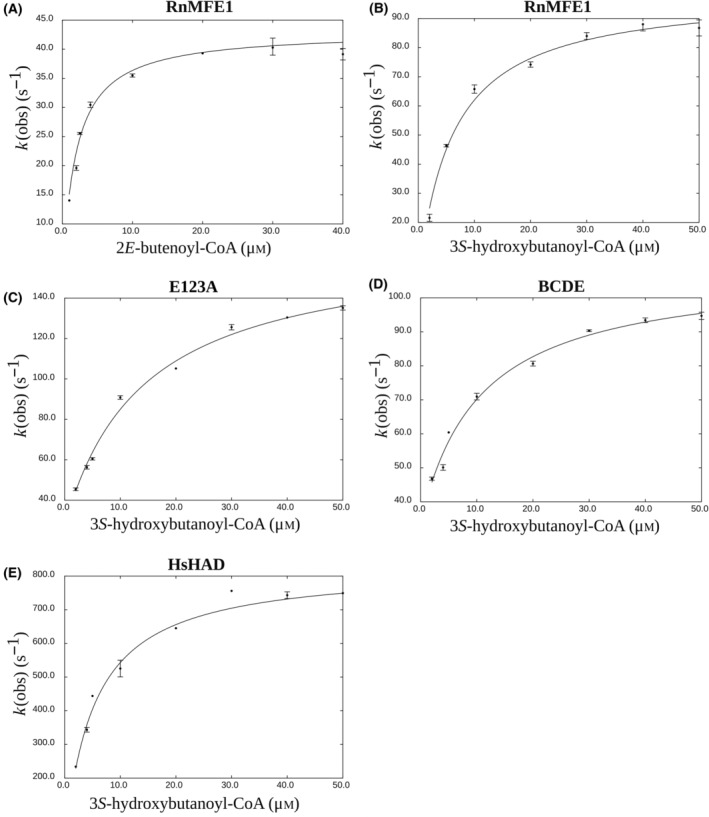 Figure 3
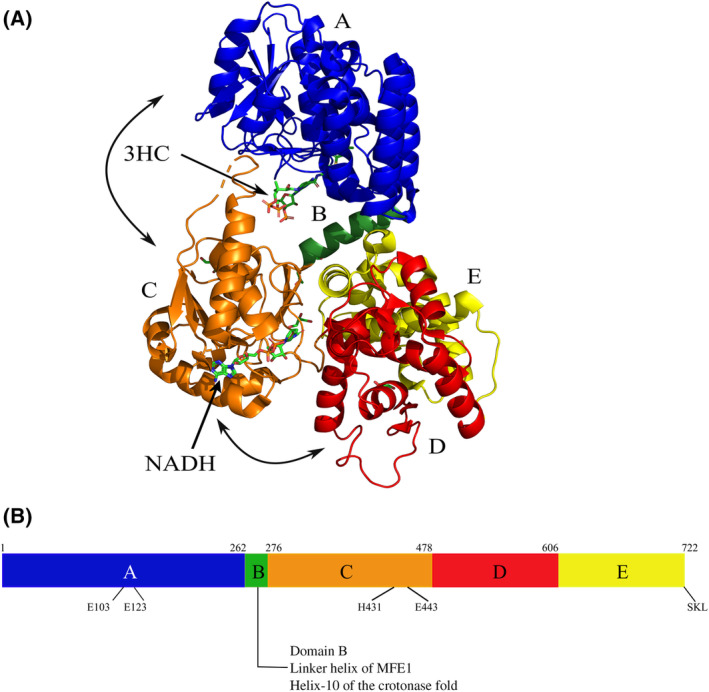 Figure 4
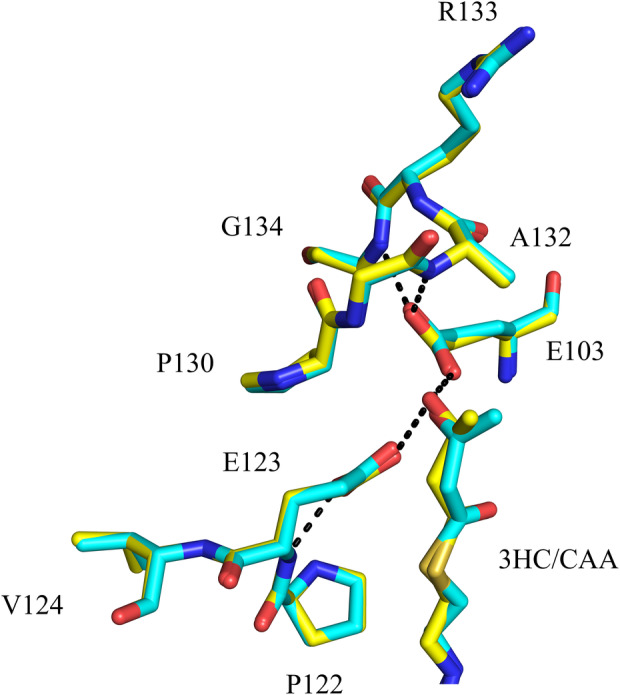 Figure 5
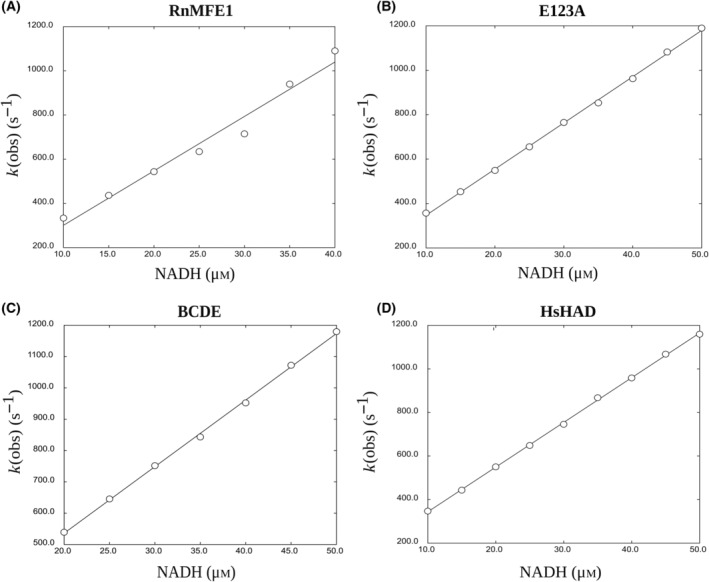 Figure 6
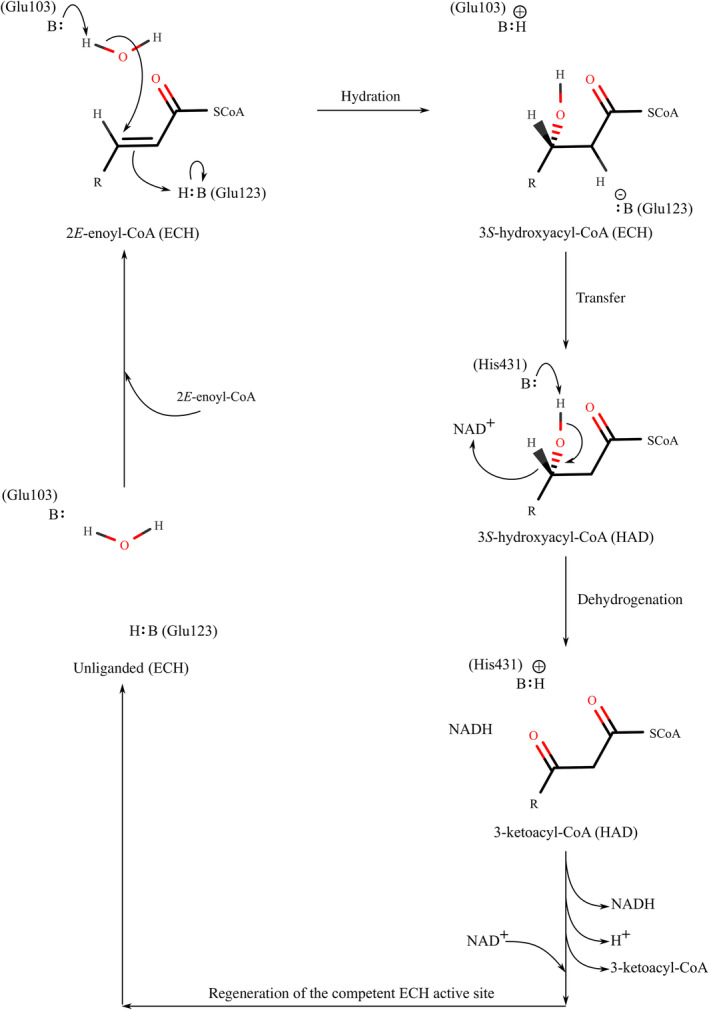 Figure 7
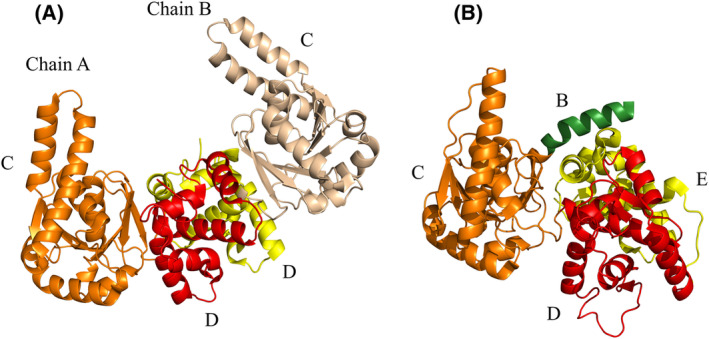 Figure 8
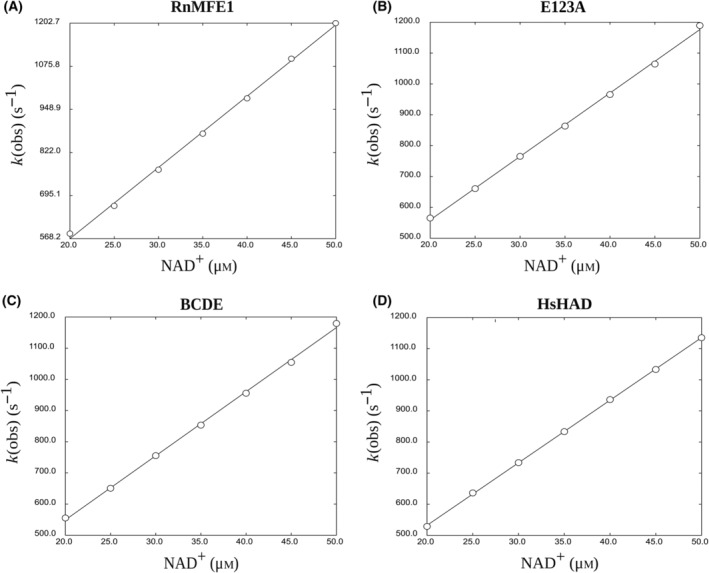 Figure 9
Peer Reviews
No public reviews on file for this paper yet. If you reviewed it on a platform where reviews are public (OpenReview, ICLR, NeurIPS, ICML), you can paste yours below so the community can read it here.
Videos
No videos yet. Explain this paper in a talk, walkthrough, or lecture? Add one.
Taxonomy
TopicsEnzyme Structure and Function · Metabolism and Genetic Disorders · Endoplasmic Reticulum Stress and Disease