Determining the Optimal Position of Surface Electrodes for Diaphragm Electromyography: A Cross-Sectional Study
Mayura P Deshmukh, Gaurang Baxi, Om C Wadhokar, Tushar J Palekar, Siddhi Pokle

TL;DR
This study identifies the best electrode placement for measuring diaphragm muscle activity using surface electromyography.
Contribution
The study empirically determines the optimal electrode positions for maximum signal amplitude and shortest duration in diaphragm EMG.
Findings
Electrodes placed 5 cm superior to the xiphoid process and 16 cm away on the sixth intercostal space provided maximum amplitude and shortest duration.
The position on the sixth intercostal space had a mean amplitude of 232.35 and duration of 7.316 milliseconds.
This placement outperformed positions on the seventh and eighth intercostal spaces in signal quality.
Abstract
Background: Placing electrodes on different aspects of the chest determines the motor firing from the diaphragm. The electrode placement close to the extent of the muscle gave promising readings as compared to the ones that were placed away. The position with the maximum amplitude and least duration was chosen. Positions of the electrodes were decided as per the extent of the muscle. The aim is to determine the appropriate position of surface electrodes for surface diaphragm electromyography (EMG). Material and methodology: Thirty healthy individuals of age ranging from 21 to 45 years were included in the study. Participants were made to lie down in a supine position and different positions like G1 (recording electrode) 5 cm superior to the tip of the xiphoid process and G2 (reference) 16 cm along the costal margin from G1, G1 over the xiphoid tip and G2 at the seventh intercostal…
Genes, proteins, chemicals, diseases, species, mutations and cell lines named across the full text — each resolved to its canonical identifier and authoritative record.
Click any figure to enlarge with its caption.
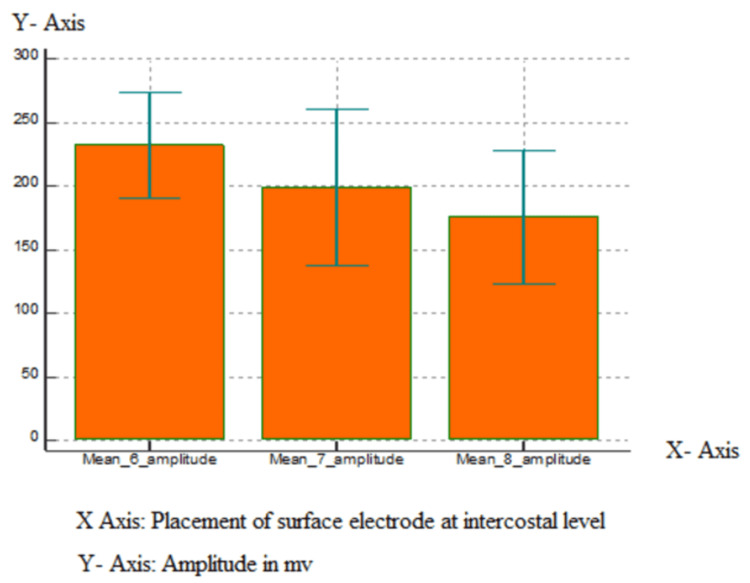 Figure 1
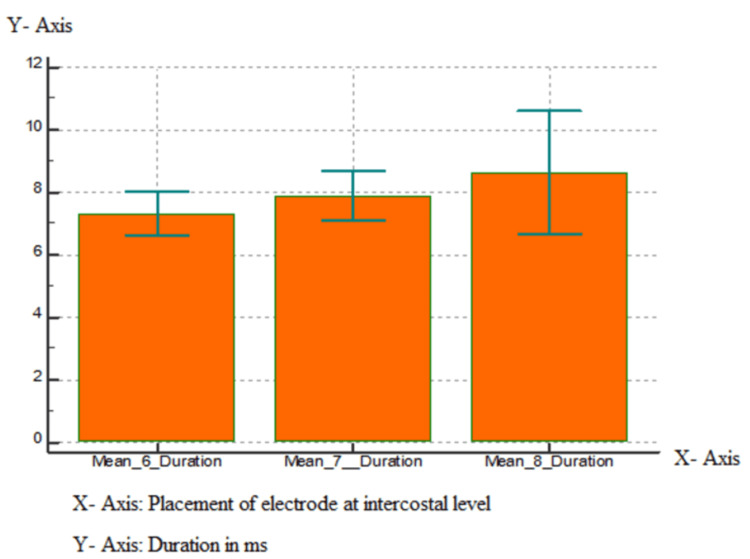 Figure 2
Peer Reviews
No public reviews on file for this paper yet. If you reviewed it on a platform where reviews are public (OpenReview, ICLR, NeurIPS, ICML), you can paste yours below so the community can read it here.
Videos
No videos yet. Explain this paper in a talk, walkthrough, or lecture? Add one.
Taxonomy
TopicsMuscle activation and electromyography studies · Phonocardiography and Auscultation Techniques · Infant Health and Development