Extreme Phenotype Sampling and Next Generation Sequencing to Identify Genetic Variants Associated with Tacrolimus in African American Kidney Transplant Recipients
Moataz Mohamed, Bin Guo, Baolin Wu, David Schladt, Amutha Muthusamy, Weihua Guan, Juan Abrahante, Guillaume Onyeaghala, Abdelrahman Saqr, Nathan Pankratz, Gaurav Agarwal, Roslyn Mannon, Arthur Matas, William Oetting, Rory Remmel, Ajay Israni, Pamala Jacobson, Casey Dorr

TL;DR
This study explores genetic factors affecting tacrolimus levels in African American kidney transplant recipients to improve treatment outcomes.
Contribution
The study uses extreme phenotype sampling and sequencing to identify low-frequency genetic variants influencing tacrolimus pharmacokinetics.
Findings
1,406 variants were suggestively associated with tacrolimus trough levels, but none were significant after correction.
High and low tacrolimus trough groups showed significant differences in dose and concentration despite similar genetic backgrounds.
The study highlights the need to explore additional factors like drug-drug-gene interactions and the pharmacomicrobiome.
Abstract
African American (AA) kidney transplant recipients (KTRs) have poor outcomes, which may in-part be due to tacrolimus (TAC) sub-optimal immunosuppression. We previously determined the common genetic regulators of TAC pharmacokinetics in AAs which were CYP3A5 *3, *6, and *7. To identify low-frequency variants that impact TAC pharmacokinetics, we used extreme phenotype sampling and compared individuals with extreme high (n=58) and low (n=60) TAC troughs (N=515 AA KTRs). Targeted next generation sequencing was conducted in these two groups. Median TAC troughs in the high group were 7.7 ng/ml compared with 6.3 ng/ml in the low group, despite lower daily doses of 5 versus 12mg, respectively. Of 34,542 identified variants across 99 genes, 1,406 variants were suggestively associated with TAC troughs in univariate models (p-value <0.05), however none were significant after multiple testing…
Genes, proteins, chemicals, diseases, species, mutations and cell lines named across the full text — each resolved to its canonical identifier and authoritative record.
Click any figure to enlarge with its caption.
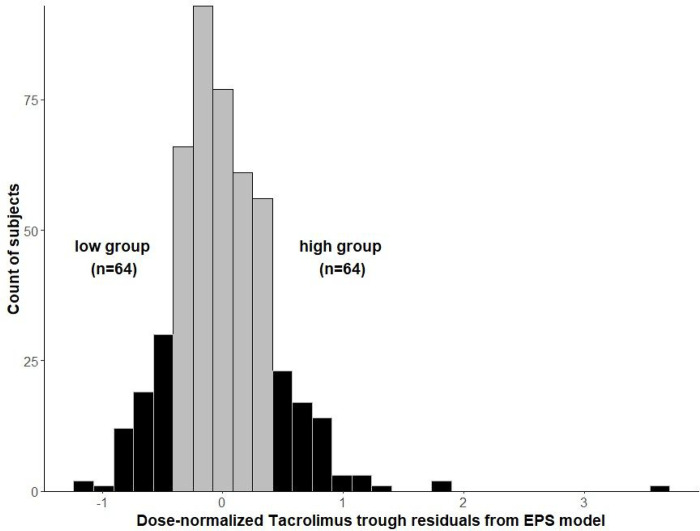 Figure 1
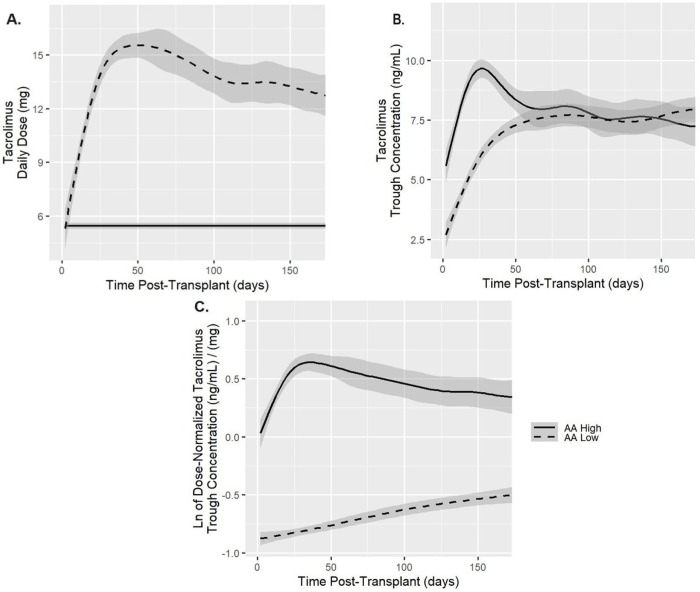 Figure 2
Peer Reviews
No public reviews on file for this paper yet. If you reviewed it on a platform where reviews are public (OpenReview, ICLR, NeurIPS, ICML), you can paste yours below so the community can read it here.
Videos
No videos yet. Explain this paper in a talk, walkthrough, or lecture? Add one.
Taxonomy
TopicsRenal Transplantation Outcomes and Treatments · Pharmacological Effects and Toxicity Studies · HIV/AIDS drug development and treatment