Enhanced Methanol Synthesis from CO2 Hydrogenation Achieved by Tuning the Cu–ZnO Interaction in ZnO/Cu2O Nanocube Catalysts Supported on ZrO2 and SiO2
David Kordus, Simon Widrinna, Janis Timoshenko, Mauricio Lopez Luna, Clara Rettenmaier, See Wee Chee, Eduardo Ortega, Osman Karslioglu, Stefanie Kühl, Beatriz Roldan Cuenya

TL;DR
Researchers improved methanol production from CO2 by optimizing the interaction between copper and zinc oxide in a catalyst.
Contribution
They showed that a stable ZnO shell on Cu2O nanocubes enhances methanol synthesis and prevents catalyst deactivation.
Findings
High Zn loadings with stable ZnO shells increase methanol production compared to Zn-free particles.
Low Zn loadings result in metallic Zn species and no significant catalytic improvement.
ZnO overlayer thickness determines catalyst stability and performance during CO2 hydrogenation.
Abstract
The nature of the Cu–Zn interaction and especially the role of Zn in Cu/ZnO catalysts used for methanol synthesis from CO2 hydrogenation are still debated. Migration of Zn onto the Cu surface during reaction results in a Cu–ZnO interface, which is crucial for the catalytic activity. However, whether a Cu–Zn alloy or a Cu–ZnO structure is formed and the transformation of this interface under working conditions demand further investigation. Here, ZnO/Cu2O core–shell cubic nanoparticles with various ZnO shell thicknesses, supported on SiO2 or ZrO2 were prepared to create an intimate contact between Cu and ZnO. The evolution of the catalyst’s structure and composition during and after the CO2 hydrogenation reaction were investigated by means of operando spectroscopy, diffraction, and ex situ microscopy methods. The Zn loading has a direct effect on the oxidation state of Zn, which, in turn,…
Genes, proteins, chemicals, diseases, species, mutations and cell lines named across the full text — each resolved to its canonical identifier and authoritative record.
Click any figure to enlarge with its caption.
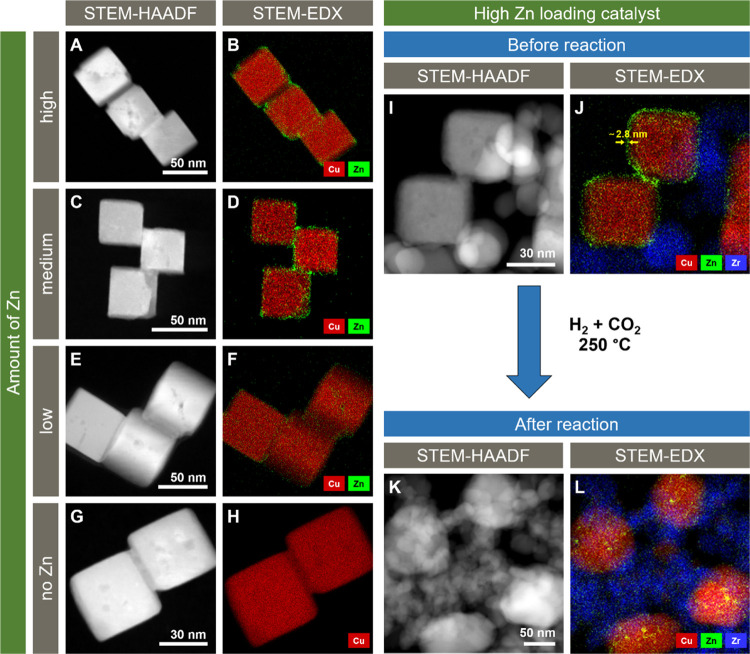 Figure 1
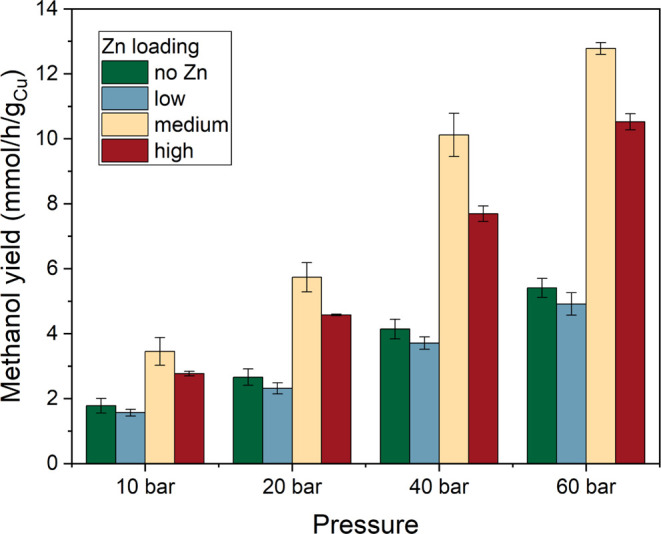 Figure 2
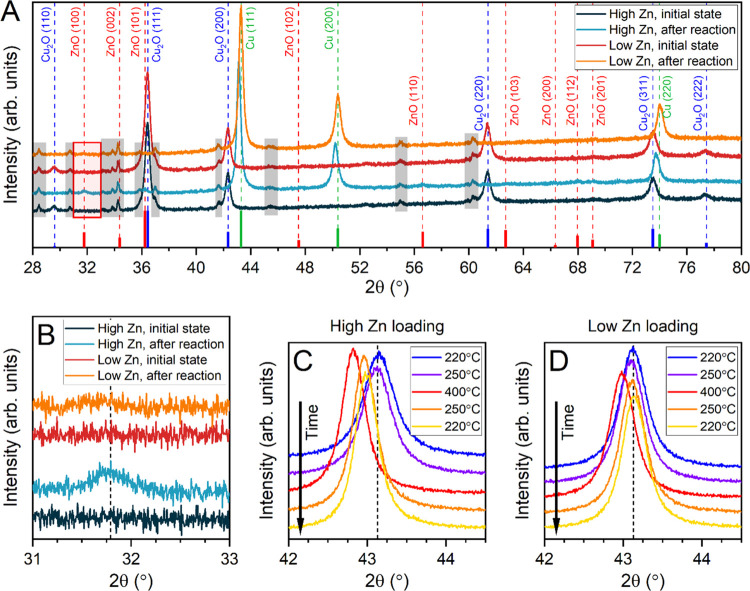 Figure 3
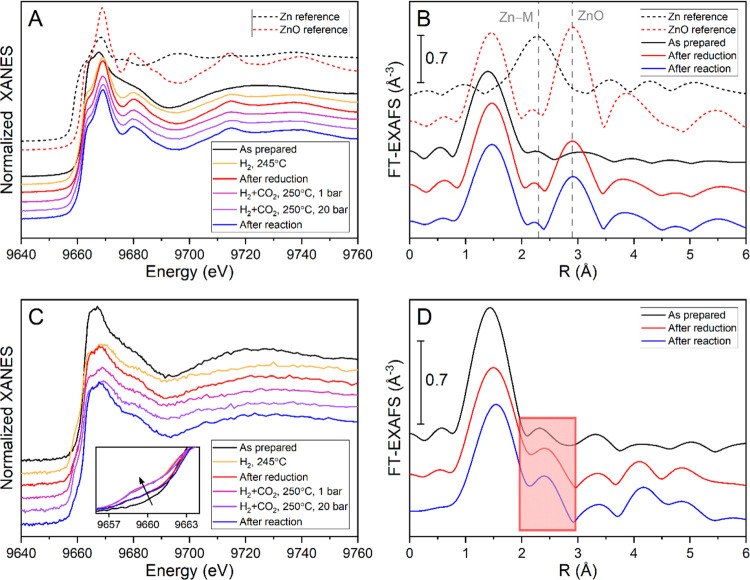 Figure 4
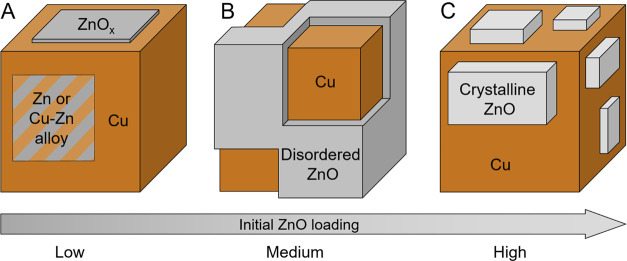 Figure 5
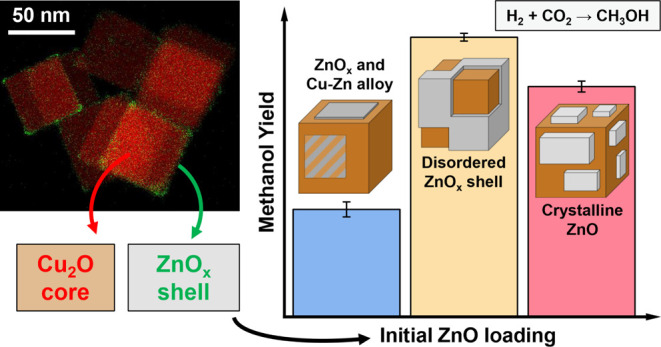 Figure 6
Peer Reviews
No public reviews on file for this paper yet. If you reviewed it on a platform where reviews are public (OpenReview, ICLR, NeurIPS, ICML), you can paste yours below so the community can read it here.
Videos
No videos yet. Explain this paper in a talk, walkthrough, or lecture? Add one.
Taxonomy
TopicsMaterial Properties and Applications