Identification of high-performing antibodies for Rab1A and Rab1B for use in Western Blot, immunoprecipitation and immunofluorescence
Vera Ruíz Moleón, Maryam Fotouhi, Riham Ayoubi, Sara González Bolívar, Kathleen Southern, Peter S. McPherson, Carl Laflamme

TL;DR
This study identifies reliable antibodies for Rab1A and Rab1B to improve research reproducibility in studying these proteins involved in disease.
Contribution
The study provides validated, high-performing antibodies for Rab1A and Rab1B using standardized protocols and knockout cell comparisons.
Findings
Seven high-quality Rab1A antibodies and five Rab1B antibodies were validated for Western Blot, immunoprecipitation, and immunofluorescence.
Antibody performance was assessed using knockout cell lines and isogenic controls to ensure specificity.
The results are part of a larger initiative to improve antibody reproducibility in human protein research.
Abstract
Rab1 is a highly conserved small GTPase that exists in humans as two isoforms: Rab1A and Rab1B, sharing 92% sequence identity. These proteins regulate vesicle trafficking between the endoplasmic reticulum (ER) and Golgi and within the Golgi stacks. Rab1A and Rab1B may be oncogenes, as they are frequently dysregulated in various human cancers. Moreover, they contribute to the progression of Parkinson’s disease. The availability of high-quality antibodies specific for Rab1A or Rab1B is essential to understand the distinct functions of these Rab1 proteins in both health and diseaseand to enhance the reproducibility of research involving these proteins. In this study, we characterized seven antibodies targeting Rab1A and five antibodies targeting Rab1B for Western Blot, immunoprecipitation, and immunofluorescence using a standardized experimental protocol based on comparing read-outs in…
Genes, proteins, chemicals, diseases, species, mutations and cell lines named across the full text — each resolved to its canonical identifier and authoritative record.
Click any figure to enlarge with its caption.
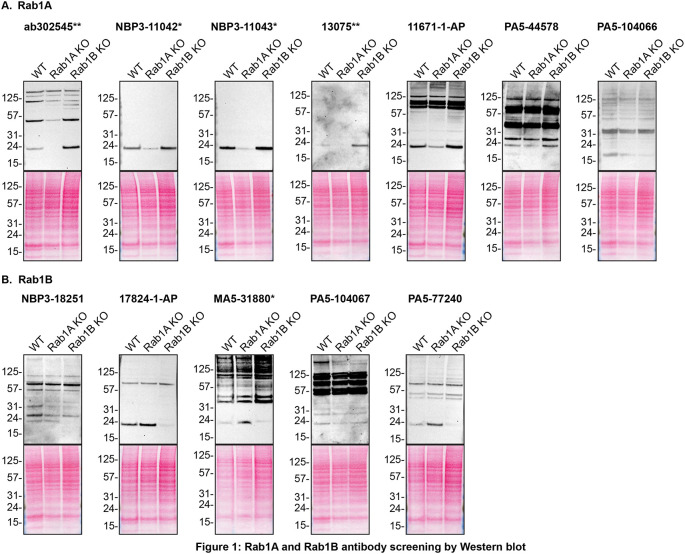 Figure 1
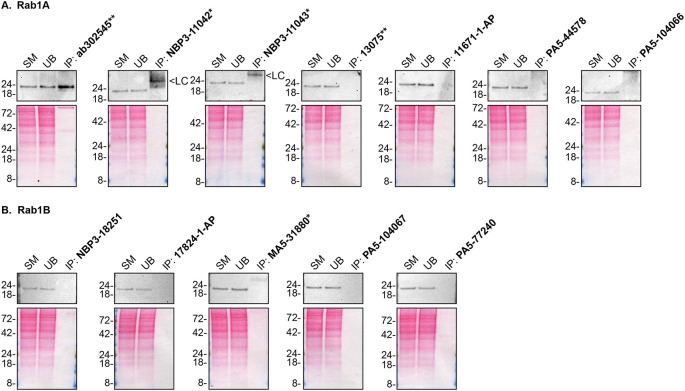 Figure 2
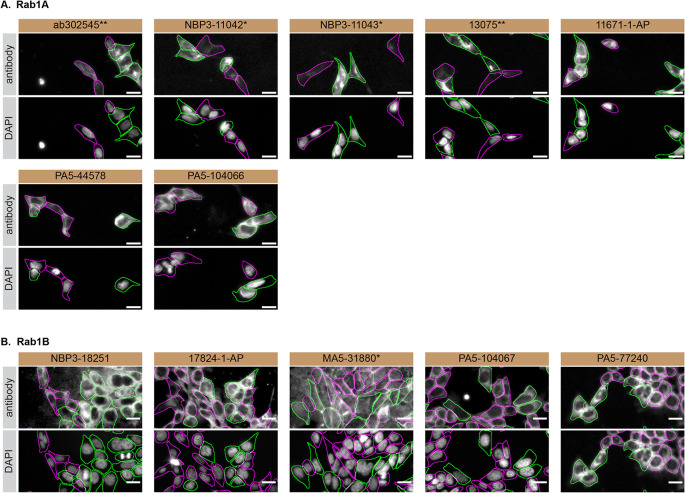 Figure 3
Peer Reviews
No public reviews on file for this paper yet. If you reviewed it on a platform where reviews are public (OpenReview, ICLR, NeurIPS, ICML), you can paste yours below so the community can read it here.
Videos
No videos yet. Explain this paper in a talk, walkthrough, or lecture? Add one.
Taxonomy
TopicsCellular transport and secretion · Endoplasmic Reticulum Stress and Disease · Lysosomal Storage Disorders Research