The ventromedial prefrontal cortex in response to threat omission is associated with subsequent explicit safety memory
Julian Wiemer, Franziska Leimeister, Matthias Gamer, Paul Pauli

TL;DR
The brain's ventromedial prefrontal cortex helps remember safety by processing when threats are absent, aiding long-term memory of safe situations.
Contribution
The study identifies specific brain regions involved in encoding safety memory through the absence of threat.
Findings
The ventromedial prefrontal cortex is linked to memory of safe associations when threats are omitted.
The left dorsolateral prefrontal cortex is active during general outcome processing.
Prefrontal and sensory brain regions work together to sustain safety memory.
Abstract
In order to memorize and discriminate threatening and safe stimuli, the processing of the actual absence of threat seems crucial. Here, we measured brain activity with fMRI in response to both threat conditioned stimuli and their outcomes by combining threat learning with a subsequent memory paradigm. Participants (N = 38) repeatedly saw a variety of faces, half of which (CS+) were associated with an aversive unconditioned stimulus (US) and half of which were not (CS-). When an association was later remembered, the hippocampus had been more active (than when forgotten). However, the ventromedial prefrontal cortex predicted subsequent memory specifically during safe associations (CS- and US omission responses) and the left dorsolateral prefrontal cortex during outcomes in general (US and US omissions). In exploratory analyses of the theoretically important US omission, we found extended…
Genes, proteins, chemicals, diseases, species, mutations and cell lines named across the full text — each resolved to its canonical identifier and authoritative record.
Click any figure to enlarge with its caption.
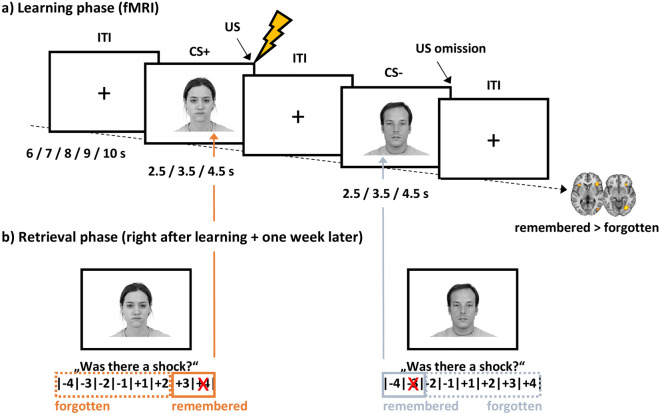 Figure 1
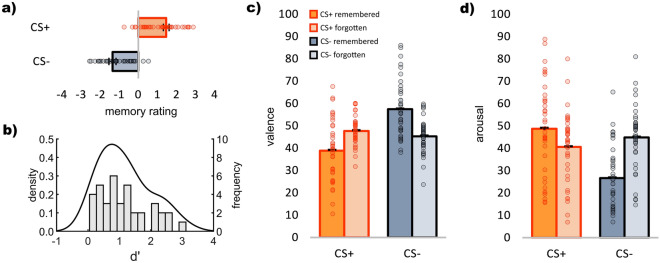 Figure 2
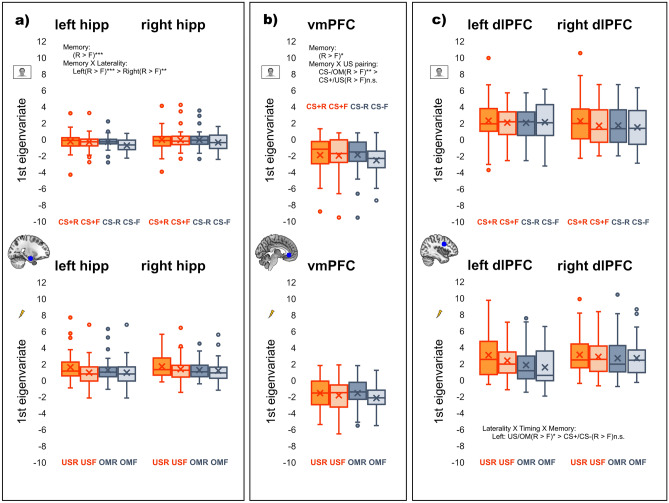 Figure 3
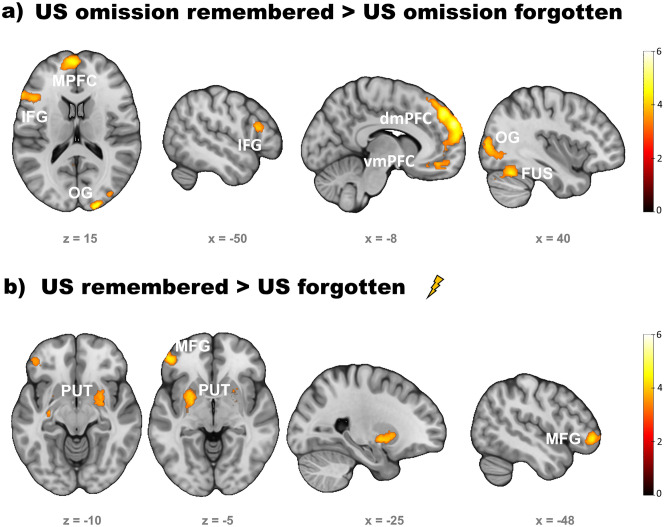 Figure 4
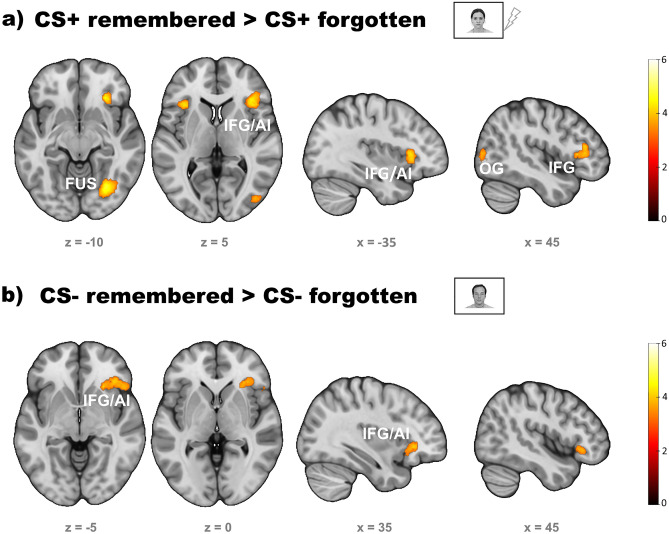 Figure 5
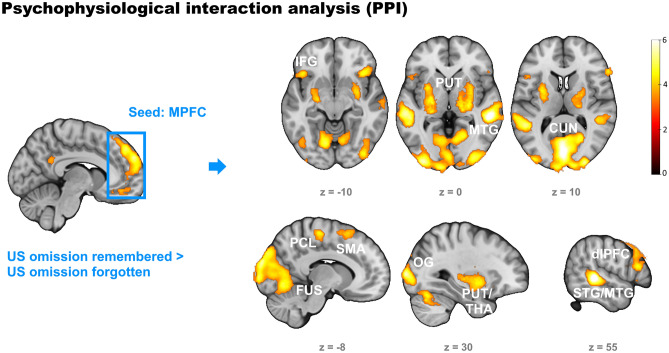 Figure 6
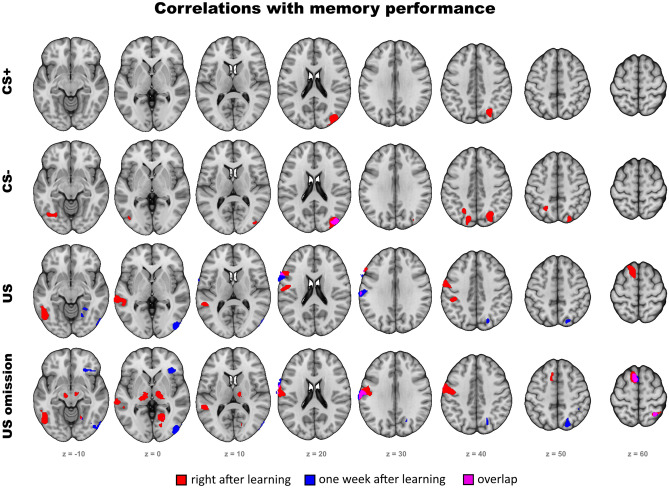 Figure 7
Peer Reviews
No public reviews on file for this paper yet. If you reviewed it on a platform where reviews are public (OpenReview, ICLR, NeurIPS, ICML), you can paste yours below so the community can read it here.
Videos
No videos yet. Explain this paper in a talk, walkthrough, or lecture? Add one.
Taxonomy
TopicsNeural and Behavioral Psychology Studies · Deception detection and forensic psychology · Traumatic Brain Injury Research