Ventriculosubgaleal shunt placement for hydrocephalus in osteogenesis imperfecta with novel compound heterozygous CRTAP variants
Shintaro Nakamura, Kyosuke Ibi, Hiroyuki Tanaka, Hirokazu Takami, Keita Okada, Nao Takasugi, Motohiro Kato, Naoto Takahashi, Takanobu Inoue

TL;DR
A novel treatment for hydrocephalus in a severe bone disorder is described, involving a shunt placement and new genetic findings.
Contribution
The paper introduces a novel treatment approach for hydrocephalus in osteogenesis imperfecta and reports new CRTAP gene variants.
Findings
Ventriculosubgaleal shunt placement was effective and safe for treating hydrocephalus in an infant with severe osteogenesis imperfecta.
Compound heterozygous CRTAP variants were identified as the genetic cause in the patient.
The described treatment strategy provides a potential solution for managing hydrocephalus in this rare condition.
Abstract
Osteogenesis imperfecta is characterized by frequent fractures, bone deformities, and other systemic symptoms. Severe osteogenesis imperfecta may progress to hydrocephalus; however, treatment strategies for this complication remain unclear. Here, we describe severe osteogenesis imperfecta in an infant with symptomatic hydrocephalus treated with ventriculosubgaleal shunt placement. Targeted next-generation sequencing revealed novel compound heterozygous CRTAP variants, i.e., NM_006371.5, c.241 G > T, p.(Glu81*) and NM_006371.5, c.923-2_932del. We suggest that ventriculosubgaleal shunt placement is an effective and safe treatment for hydrocephalus in patients with severe osteogenesis imperfecta.
Genes, proteins, chemicals, diseases, species, mutations and cell lines named across the full text — each resolved to its canonical identifier and authoritative record.
Click any figure to enlarge with its caption.
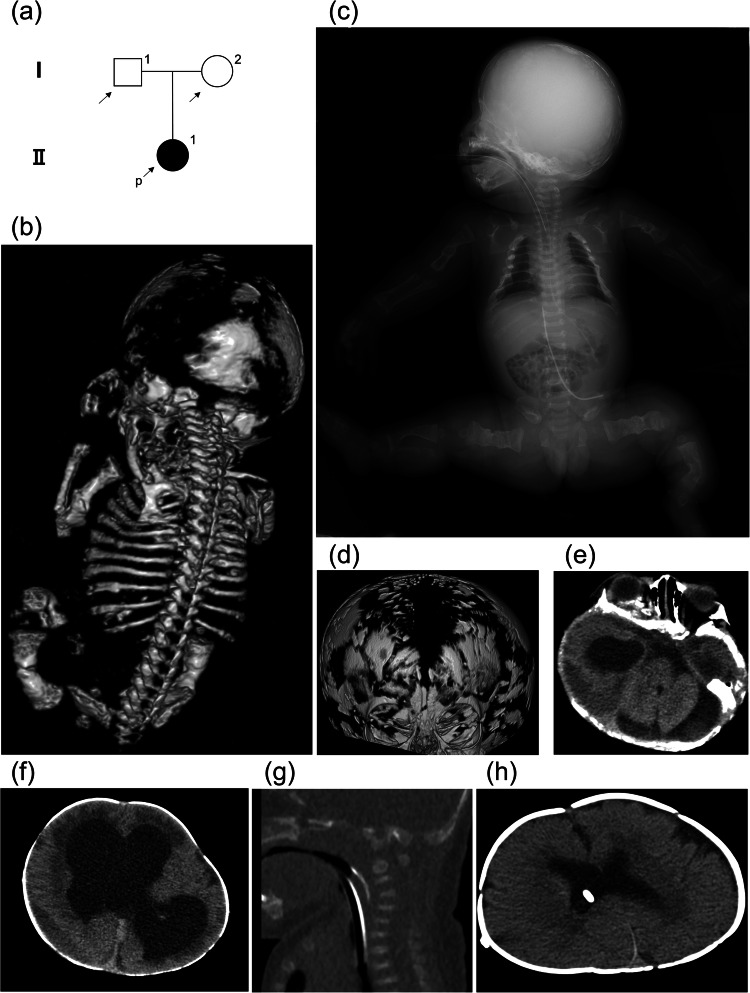 Figure 1
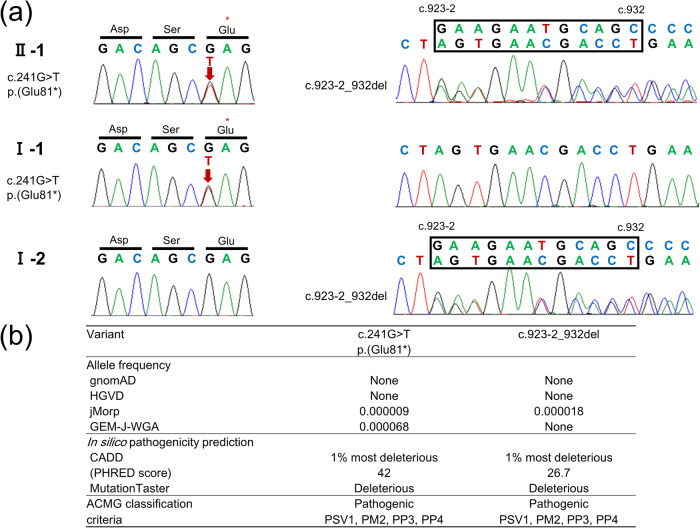 Figure 2
Peer Reviews
No public reviews on file for this paper yet. If you reviewed it on a platform where reviews are public (OpenReview, ICLR, NeurIPS, ICML), you can paste yours below so the community can read it here.
Videos
No videos yet. Explain this paper in a talk, walkthrough, or lecture? Add one.
Taxonomy
TopicsConnective tissue disorders research · Bone fractures and treatments · Aortic Disease and Treatment Approaches