Gallium Trichloride Fluid: Dimer Dissociation Mechanism, Local Structure, and Atomic Dynamics
Maxim Khomenko, Anton Sokolov, Andrey Tverjanovich, Maria Bokova, Mohammad Kassem, Takeshi Usuki, Eugene Bychkov

TL;DR
This paper studies the structure and behavior of gallium trichloride fluid to improve metal recycling processes.
Contribution
The study reveals the dimer dissociation mechanism and atomic dynamics in supercritical gallium trichloride using first-principles simulations.
Findings
Dimer dissociation involves intermediate corner-sharing CS-Ga2Cl6 structures.
GaCl3 monomers partially disproportionate at high temperatures and low pressures.
Supercritical gallium trichloride exhibits unusual atomic dynamics.
Abstract
Molten gallium trichloride emerges as a promising solvent for oxidative metal recycling. The use of supercritical fluid enhances the performance and kinetics of metal dissolution due to significantly lower viscosity in the reaction media. Additionally, the dual molecular nature of gallium trichloride, existing as edge-sharing ES-Ga2Cl6 dimers at low temperatures and high pressure, or flat trigonal GaCl3 monomers in the vicinity of the critical point and low pressures, creates the possibility to tailor the chemical geometry to a particular metallic species. Nevertheless, the mechanism of dimer dissociation, local structure, and atomic dynamics in supercritical gallium trichloride fluids are not known. Using first-principles molecular dynamics, validated by comparison with our high-energy X-ray diffraction results, we illustrate the elementary steps in dimer dissociation. These include…
Genes, proteins, chemicals, diseases, species, mutations and cell lines named across the full text — each resolved to its canonical identifier and authoritative record.
Click any figure to enlarge with its caption.
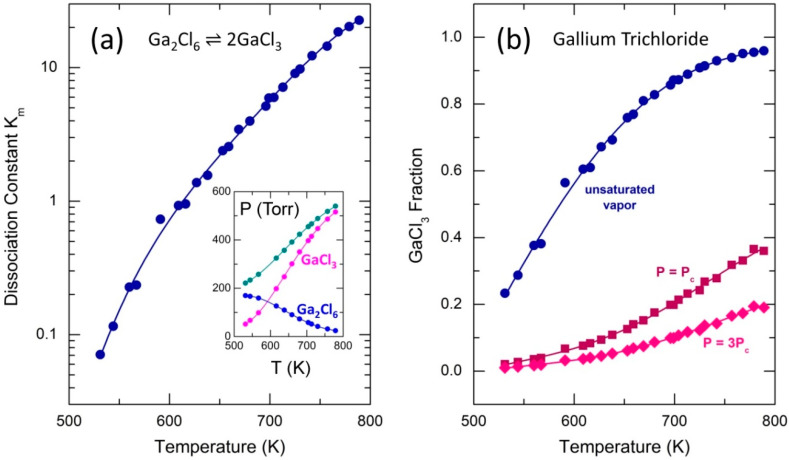 Figure 1
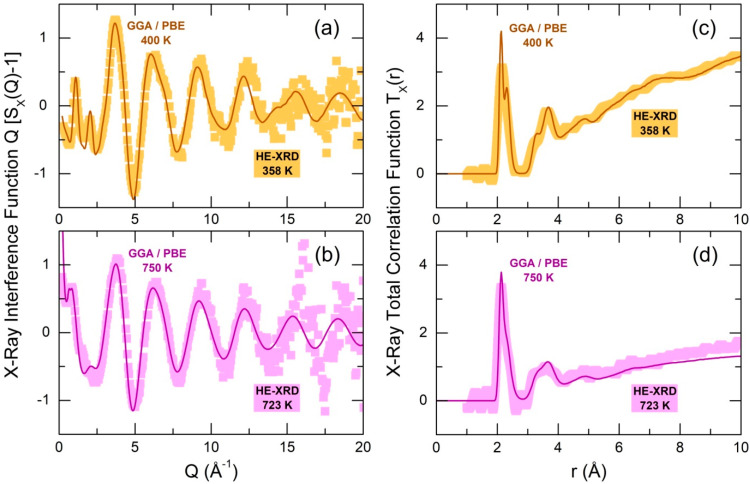 Figure 2
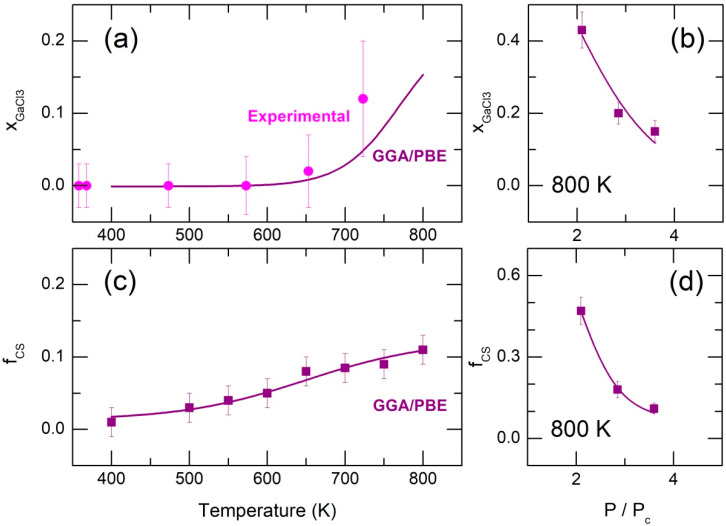 Figure 3
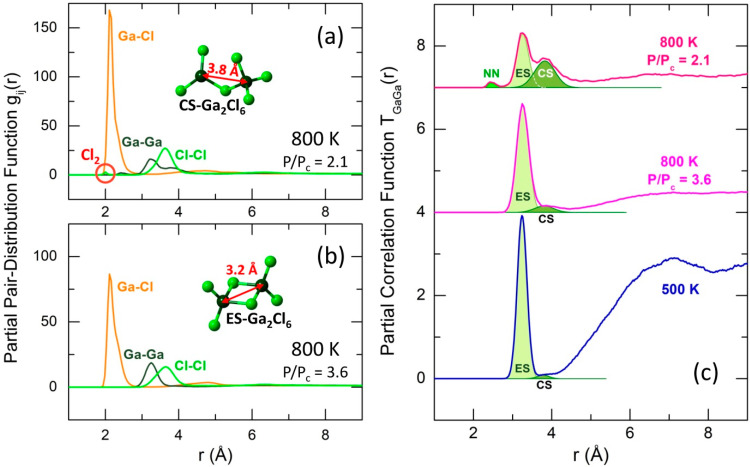 Figure 4
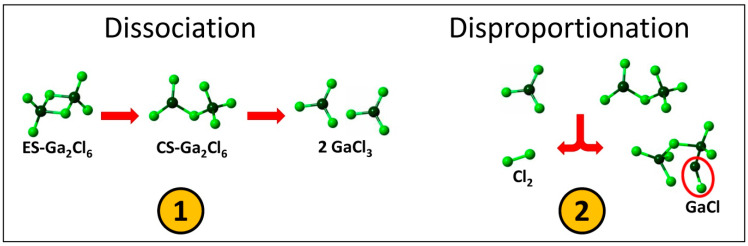 Figure 5
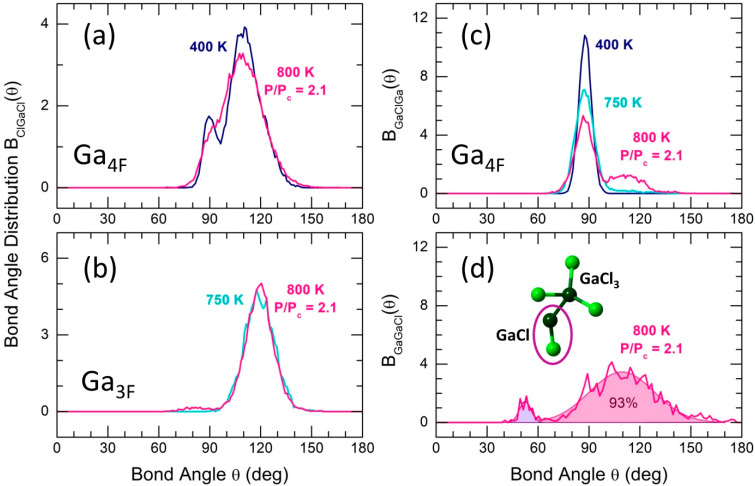 Figure 6
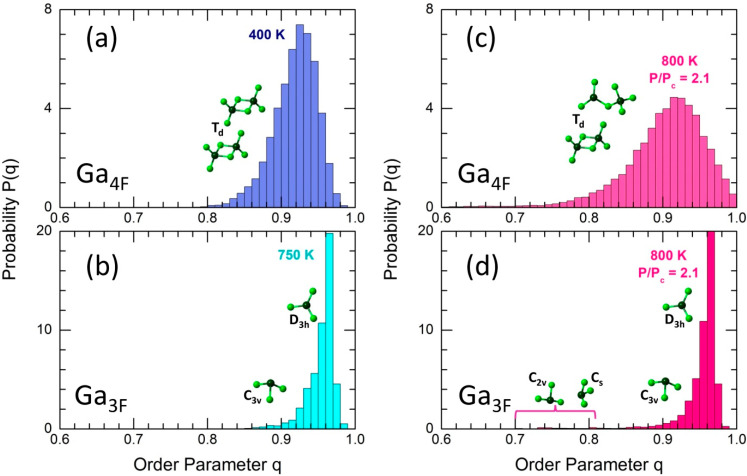 Figure 7
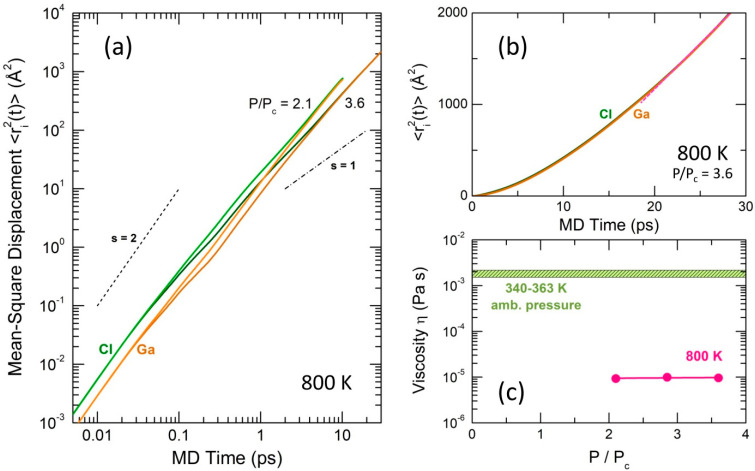 Figure 8
- —Région Hauts de France and the Ministère de l’Enseignement Supérieur et de la Recherche (CPER ECRIN)
- —European Fund for Regional Economic Development
- —Japan Synchrotron Radiation Research Institute
- —Ministry of Science and Higher Education within the state assignment of the NRC “Kurchatov Institute”
- —HPC computing resources at Lomonosov Moscow State University
- —Grand Equipement National de Calcul Intensif (GENCI)
- —Service COmmun du Système d’Information de l’Université
Peer Reviews
No public reviews on file for this paper yet. If you reviewed it on a platform where reviews are public (OpenReview, ICLR, NeurIPS, ICML), you can paste yours below so the community can read it here.
Videos
No videos yet. Explain this paper in a talk, walkthrough, or lecture? Add one.
Taxonomy
TopicsIonic liquids properties and applications · Advanced Chemical Physics Studies · Catalysis and Oxidation Reactions
1. Introduction
Molten gallium trichloride appears to be a promising oxidative solvent for the recycling of metals, including rare earth elements, platinum and transuranium group metals, and heavy pnictogens and chalcogens [1,2,3,4,5,6,7]. The use of supercritical fluid additionally yields a much lower viscosity in the reaction media, higher diffusion coefficients, and favorable kinetics. Supercritical solvents, particularly carbon dioxide fluid, have already been successfully used for the oxidative dissolution of copper and zinc in the microelectronic industry (see, for example, Ref. [7] and references therein). Supercritical CO_2_ possesses high surface wetting, extremely low viscosity, low surface tension, and a low dielectric constant, which are beneficial for metal recycling. The dual molecular form of gallium trichloride, existing as edge-sharing tetrahedral dimers ES-Ga_2_Cl_6_ or flat trigonal GaCl_3_ monomers, creates the possibility to adjust the chemical geometry to a particular metal species. This is achieved by choosing either a tetrahedral chlorinated agent [1,2] or a planar molecular shape with an easily accessible gallium counterpart, facilitating the creation of a metal–gallium bond [3]. The dimer dissociation, Ga_2_Cl_6_ ⇌ 2GaCl_3_, basically depends on temperature and pressure [8,9]. Unsaturated gallium trichloride vapor primarily transforms from its dimeric form at low temperatures to a monomeric gas above 700 K (see the inset in Figure 1a). However, the monomeric fraction decreases with increasing pressure and appears to be ≈ 0.20 at the critical temperature = 694 K and pressure = 6.11 MPa [10], Figure 1b. Further increasing the pressure ( ) leads to a monotonic decrease in . These trends are supported by Raman and diffraction studies of unsaturated vapors and experiments conducted under high-pressure conditions [11,12,13,14]. In addition, a small fraction of Ga_3_Cl_9_ trimers (2–3%) was found in a low-temperature vapor, disappearing above 600 K [15].
Clear thermodynamic results do not unveil the exact microscopic mechanism of the dimer dissociation on an atomic scale. We have used first-principles molecular dynamics (FPMD) above the critical point to identify the elementary steps of the dissociation reaction and associated structural changes. The quality of FPMD modeling was validated using high-energy X-ray diffraction results of normal gallium trichloride liquid and supercritical fluid, reported elsewhere [14].
2. Results and Discussion
2.1. Validation of the FPMD Modeling by High-Energy X-ray Diffraction
The FPMD modeling, employing the general gradient approximation and PBE exchange–correlation functional (GGA/PBE), used a simulation box of 800 atoms (200 Ga + 600 Cl). The box size was chosen to match the experimental number density. The simulations reveal good agreement with HE-XRD results below and above the critical point, Figure 2. In supercritical gallium trichloride fluid, a strong small-angle X-ray scattering (SAXS) is observed, attributed to mesoscopic voids and cavities. Despite the insufficient size of the FPMD box, a distinct SAXS signature of mesoscopic voids is clearly reproduced in -space, emphasizing the high quality of the first-principles simulations.
The real-space functions mimic asymmetric Ga-Cl nearest-neighbors (NNs), which are related to terminal Ga-Cl( ) and bridging Ga-Cl( ) contributions in ES-Ga_2_Cl_6_ dimers at 2.12 and 2.31 Å, respectively. These two populations are rather well resolved in normal liquids but overlap in supercritical fluids. The multimodal second neighbor features include Ga-Ga, multiple Cl( )-Cl( ), Cl( )-Cl( ), and Cl( )-Cl( ) correlations between 3 and 4 Å, as well as more distant Ga-Cl( ) second neighbor contacts at 5 Å. A broad unresolved feature, roughly centered at approximately 7 Å, represents a center–center correlation distance between Ga_2_Cl_6_ dimers. This separation is easily distinguished in normal liquids but becomes flat and essentially invisible in supercritical fluids.
2.2. Dimer Dissociation in Supercritical Fluid
Our HE-XRD measurements were carried out under high-pressure conditions due to the small volume of the sealed silica tube containing gallium trichloride. At the critical temperature = 694 K and above, the estimated pressure was significantly higher than the critical pressure , with ≳ 3.6. The experimental and FPMD-derived monomeric fractions ( ≈ 0.12 at 723 K and = 0.15 at 800 K, Figure 3a) are reasonably consistent with and the thermodynamic approach, as shown in Figure 1b.
Further increase in at 800 K was achieved by enlarging the simulation box, thereby decreasing the pressure to = 2.85 and 2.1. The reduced pressure raised the monomeric fraction by nearly a factor of three, reaching = 0.43 at = 2.1 (Figure 3b). In addition, an approximate extrapolation to = 0 yields ≈ 1.0. These results appear consistent with the thermodynamic model, which predicts = 0.96 for unsaturated vapor at 800 K.
Moreover, the partial pair-distribution functions at 800 K and reduced pressure ( = 2.1) show particularly interesting results (Figure 4a). The Ga-Ga partial function at higher pressure and lower temperatures typically reveals a single predominant peak at 3.2 Å, corresponding to short Ga-Ga second neighbor distances in ES-dimers, see the insert in Figure 4b. This single peak transforms into a bimodal feature with decreasing . The high- counterpart at 3.8 Å indicates a significant fraction of corner-sharing CS-Ga_2_Cl_6_ dimers (the insert in Figure 4a), which are formed after breaking one Ga-Cl( ) bond in ES-dimers. The CS-entities seem to be intermediate varieties in the ES-dimer dissociation process.
However, a close inspection of partials over the available - and -ranges shows that a small population of CS-Ga_2_Cl_6_ also exists at lower temperatures and higher pressures. The fitting (Figure 4c) allows for a quantitative analysis of the CS-population. The fitting results, shown in Figure 3c, reveal a weak temperature dependence of the CS-population at high and a sudden rise in at reduced pressure (Figure 3d). The observed similarity between and suggests that the transformation ES-Ga_2_Cl_6_ → CS-Ga_2_Cl_6_ is a first elementary step in the dimer dissociation process.
As a result of dissociation, the shape of the asymmetric Ga-Cl NN peak changes with increasing temperature and reducing pressure. The fraction of Ga-Cl( ) pairs at 2.12 Å increases, while the population of Ga-Cl( ) at 2.31 Å decreases.
We should also note the emergence of a small but distinct fraction of Ga-Ga (2.45 Å) and Cl-Cl homopolar bonds (2.01 Å) at 800 K and = 2.1, Figure 4a. The Cl-Cl bonds are associated with molecular chlorine formed in the supercritical fluid resulting from the monomer disproportionation: GaCl_3_ ⇌ GaCl + Cl_2_. Gallium monochloride is typically observed at high temperatures, becoming predominant above 1100 K [17,18]. In our case, GaCl remains elusive, either forming intermediate species via homopolar Ga-Ga and heteropolar Ga-Cl bonding or persisting as diatomic molecules (with a residual 50% occurrence in the latter two cases). Schematics of the dissociation and disproportionation reactions are summarized in Figure 5.
2.3. Local Geometry of Tetrahedral and Trigonal Units
The local geometry of tetrahedral dimers depends on temperature and pressure. Figure 6a reveals the contrasting Cl-Ga-Cl bond angle distributions for normal gallium trichloride liquid at 400 K and supercritical fluid at 800 K with reduced . The function at 400 K exhibits a well-resolved, slightly asymmetric bimodal distribution centered at 89° and 111°. The tetrahedral angular contribution is related to Cl-Ga-Cl triplets involving terminal Cl( ) species, with a low- minority corresponding to a nearly square ring of the ES-dimer. The Ga-Cl( )-Ga counterpart of the ring, , is centered at 88° (Figure 6c), reflecting its folded non-planar nature. In contrast, the bimodal distribution for remaining tetrahedra in the supercritical fluid at reduced pressure is poorly resolved, with a significantly diminished low- angular part of the central Ga-Cl( )-Ga-Cl( ) ring due to a partial ES-CS conversion. Additionally, the tetrahedra become less distorted, with the major tetrahedral contribution centered at 109°. The ES-CS conversion becomes clearly illustrated by the function at 800 K and reduced pressure (Figure 6c). A previously symmetric transforms into a bimodal angular distribution. The emerging high- angular population centered at 112° is associated with CS-connectivity in partially transformed Ga_2_Cl_6_ dimers.
The trigonal GaCl_3_ units are primarily flat and possess approximate symmetry. The broadened function is centered at 119° and essentially remains intact as a function of temperature and pressure (Figure 6b). Nevertheless, a weak population (≈4%) of distorted trigonal units appears at 800 K and reduced pressure, revealing a low- component centered at 87 ± 4°.
The geometry of GaCl diatomic entities, interacting with trigonal monomers or CS-dimers through the formation of Ga-Ga homopolar bonds (see Figure 5 and the insert in Figure 6d), is characterized by Ga-Ga-Cl bond angles. The distribution is essentially centered at 109° (Figure 6d), indicating a tetrahedral geometry of the arising transient units. Additionally, there is a small population of highly distorted species with peaked at 52°.
Complementary information on local geometry yields the orientation order parameter [19,20]:
where is the Cl-Ga-Cl angle of a tetrahedral ( = 4) or trigonal ( = 3) unit. The average value of changes between 0 for an ideal gas and = 1 for a regular tetrahedral network.
The GaCl_4_ tetrahedra are strongly distorted in ES-Ga_2_Cl_6_ dimers, revealing two different Ga-Cl( ) and Ga-Cl( ) bond lengths and a bimodal angular distribution. As a consequence, the order parameter exhibits an asymmetric probability function, centered at = 0.93 (Figure 7a). Nevertheless, a non-tetrahedral geometry at < 0.8 [21,22] is basically missing, as well as regular tetrahedral units with ≈ 1. The tetrahedral function in supercritical fluid at reduced pressure becomes strongly broadened; however, the maximum is slightly shifted to a higher , and the high- tail extends up to = 1. On the other hand, a larger fraction of regular tetrahedra is compensated by a higher population of strongly distorted entities and even non-tetrahedral species (4.6%).
The shape of the trigonal function, peaked at = 0.97, remains essentially intact in supercritical fluids (Figure 7b,d), indicating the relative stability of the trigonal geometry. GaCl_3_ monomers of symmetry are consistent with this maximum. Symmetric (umbrella-type) or asymmetric bending temporarily alters the Cl-Ga-Cl bond angles, reducing the symmetry to or lower, mostly explaining the shape. However, a small fraction (2.3%) of highly distorted pyramids with ranging between 0.70 ≤ ≤ 0.82 exists at 800 K and reduced pressure. Considering the small population of Cl-Ga-Cl angles at about 90° (Figure 6b), these GaCl_3_ units could have symmetry, including T-shaped planar entities ( , = ¾), as shown in the insert of Figure 7d.
2.4. Dynamics in Supercritical Fluid
The much lower viscosity of supercritical fluids compared to normal liquids significantly accelerates the rate of chemical processes involving supercritical solvent [7,23], emphasizing the importance of understanding atomic dynamics in supercritical gallium trichloride for practical applications. The mean-square displacements (MSD) of Ga and Cl, , were utilized for diffusion calculations.
where and are the positions of particle at time and the initial time, respectively; represents the total number of particles in the simulation box, and the angle brackets denote the average over initial times.
Typical gallium and chlorine MSD in supercritical fluid at 800 K and different pressure ( = 2.1 and 3.6) are shown in Figure 8a on a log–log scale. They differ significantly from the MSDs for normal liquid (Figure S1 in the Supporting Information), which exhibit two distinct regimes: (i) below 30 fs and (ii) above 1 ps. The ballistic regime (i) is characterized by a power-law dependence, , with the power-law exponent = 2 [24]. The diffusion regime (ii) reveals a linear dependence of as a function of time , that is, = 1. These two regimes are schematically shown in Figure 8a. In contrast, the supercritical fluid does not exhibit the diffusion regime. Instead, the slope decreases slightly above 1 ps but remains considerably higher than = 1.
The gallium and chlorine diffusion coefficients were derived from and using the Einstein relation.
While the supercritical fluid does not exhibit the diffusion regime, the function is not linear on a linear scale and displays an upward curvature. Therefore, the derived diffusion coefficients are only approximate.
The effective diffusion coefficient was defined as and used for viscosity calculation applying the Stokes–Einstein relation.
where is the effective hydrodynamic radius, and and have their usual meanings. For the viscosity calculations, a constant value of 3.65 Å, corresponding to the intramolecular distance Cl( )−Cl( ), was chosen as . The choice yielded good agreement with experimental viscosity data [25] for normal liquid gallium trichloride (Figure S2).
The derived viscosity for supercritical GaCl_3_ at 800 K and different pressure, shown in Figure 8c, slightly decreases as a function of pressure between 2.1 ≤ ≤ 3.6 and appears to be comparable with the viscosities of supercritical molecular solvents and gases [26,27,28,29]. As expected, the supercritical = 10^−5^ Pa s is approximately 200 times lower than the viscosity of normal gallium trichloride liquid, also plotted in Figure 8c.
3. Simulation Details
First-principles molecular dynamics (FPMD), implemented within the CP2K package [30], was used to investigate the local structure and atomic dynamics in molten and supercritical GaCl_3_. The generalized gradient approximation (GGA) and the PBE [31] exchange–correlation functional, along with Grimme dispersion corrections D3BJ [32], were utilized. The initial atomic configuration was generated using Empirical Potential Structure Refinement (EPSR) program [33,34]. The Lennard–Jones potential well depth ε = 1.0 kJ mol^−1^ and length σ = 2.5 Å were initially set for both gallium and chlorine. Following the preliminary equilibration, the empirical potential was introduced to start the refinement against the X-ray data until achieving internal energy stabilization. The cubic simulation box, containing 800 atoms (200 Ga and 600 Cl), was sized to match the experimental density. Subsequent optimization was conducted using density functional theory, employing the molecularly optimized correlation-consistent polarized triple-zeta valence basis set and norm-conserving relativistic Goedecker–Teter–Hutter-type pseudopotentials [35]. FPMD simulations were carried out using a canonical NVT ensemble with a Nosé–Hoover [36,37] thermostat. The simulation boxes underwent heating and cooling cycles from 300 K to 800 K using 50 or 100 K steps for duration of 30–45 ps each. The connectivity, ring statistics, and bond angle distributions were analyzed using the R. I. N. G. S. package [38] and a modified connectivity program [39].
4. Conclusions
First-principles simulations of supercritical gallium trichloride fluid at different pressures reveal the elementary steps of edge-sharing ES-Ga_2_Cl_6_ dimer dissociation. First, the ES-dimers convert into intermediate corner-sharing CS-Ga_2_Cl_6_ entities before further splitting into GaCl_3_ monomers. A small fraction of monomers disproportionates into molecular chlorine and gallium monochloride: GaCl_3_ → GaCl + Cl_2_. Gallium monochloride exhibits elusive behavior, forming transient species with GaCl_3_ monomers or CS-dimers via Ga-Ga homopolar or Ga-Cl heteropolar bonds (approximately 50% of the total population). The remaining 50% of the population exists as diatomic molecules.
Local tetrahedral geometry in dimers and trigonal geometry in monomers behave differently as a function of temperature and pressure. In normal liquids, the GaCl_4_ tetrahedra are strongly distorted, showing different Ga-Cl( ) (2.12 Å) and Ga-Cl( ) (2.31 Å) interatomic distances and a bimodal bond angle distribution. Two competitive processes appear in supercritical fluids: the ES-CS conversion yields more regular tetrahedra, while temperature-induced enhanced dynamical distortion partly leads to a small fraction of non-tetrahedral geometry. Flat trigonal monomers of approximate symmetry remain essentially intact, with symmetric and asymmetric bending vibrations temporarily decreasing the local symmetry to . A very small fraction (2.3%) of GaCl_3_ units is strongly distorted, possessing and/or symmetry.
In contrast to normal liquids, the atomic dynamics in supercritical fluids do not exhibit the diffusion regime, i.e., the mean-square displacements , where = 1. Instead, the power-low exponent appears to be intermediate between the ballistic ( = 2) and diffusion regimes, 2 < < 1. Consequently, the diffusion coefficients calculated using the Einstein relation are only approximate. The derived viscosity at constant temperature (800 K) is nearly invariant over the studied pressure range (2.1 ≤ ≤ 3.6, where = 6.11 MPa is the critical pressure). The calculated value = 10^−5^ Pa s is typical for supercritical molecular solvents and gases and is 200 times lower that the viscosity of normal gallium trichloride liquid.
The reference list from the paper itself. Each links out to its DOI / PubMed record.
- 1Fetrow T.V. Cashman B.K. Carpenter S.H. Janicke M.T. Anderson N.H. Klamm B.E. Mason H.E. Tondreau A.M. Oxidative Dissolution of Lanthanide Metals Ce and Ho in Molten Ga Cl 3Inorg. Chem.202310.1021/acs.inorgchem.3c 02774 PMC 1113532337851526 · doi ↗ · pubmed ↗
- 2Carpenter S.H. Klamm B.E. Fetrow T.V. Scott B.L. Gaunt A.J. Anderson N.H. Tondreau A.M. Chlorination of Pu and U Metal Using Ga Cl 3Inorg. Chem.2023628462846610.1021/acs.inorgchem.3c 0052237220066 PMC 10246562 · doi ↗ · pubmed ↗
- 3Braunschweig H. Gruss K. Radacki K. Reactivity of Pt 0 Complexes toward Gallium(III) Halides: Synthesis of a Platinum Gallane Complex and Oxidative Addition of Gallium Halides to Pt 0Inorg. Chem.2008478595859710.1021/ic 801293 e 18785731 · doi ↗ · pubmed ↗
- 4Freudenmann D. Feldmann C. [Bi 3Ga S 5]2[Ga 3Cl 10]2[Ga Cl 4]2·S 8 Containing Heterocubane-Type [Bi 3Ga S 5]2+, Star-Shaped [Ga 3Cl 10]−, Monomeric [Ga Cl 4]− and Crown-Like S 8Dalton Trans.20114045245610.1039/C 0DT 00985 G 21049096 · doi ↗ · pubmed ↗
- 5Eich A. Schnakenburg G. Beck J. Ga 2Sb Cl 7O − A Molecular Gallium Antimony Chloride Oxide Synthesized from a Ga Cl 3 Melt Z. Anorg. Allg. Chem.20146402431243410.1002/zaac.201400260 · doi ↗
- 6Eich A. Hoffbauer W. Schnakenburg G. Bredow T. Daniels J. Beck J. Double-Cube-Shaped Mixed Chalcogen/Pentele Clusters from Ga Cl 3 Melts Eur. J. Inorg. Chem.201420143043305210.1002/ejic.201402230 · doi ↗
- 7Li X. Binnemans K. Oxidative Dissolution of Metals in Organic Solvents Chem. Rev.20211214506453010.1021/acs.chemrev.0c 0091733724831 PMC 8154329 · doi ↗ · pubmed ↗
- 8Chusova T.P. Zelenina L.N. Yu G. Stenin Y.G. Semenova Z.I. Titov V.A. Thermodynamics of Vaporization of Gallium Trichloride Rus. Chem. Bull.2007561313131710.1007/s 11172-007-0200-3 · doi ↗