Machine Learning for the Design and the Simulation of Radiofrequency Magnetic Resonance Coils: Literature Review, Challenges, and Perspectives
Giulio Giovannetti, Nunzia Fontana, Alessandra Flori, Maria Filomena Santarelli, Mauro Tucci, Vincenzo Positano, Sami Barmada, Francesca Frijia

TL;DR
This paper reviews how machine learning can improve the design and simulation of MRI radiofrequency coils to enhance image quality.
Contribution
The paper provides a comprehensive review of machine learning applications in MRI coil design and simulation.
Findings
Machine learning and deep learning are promising for solving electromagnetic problems in MRI coil design.
Simulation and design of RF coils can benefit from ML-based algorithms to optimize performance parameters.
Current ML applications focus on improving transmit and receive coil efficiency for better image quality.
Abstract
Radiofrequency (RF) coils for magnetic resonance imaging (MRI) applications serve to generate RF fields to excite the nuclei in the sample (transmit coil) and to pick up the RF signals emitted by the nuclei (receive coil). For the purpose of optimizing the image quality, the performance of RF coils has to be maximized. In particular, the transmit coil has to provide a homogeneous RF magnetic field, while the receive coil has to provide the highest signal-to-noise ratio (SNR). Thus, particular attention must be paid to the coil simulation and design phases, which can be performed with different computer simulation techniques. Being largely used in many sectors of engineering and sciences, machine learning (ML) is a promising method among the different emerging strategies for coil simulation and design. Starting from the applications of ML algorithms in MRI and a short description of the…
Genes, proteins, chemicals, diseases, species, mutations and cell lines named across the full text — each resolved to its canonical identifier and authoritative record.
Click any figure to enlarge with its caption.
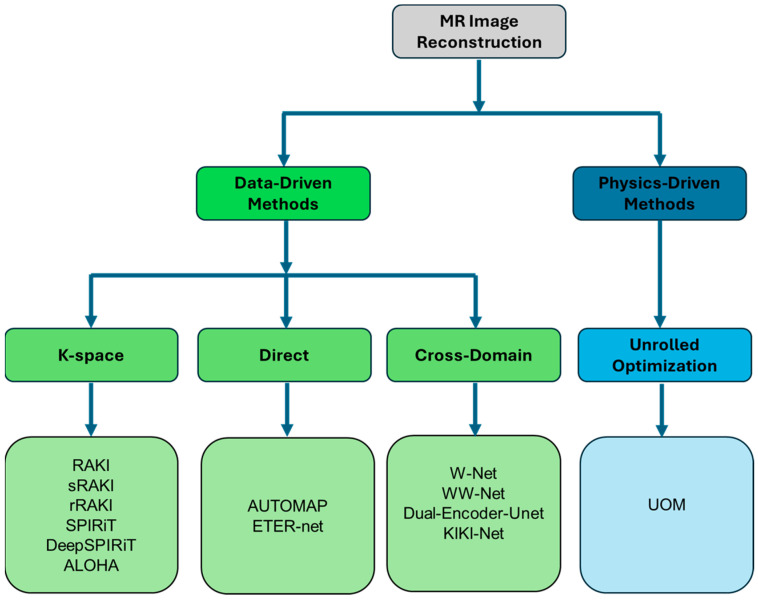 Figure 1
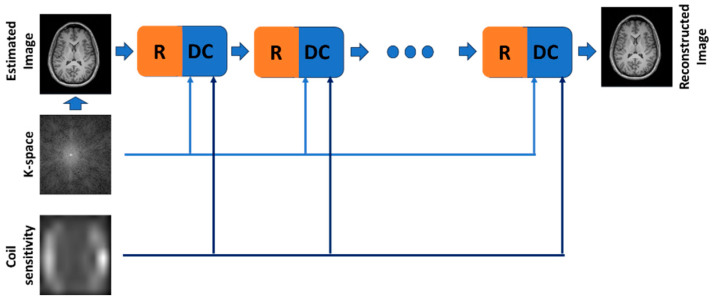 Figure 2
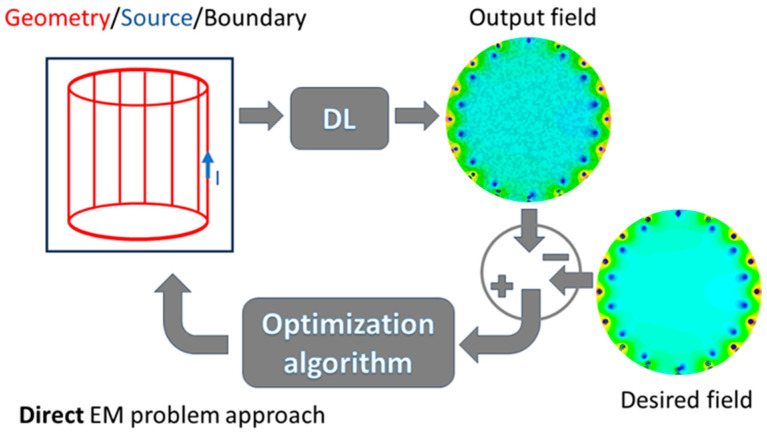 Figure 3
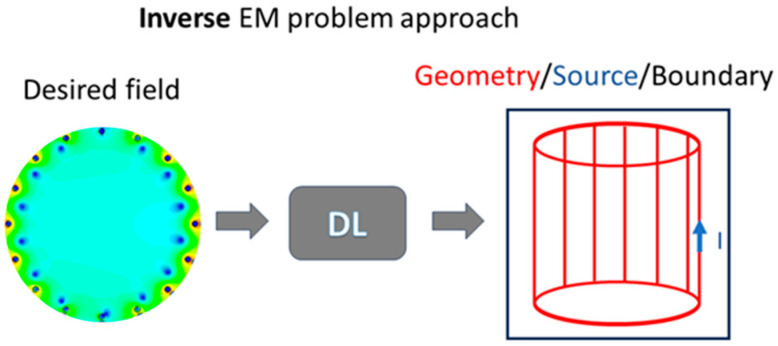 Figure 4
Peer Reviews
No public reviews on file for this paper yet. If you reviewed it on a platform where reviews are public (OpenReview, ICLR, NeurIPS, ICML), you can paste yours below so the community can read it here.
Videos
No videos yet. Explain this paper in a talk, walkthrough, or lecture? Add one.
Taxonomy
TopicsGeological Formations and Processes Exploration