Ecological Status of Algeciras Bay, in a Highly Anthropised Area in South-West Europe, through Metal Assessment—Part I: Abiotic Samples
María José Casanueva-Marenco, María Dolores Galindo-Riaño, María Dolores Granado-Castro, Margarita Díaz-de-Alba

TL;DR
This study assesses the ecological impact of metal pollution in Algeciras Bay, a heavily industrialized area in South-west Europe, by analyzing metal concentrations in water and sediment.
Contribution
The study provides a detailed metal assessment in abiotic samples to evaluate pollution levels and ecological risks in a highly anthropized bay.
Findings
Metal concentrations in sediments near industrial sites were significantly higher, with Pb levels reaching 21.4 ± 5.1 mg/kg.
Cd showed low partition coefficient in water, indicating higher bioavailability and potential ecological risks.
Pollution indexes revealed site 3 as the most polluted, with contamination factor (CF) of 7.12 and geoaccumulation index (Igeo) of 2.25.
Abstract
The ecological status of Algeciras Bay (South-west Europe), highly influenced by anthropogenic activities, was assessed by monitoring Zn, Cd, Pb, and Cu in water and sediment samples. Total contents and metal fractions with different availabilities and their spatial-seasonal distribution were determined. The trend in water and sediment contents were Zn > Pb ≈ Cu > Cd, without significant seasonal variations. Sites 3 and 4, closest to industrial activities, had the highest metal concentrations, mainly in sediments. Cd showed low partition coefficient in water, indicating higher bioavailability. Total metal content in sediments exceeded the threshold effect level for Cu and were close to Pb. The BCR procedure revealed the highest availabilities for Cd and Pb, due to its higher content in exchangeable and reducible fractions. Higher Pb levels (21.4 ± 5.1 mg/kg) were found in sediments of…
Genes, proteins, chemicals, diseases, species, mutations and cell lines named across the full text — each resolved to its canonical identifier and authoritative record.
Click any figure to enlarge with its caption.
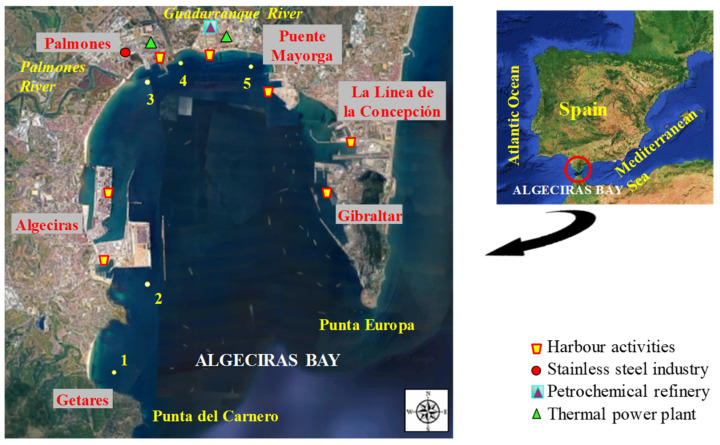 Figure 1
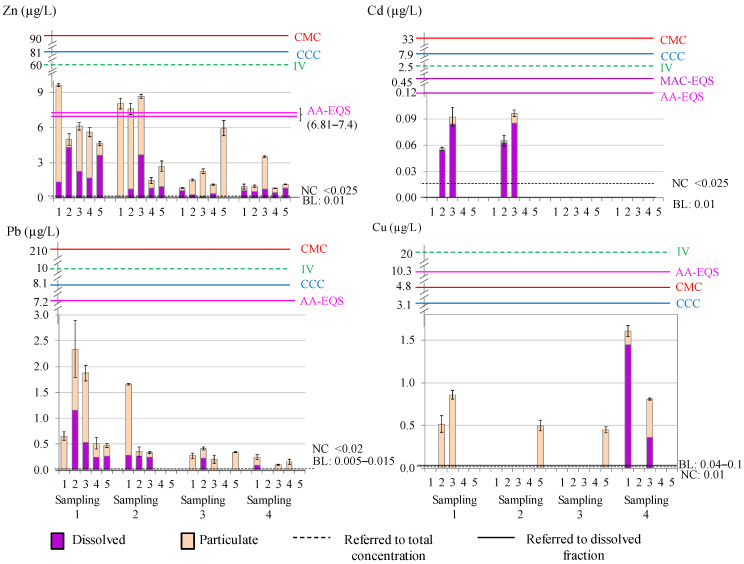 Figure 2
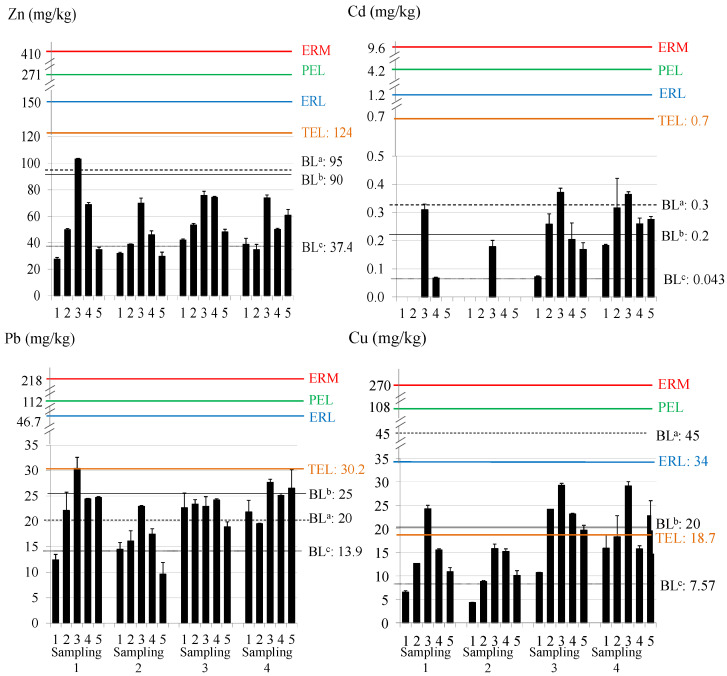 Figure 3
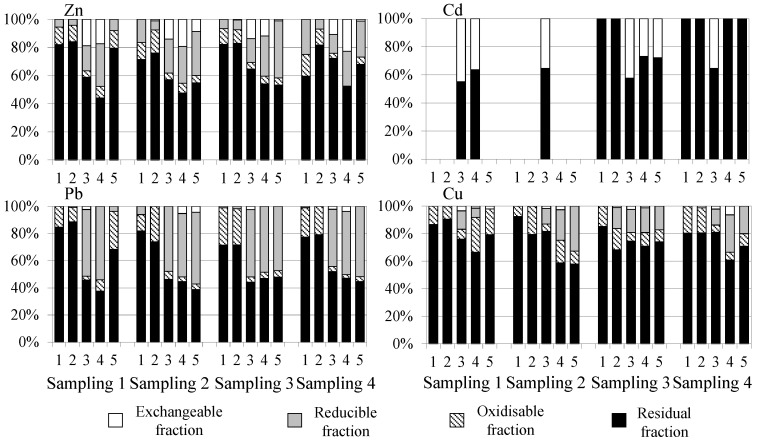 Figure 4
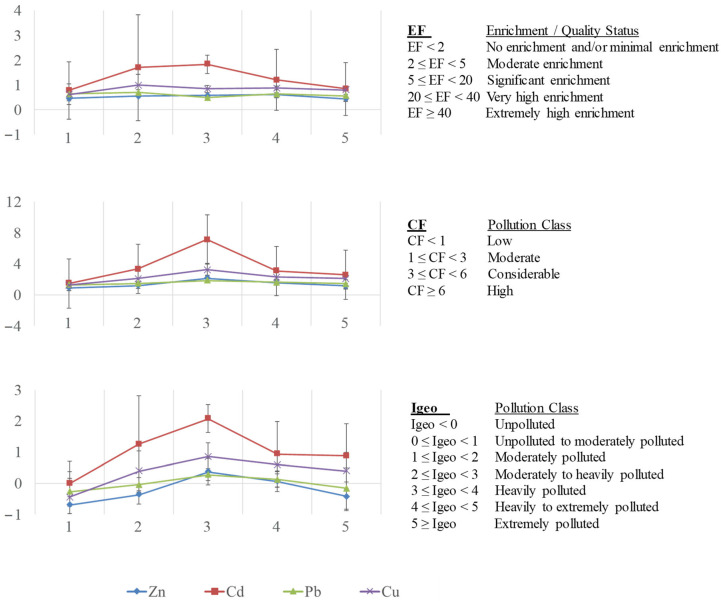 Figure 5
Peer Reviews
No public reviews on file for this paper yet. If you reviewed it on a platform where reviews are public (OpenReview, ICLR, NeurIPS, ICML), you can paste yours below so the community can read it here.
Videos
No videos yet. Explain this paper in a talk, walkthrough, or lecture? Add one.
Taxonomy
TopicsHeavy metals in environment · Mercury impact and mitigation studies · Environmental Toxicology and Ecotoxicology