Characterization of a Novel Hyperthermophilic GH1 β-Glucosidase from Acidilobus sp. and Its Application in the Hydrolysis of Soybean Isoflavone Glycosides
Jinjian He, Yuying Li, Xihang Sun, Dinghui Zuo, Mansheng Wang, Xia Zheng, Pinglian Yu, Pengjun Shi

TL;DR
Scientists discovered a heat-loving enzyme from a Yellowstone hot spring microbe that efficiently breaks down plant compounds and could be useful in food and biofuel industries.
Contribution
A novel hyperthermophilic GH1 β-glucosidase from Acidilobus sp. with exceptional thermostability and ethanol tolerance is characterized and tested for glycoside hydrolysis.
Findings
BglAc shows maximum activity at 100 °C and pH 5.0 with pNPG as substrate.
The enzyme retains 96% activity in 10% ethanol and 78% in 20% ethanol.
BglAc effectively converts soybean isoflavone glycosides into their aglycones.
Abstract
A putative β-glucosidase gene, BglAc, was amplified from Acidilobus sp. through metagenome database sampling from a hot spring in Yellowstone National Park. BglAc is composed of 485 amino acid residues and bioinformatics analysis showed that it belongs to the GH1 family of β-glucosidases. The gene was successfully expressed in Escherichia coli with a molecular weight of approximately 55.3 kDa. The purified recombinant enzyme showed the maximum activity using p-nitrophenyl-β-D-glucopyranoside (pNPG) as the substrate at optimal pH 5.0 and 100 °C. BglAc exhibited extraordinary thermostability, and its half-life at 90 °C was 6 h. The specific activity, Km, Vmax, and Kcat/Km of BglAc toward pNPG were 357.62 U mg−1, 3.41 mM, 474.0 μmol min−1·mg−1, and 122.7 s−1mM−1. BglAc exhibited the characteristic of glucose tolerance, and the inhibition constant Ki was 180.0 mM. Furthermore, a significant…
Genes, proteins, chemicals, diseases, species, mutations and cell lines named across the full text — each resolved to its canonical identifier and authoritative record.
Click any figure to enlarge with its caption.
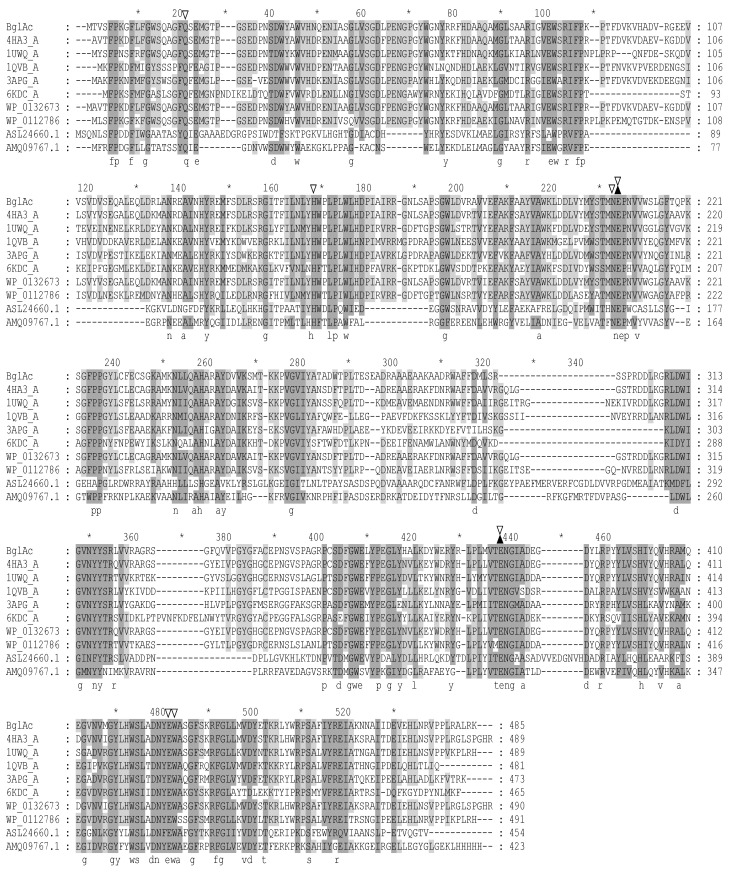 Figure 1
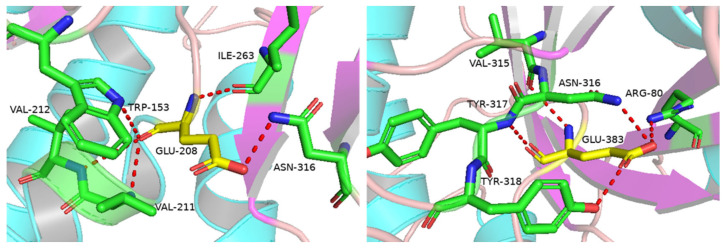 Figure 2
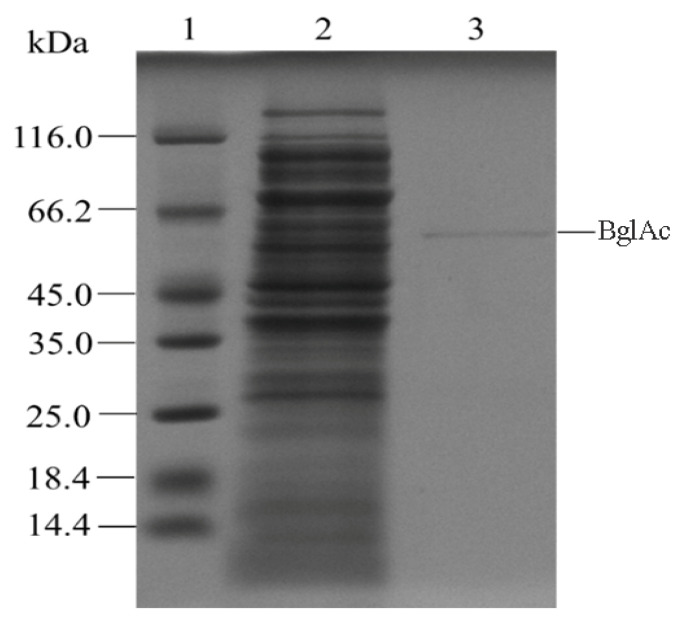 Figure 3
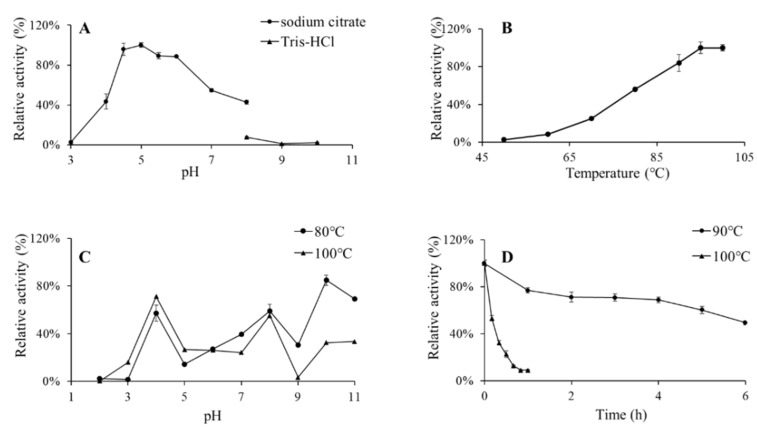 Figure 4
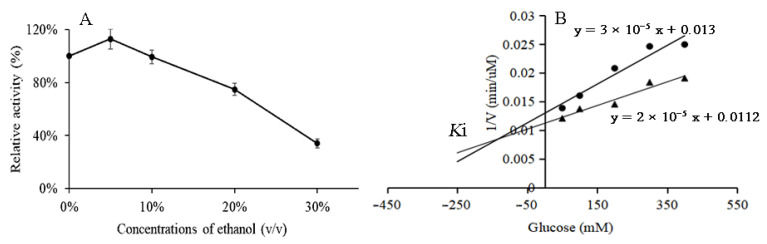 Figure 5
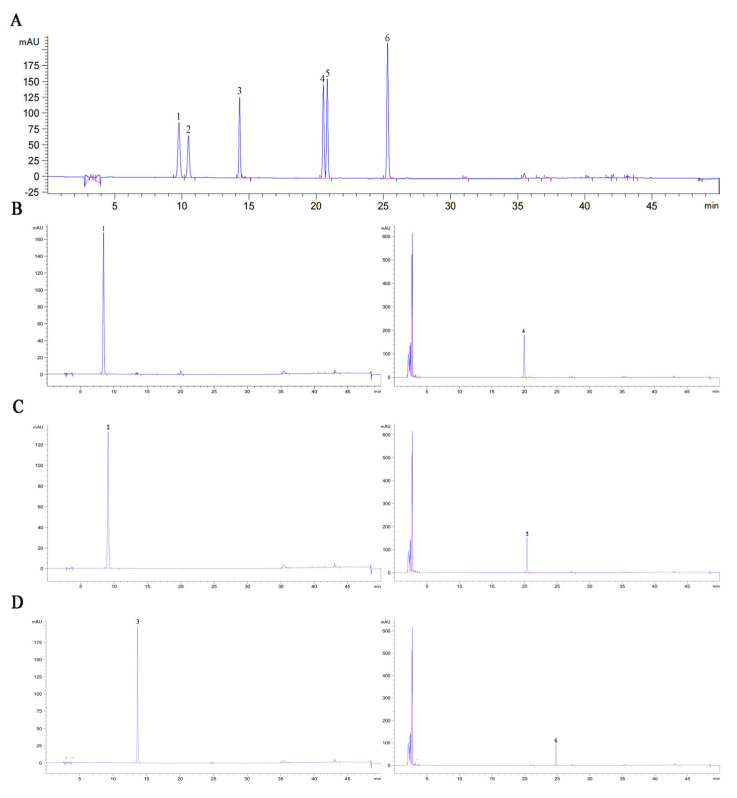 Figure 6
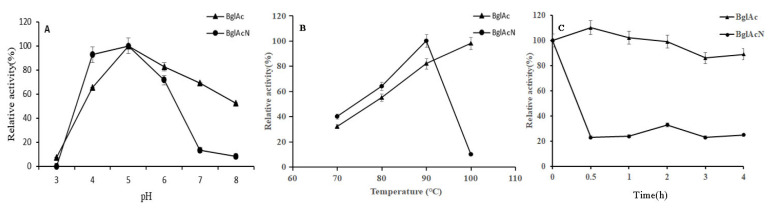 Figure 7
Peer Reviews
No public reviews on file for this paper yet. If you reviewed it on a platform where reviews are public (OpenReview, ICLR, NeurIPS, ICML), you can paste yours below so the community can read it here.
Videos
No videos yet. Explain this paper in a talk, walkthrough, or lecture? Add one.
Taxonomy
TopicsPolysaccharides and Plant Cell Walls · Phytoestrogen effects and research · Enzyme Production and Characterization