Randomized comparison of oblique and perpendicular stabilizers for minimally invasive repair of pectus excavatum
Miguel L Tedde, Rafael Lucas Costa De Carvalho, Jose Ribas Milanez De Campos, Diego Arley Gomes Da Silva, Erica Mie Okumura, Gustavo Falavigna Guilherme, Alana Cozzer Marchesi, Paulla Petrizzo, Barbara Siqueira Souto Maior, Paulo Manuel Pego-Fernandes

TL;DR
This study compares two types of stabilizers used in minimally invasive surgery for pectus excavatum to see if one reduces bar displacement and improves outcomes.
Contribution
The study introduces a randomized clinical trial comparing oblique and perpendicular stabilizers for pectus excavatum repair.
Findings
No significant difference in bar displacement between oblique and perpendicular stabilizers.
Both groups showed improved body image and psycho-social scores post-surgery.
The intervention group had a greater improvement in perception of physical difficulties.
Abstract
Bar dislocation is one of the most feared complications of the minimally invasive repair of pectus excavatum. Prospective randomized parallel-group clinical trial intending to assess whether oblique stabilizers can reduce bar displacement in comparison with regular stabilizers used in minimally invasive repair of pectus excavatum. Additionally, we evaluated pain, quality of life and other postoperative complications. Participants were randomly assigned to surgery with perpendicular (n = 16) or oblique stabilizers (n = 14) between October 2017 and September 2018 and followed for 3 years. Bar displacements were evaluated with the bar displacement index. Pain scores were evaluated through visual analogue scale and quality of life through the Pectus Excavatum Evaluation Questionnaire. Control group average displacement index was 17.7 (±26.7) and intervention group average displacement…
Genes, proteins, chemicals, diseases, species, mutations and cell lines named across the full text — each resolved to its canonical identifier and authoritative record.
Click any figure to enlarge with its caption.
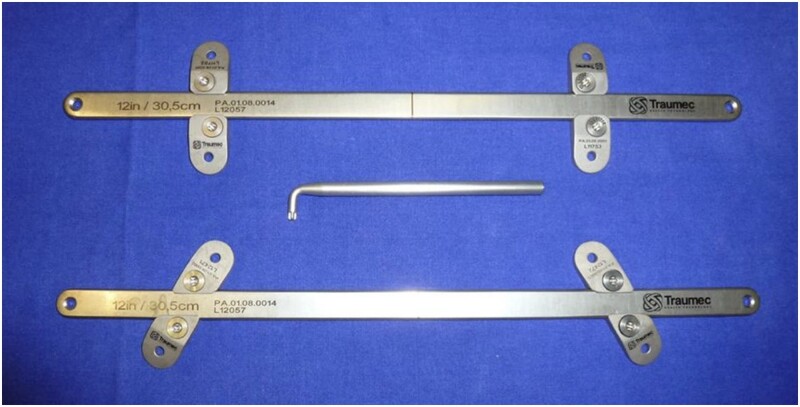 Figure 1
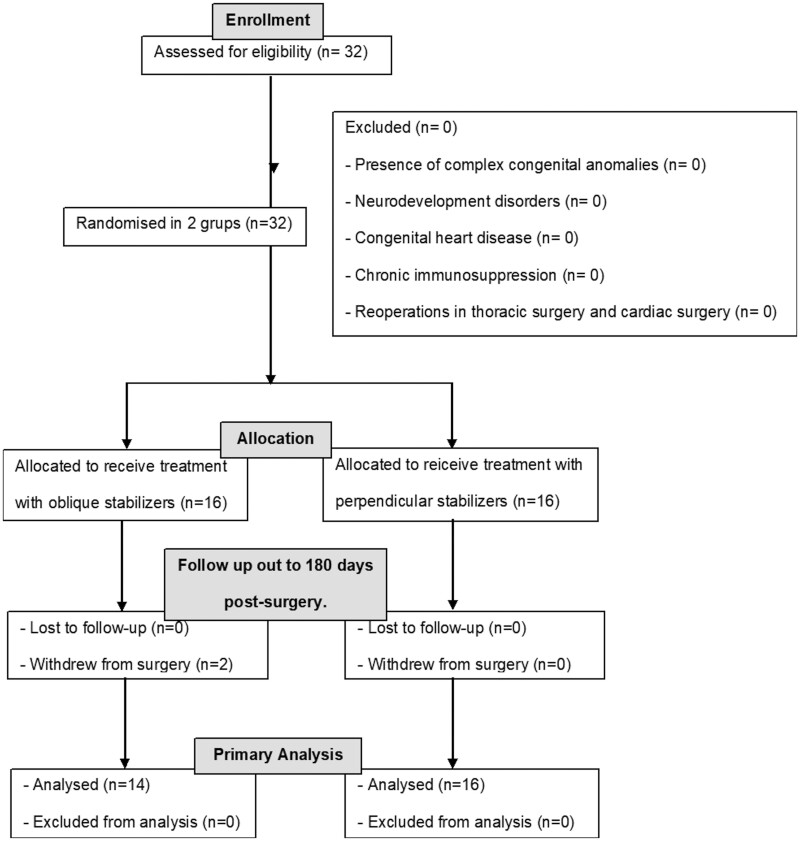 Figure 2
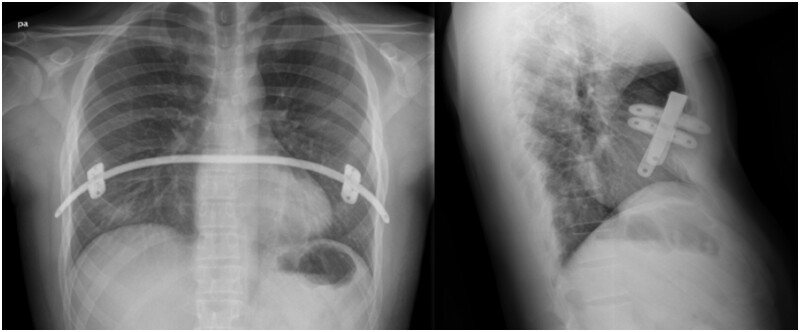 Figure 3
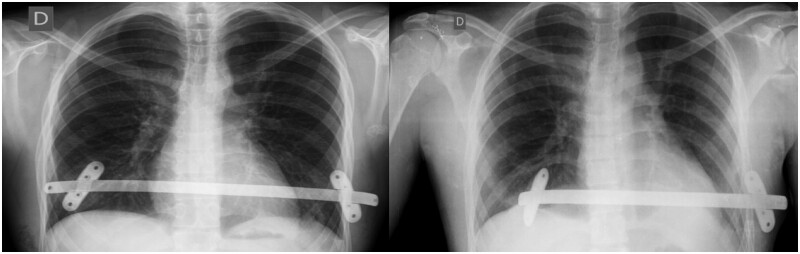 Figure 4
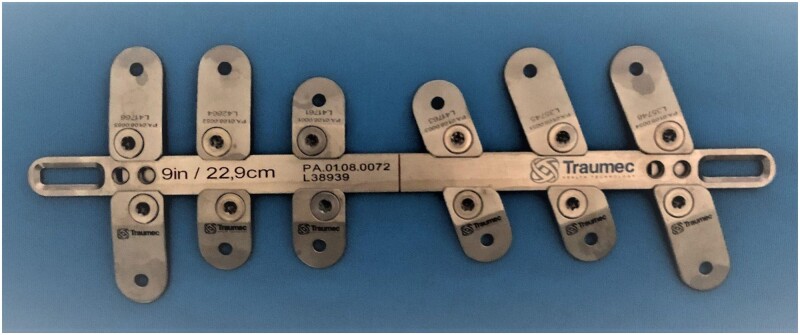 Figure 5
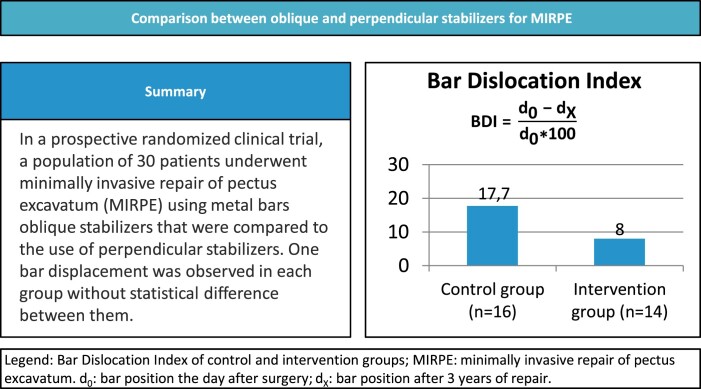 Figure 6
Peer Reviews
No public reviews on file for this paper yet. If you reviewed it on a platform where reviews are public (OpenReview, ICLR, NeurIPS, ICML), you can paste yours below so the community can read it here.
Videos
No videos yet. Explain this paper in a talk, walkthrough, or lecture? Add one.
Taxonomy
TopicsMedieval and Classical Philosophy