Long-term outcome and cardiac function after anatomic repair of congenitally corrected transposition
Fumi Yokohama, Norihisa Toh, Yasuhiro Kotani, Yoichi Takaya, Yosuke Kuroko, Kenji Baba, Teiji Akagi, Shingo Kasahara, Hiroshi Ito

TL;DR
This study examines long-term outcomes of heart function and survival in patients with a rare heart condition after surgical repair, finding acceptable results but notable late complications.
Contribution
The paper provides long-term follow-up data on cardiac outcomes after anatomic repair of congenitally corrected transposition of the great arteries.
Findings
Mortality rates at 10 and 20 years were 86% and 71%, with no significant difference between surgical groups.
Late complications like heart failure and reoperation were relatively common, especially in the Rastelli–Senning/Mustard group.
Aortic regurgitation occurred in some patients, more frequently after the double switch operation.
Abstract
There is limited information on long-term outcomes and trajectories of ventricular and valvular functions in patients with congenitally corrected transposition of the great arteries after anatomic repair according to the operative strategy with a median follow-up period of more than 10 years. Twenty-nine patients who underwent anatomic repair in Okayama University Hospital between January 1994 and December 2020 were reviewed. Outcomes were compared between patients who underwent a double switch operation (DS group) and patients with an atrial switch with a Rastelli operation (Rastelli–Senning/Mustard group). Fifteen (52%) were in the DS group and 14 (48%) were in the Rastelli–Senning/Mustard group. The median follow-up period after anatomic repair was 12.7 (interquartile range 4.2–18.8) years. There were 3 (10%) early deaths and 3 (10%) late deaths. Survival rates for the entire…
Genes, proteins, chemicals, diseases, species, mutations and cell lines named across the full text — each resolved to its canonical identifier and authoritative record.
Click any figure to enlarge with its caption.
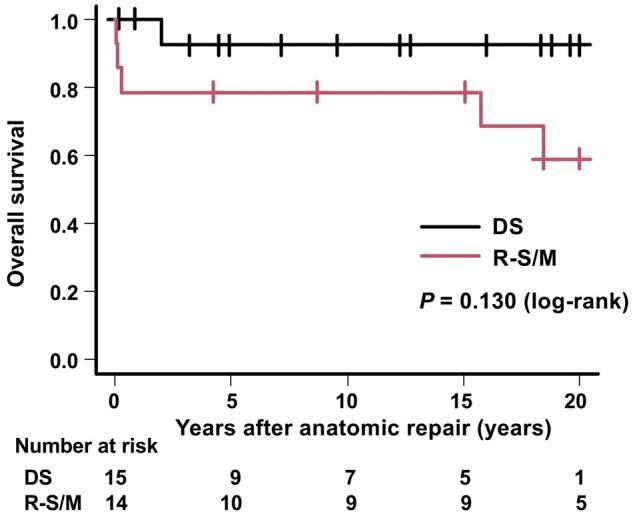 Figure 1
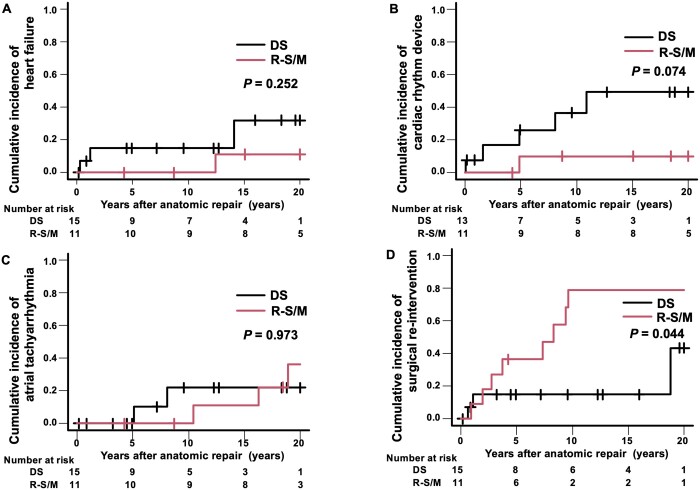 Figure 2
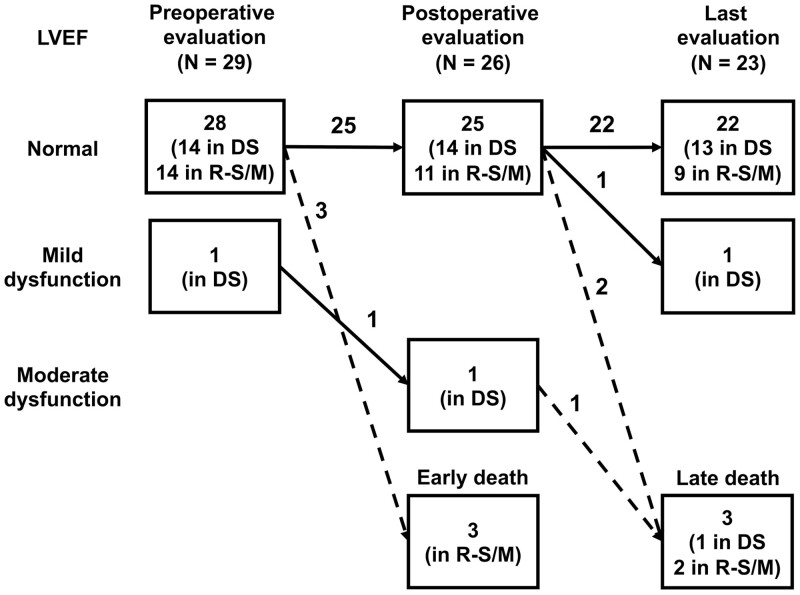 Figure 3
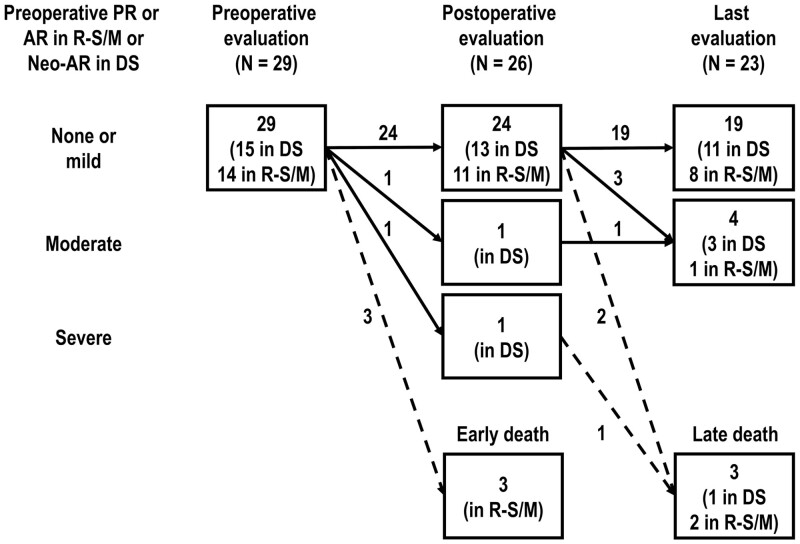 Figure 4
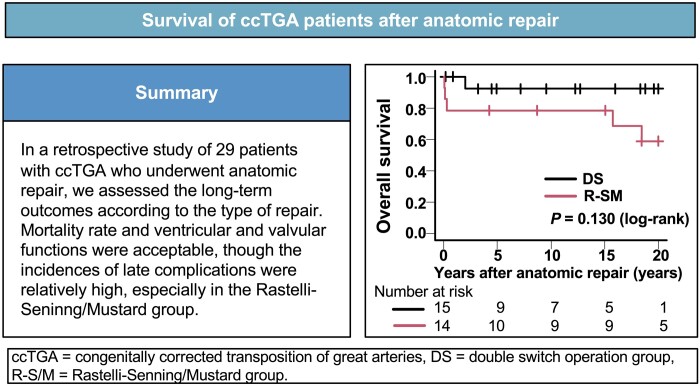 Figure 5
Peer Reviews
No public reviews on file for this paper yet. If you reviewed it on a platform where reviews are public (OpenReview, ICLR, NeurIPS, ICML), you can paste yours below so the community can read it here.
Videos
No videos yet. Explain this paper in a talk, walkthrough, or lecture? Add one.
Taxonomy
TopicsCongenital Heart Disease Studies · Cardiovascular Issues in Pregnancy · Coronary Artery Anomalies