Removal of dead fish eggs by Asellus aquaticus as a potential biological control in aquaculture
Balázs Kucska, Quyến Nguyễn Ngọc, Bence Ivánovics, Ádám Staszny, Máté Havasi, Károly Vranovics, Jeffrey Daniel Griffitts, Ádám Varga, Béla Urbányi, Tamás Müller

TL;DR
This study shows that Asellus aquaticus can selectively eat dead fish eggs without harming live ones, suggesting they could help keep aquaculture hatcheries clean.
Contribution
The study demonstrates the selective foraging behavior of A. aquaticus on dead fish eggs, opening new possibilities for biological control in aquaculture.
Findings
A. aquaticus consumed dead zebrafish eggs but left viable eggs and larvae untouched.
The number and exposure time of A. aquaticus affected the proportion of dead eggs consumed.
A. aquaticus may help reduce pathogen growth by removing dead eggs as a substrate.
Abstract
The objective of the present experimental study was to gain a better understanding of the foraging activity of Asellus aquaticus during fish egg incubation. A. aquaticus were introduced into experimental setups of dead eggs, viable eggs and hatched larvae of zebrafish (Danio rerio), a commonly used model organism. The amount of A. aquaticus and the duration of their exposure to the eggs significantly affected the proportion of consumed dead eggs in each experimental cycle. A. aquaticus belongs to the group of aquatic detritivores, and no predatory behavior was observed during the experiments. These crustaceans could distinguish between the dead eggs and those containing living embryos. Furthermore, zebrafish larvae remained unharmed by A. aquaticus, even in the absence of alternative food source. These findings underscore the potential sanitary role of these crustaceans in natural…
Genes, proteins, chemicals, diseases, species, mutations and cell lines named across the full text — each resolved to its canonical identifier and authoritative record.
Click any figure to enlarge with its caption.
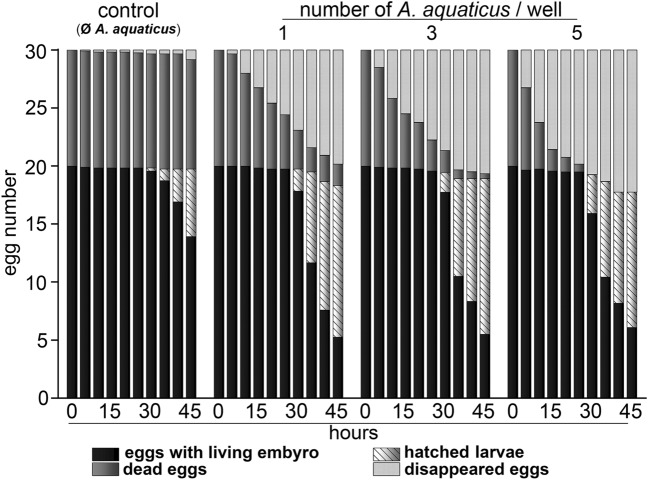 Figure 1
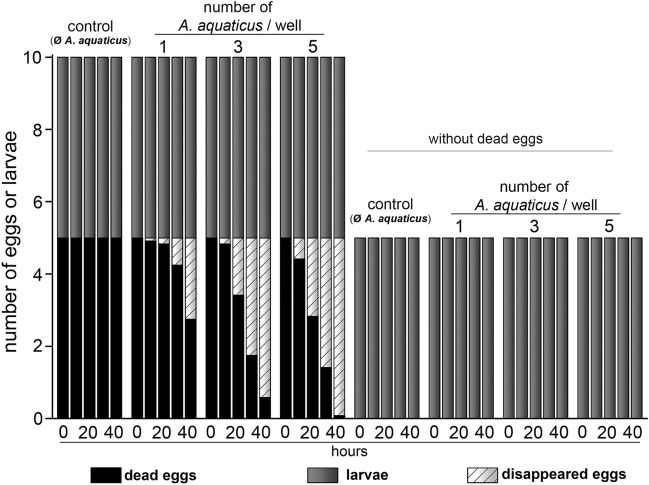 Figure 2
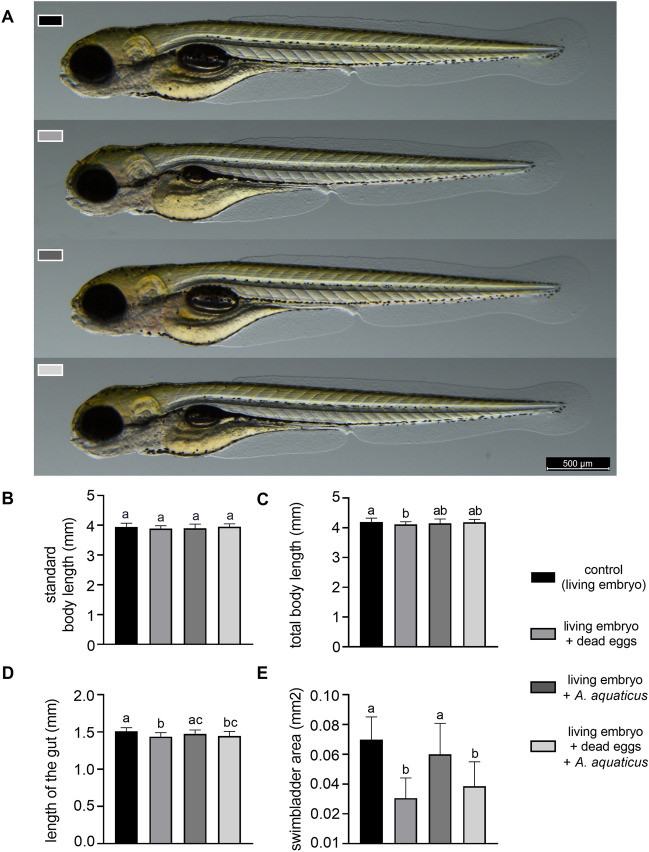 Figure 3
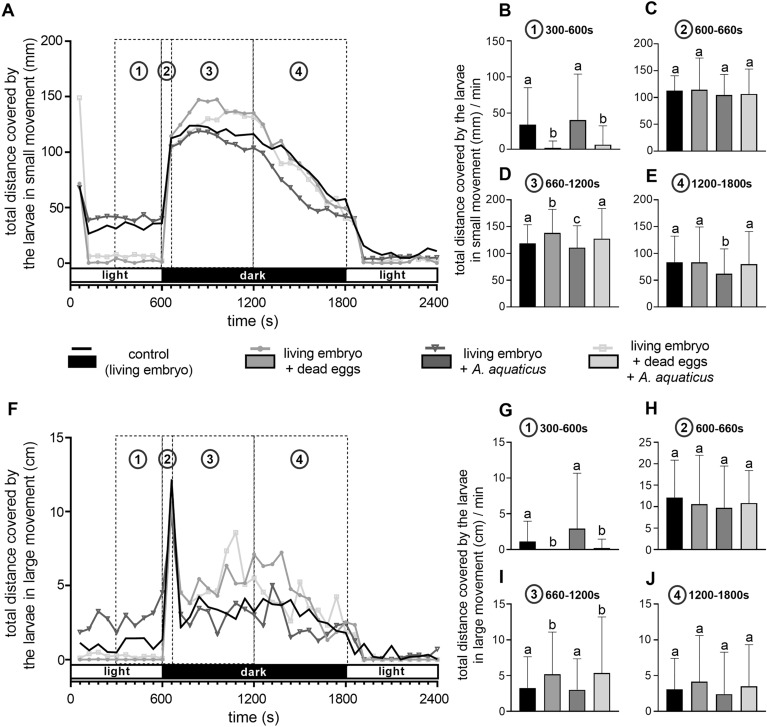 Figure 4
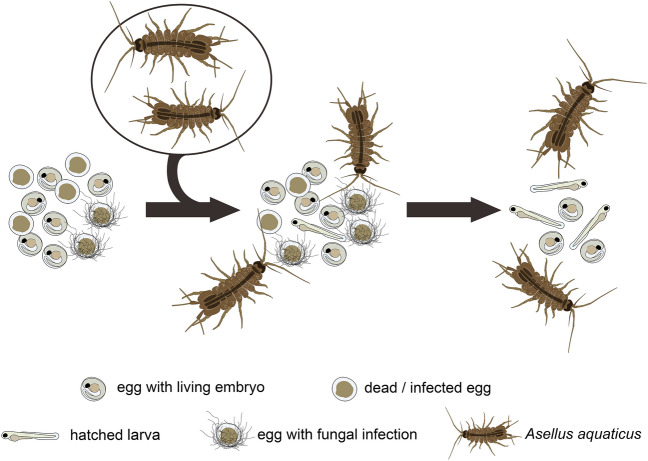 Figure 5
Peer Reviews
No public reviews on file for this paper yet. If you reviewed it on a platform where reviews are public (OpenReview, ICLR, NeurIPS, ICML), you can paste yours below so the community can read it here.
Videos
No videos yet. Explain this paper in a talk, walkthrough, or lecture? Add one.
Taxonomy
TopicsEnvironmental Toxicology and Ecotoxicology · Zebrafish Biomedical Research Applications · Biological Control of Invasive Species