Variability and harshness shape flexible strategy-use in support of the constrained flexibility framework
Sarah Pope-Caldwell, Dominik Deffner, Luke Maurits, Terrence Neumann, Daniel Haun

TL;DR
The study shows how people's decision-making strategies change based on environmental conditions like stability and harshness.
Contribution
The research provides empirical evidence supporting the constrained flexibility framework in decision-making.
Findings
Elective switching is suppressed by harshness in decision-making environments.
Results align with the constrained flexibility framework's predictions about strategy use.
Findings highlight the adaptive nature of cognitive flexibility in unpredictable contexts.
Abstract
Human cognition is incredibly flexible, allowing us to thrive within diverse environments. However, humans also tend to stick to familiar strategies, even when there are better solutions available. How do we exhibit flexibility in some contexts, yet inflexibility in others? The constrained flexibility framework (CFF) proposes that cognitive flexibility is shaped by variability, predictability, and harshness within decision-making environments. The CFF asserts that high elective switching (switching away from a working strategy) is maladaptive in stable or predictably variable environments, but adaptive in unpredictable environments, so long as harshness is low. Here we provide evidence for the CFF using a decision-making task completed across two studies with a total of 299 English-speaking adults. In line with the CFF, we found that elective switching was suppressed by harshness, using…
Genes, proteins, chemicals, diseases, species, mutations and cell lines named across the full text — each resolved to its canonical identifier and authoritative record.
Click any figure to enlarge with its caption.
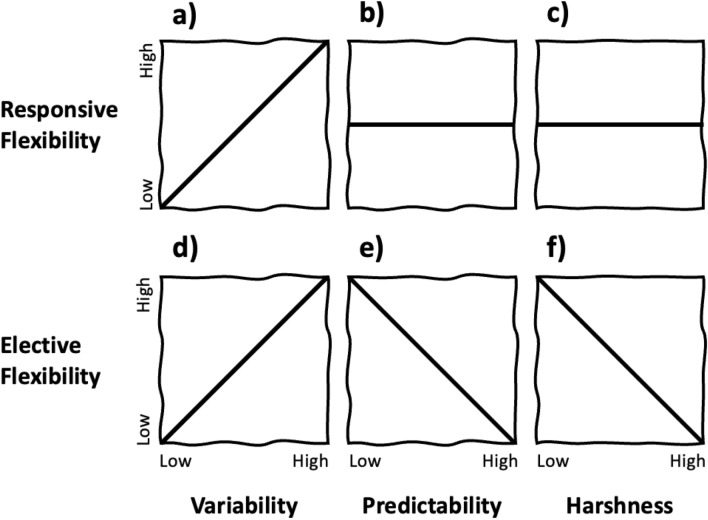 Figure 1
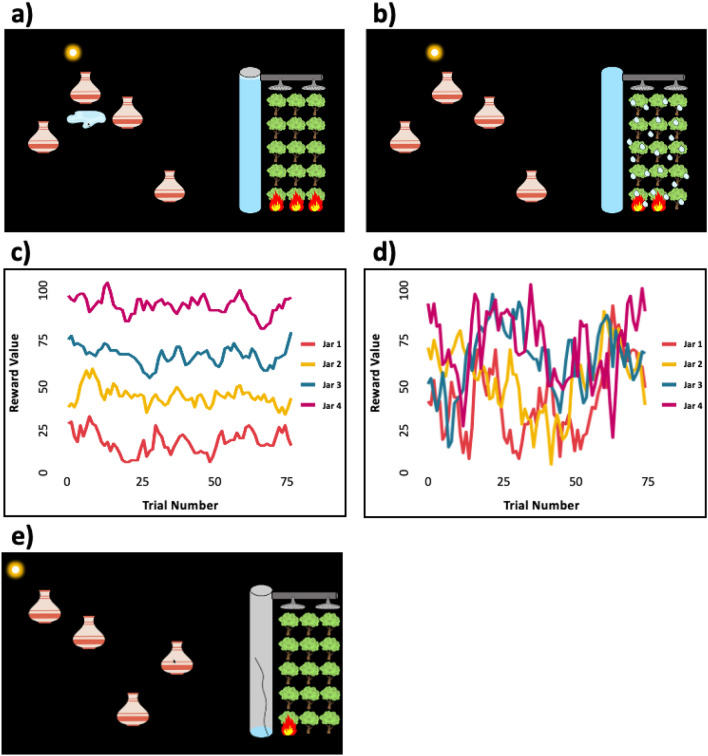 Figure 2
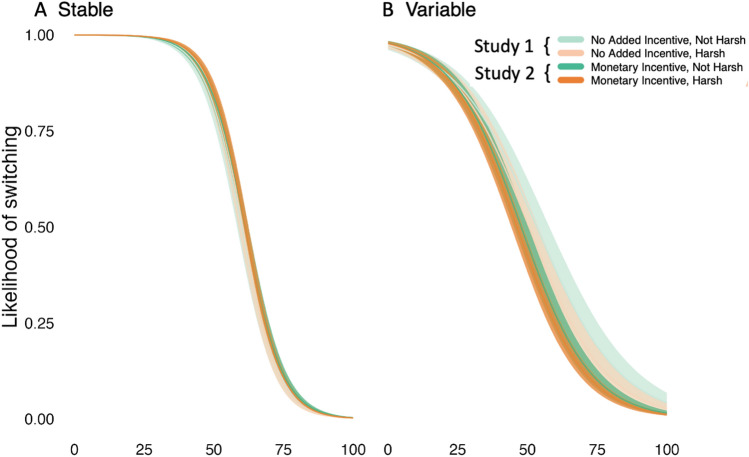 Figure 3
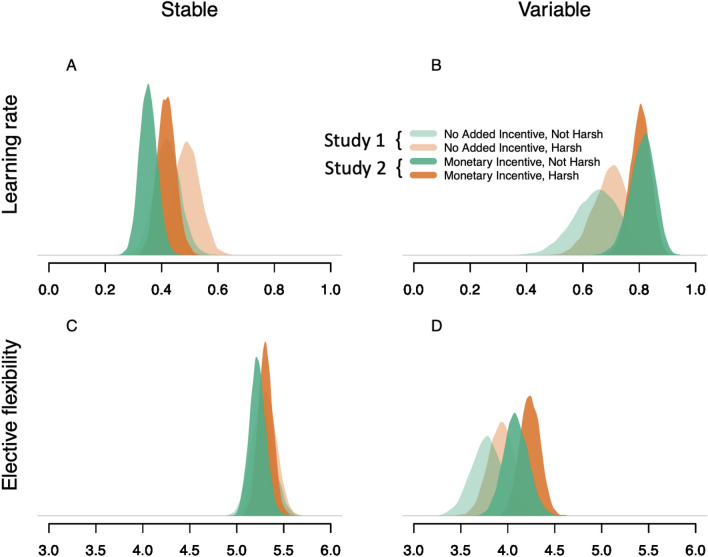 Figure 4
Peer Reviews
No public reviews on file for this paper yet. If you reviewed it on a platform where reviews are public (OpenReview, ICLR, NeurIPS, ICML), you can paste yours below so the community can read it here.
Videos
No videos yet. Explain this paper in a talk, walkthrough, or lecture? Add one.
Taxonomy
TopicsCreativity in Education and Neuroscience · Behavioral Health and Interventions · Action Observation and Synchronization