The Influence of Ferrule Design and Pulpal Extensions on the Accuracy of Fit and the Fracture Resistance of Zirconia-Reinforced Lithium Silicate Endocrowns
Samah Saker, Ahmed Yaseen Alqutaibi, Mohammed Ahmed Alghauli, Danya Hashem, Sary Borzangy, Ahmed E. Farghal, Ahmad A. Alnazzawi, Sultan Ainoosah, Mohammed H. AbdElaziz

TL;DR
This study examines how different ferrule designs and pulpal extensions affect the fit and strength of zirconia-reinforced lithium silicate endocrowns in molars.
Contribution
The study introduces a comparison of endocrown designs with and without ferrules and varying pulpal inlay depths using ZLS material.
Findings
Endocrowns without ferrule showed higher fracture strength than 1 mm ferrule designs.
Extending inlay depth increased fracture resistance in 1 mm ferrule designs but not in conventional designs.
All designs showed clinically acceptable marginal and internal fit despite surface discrepancies.
Abstract
The study aimed to assess the marginal, axial, and internal adaptation, as well as the fracture resistance of zirconia-reinforced lithium silicate (ZLS) endocrowns with varying pulpal inlay extensions and marginal geometry. Sixty extracted maxillary first molar teeth were divided into six groups (n = 10) according to pulpal inlay extension and marginal configuration. The first three groups (J2, J3, and J4) utilized prepared teeth for endocrowns without ferrule design and 2 mm, 3 mm, and 4 mm pulpal extensions, respectively. The second three groups (F2, F3, and F4) utilized prepared teeth with 1 mm shoulder margins and 2 mm, 3 mm, and 4 mm pulpal extensions. The endocrowns were fabricated from ZLS blocks using CAD/CAM milling technology. After cementation, the specimens underwent thermal aging for 5000 cycles and were evaluated for marginal adaptation. Using a universal testing machine,…
Genes, proteins, chemicals, diseases, species, mutations and cell lines named across the full text — each resolved to its canonical identifier and authoritative record.
Click any figure to enlarge with its caption.
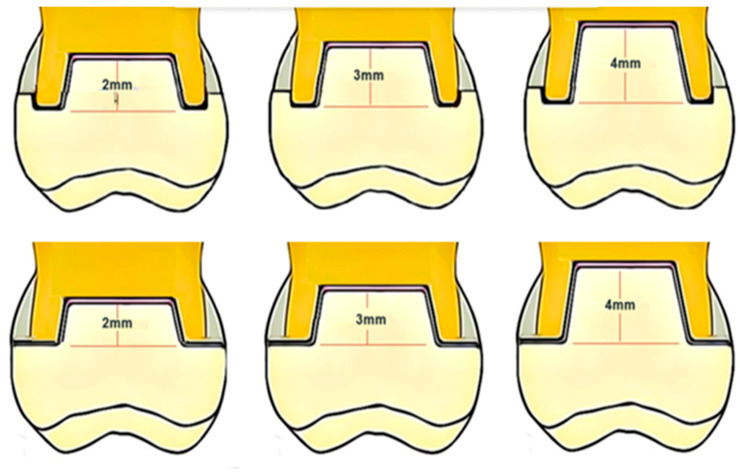 Figure 1
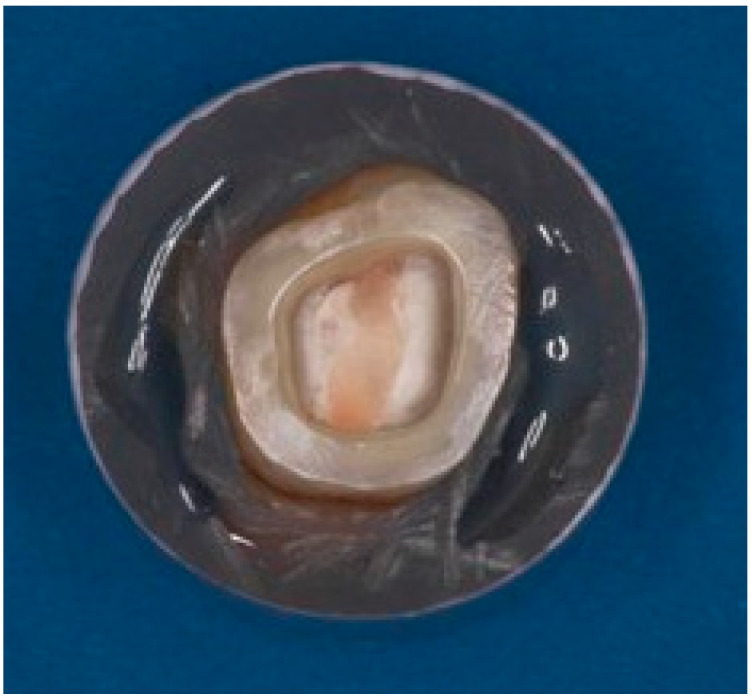 Figure 2
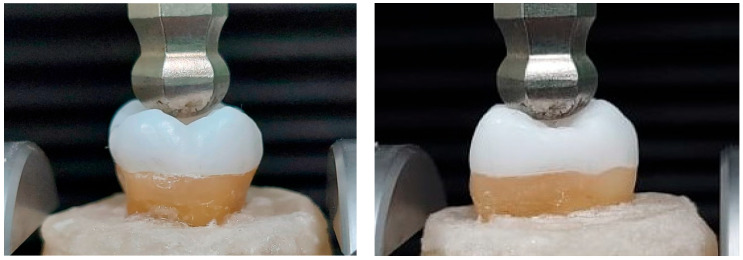 Figure 3
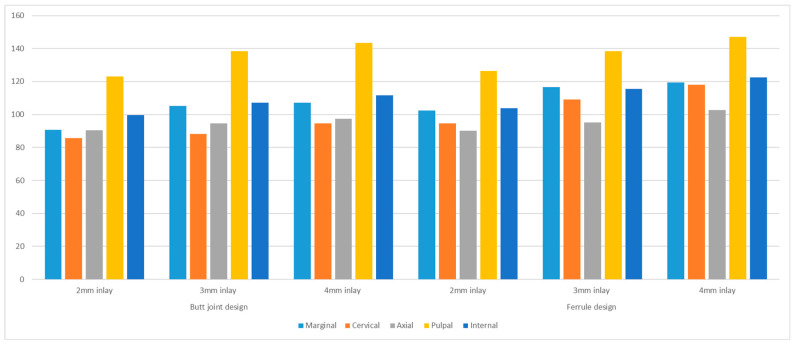 Figure 4
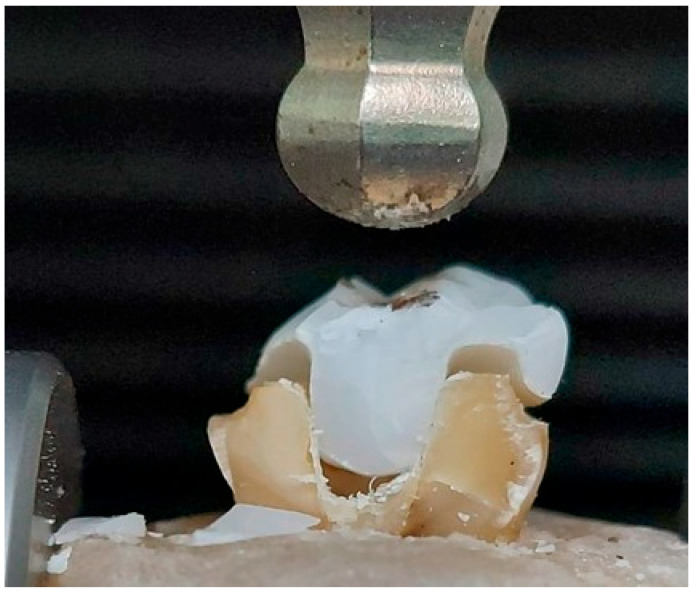 Figure 5
Peer Reviews
No public reviews on file for this paper yet. If you reviewed it on a platform where reviews are public (OpenReview, ICLR, NeurIPS, ICML), you can paste yours below so the community can read it here.
Videos
No videos yet. Explain this paper in a talk, walkthrough, or lecture? Add one.
Taxonomy
TopicsReligious Tourism and Spaces