Increased Upper Extremity Muscle Mass in Ambulatory Children with Cerebral Palsy
Taeyoung Song, Jaewon Kim, Dae-Hyun Jang

TL;DR
Ambulatory children with cerebral palsy have more upper body muscle mass than typically developing children, especially those with moderate mobility limitations.
Contribution
This study reveals increased upper extremity muscle mass in ambulatory children with cerebral palsy compared to controls.
Findings
Children with CP had significantly greater upper extremity lean body mass than typically developing peers.
The difference in upper extremity muscle mass was most pronounced in children with GMFCS level II.
CP children showed a higher proportion of upper extremity muscle mass relative to total extremity mass.
Abstract
Aim: To compare muscle mass in the upper and lower extremities between ambulatory children with cerebral palsy (CP) and typically developing (TD) children. Materials and Methods: A total of 21 children aged 2 to 12 years with CP and a Gross Motor Function Classification System (GMFCS) level of I, II, or III were matched with 21 TD children for age, sex, and body mass index. The lean body mass (LBM) of each extremity was calculated from whole-body dual-energy X-ray absorptiometry. Results: The LBM of the upper extremities was greater in children with CP compared to TD children, and the difference was significant in the GMFCS level II group (1340.6 g vs. 1004.2 g, p = 0.027). There was no significant difference in the LBM of the lower extremities between the CP and TD groups (p = 0.190). The ratio of lower extremity LBM to total extremity LBM was lower in children with CP, while the ratio…
Genes, proteins, chemicals, diseases, species, mutations and cell lines named across the full text — each resolved to its canonical identifier and authoritative record.
Click any figure to enlarge with its caption.
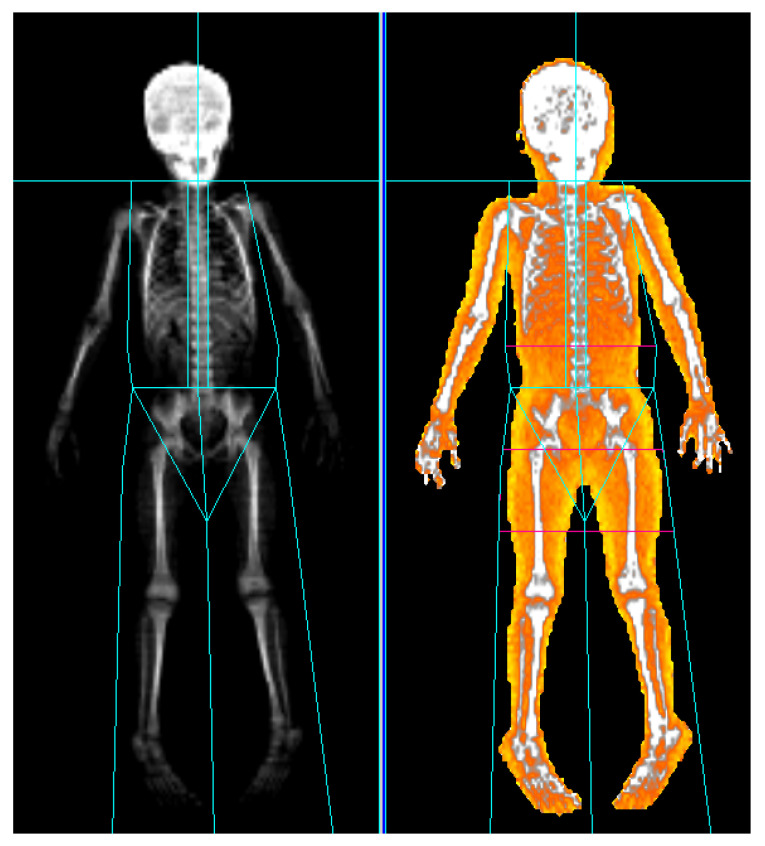 Figure 1
Peer Reviews
No public reviews on file for this paper yet. If you reviewed it on a platform where reviews are public (OpenReview, ICLR, NeurIPS, ICML), you can paste yours below so the community can read it here.
Videos
No videos yet. Explain this paper in a talk, walkthrough, or lecture? Add one.
Taxonomy
TopicsCerebral Palsy and Movement Disorders · Infant Development and Preterm Care · Family and Disability Support Research