Forecasting of Airborne Conidia Quantities and Potential Insect Associations of Cryphonectria parasitica, the Causal Agent of Chestnut Blight, in England
Pedro Romon-Ochoa, Pankajini Samal, Tom Pace, Tim Newman, Mark Oram, Nicholas Baxter, John A. S. Manning, Mick Biddle, Kerry Barnard, Daegan Inward, Paul Taylor, Steven Hendry, Ana Pérez-Sierra, Lisa Ward

TL;DR
This study tracks airborne spores of a chestnut blight fungus in England and investigates if insects carry the spores.
Contribution
An improved real-time PCR method was used to quantify airborne spores and assess insect associations with the fungus.
Findings
Spore counts ranged from 60 to 8,500 per week with seasonal fluctuations.
Weather parameters like temperature and humidity correlated with spore numbers.
No spores of Cryphonectria parasitica were found on ten collected insect species.
Abstract
Sweet chestnut, an Asiatic tree introduced in many parts of Europe including the United Kingdom, is planted for nut production, timber, and amenity. Its major threat is the disease called blight, caused by the fungus Cryphonectria parasitica, which infects through wounds by airborne spores. Field trapping using sticky rods rotating traps was performed in an infected area in Devon (between May 2021 and April 2023). An improved dual hydrolysis Taqman probes real-time PCR was used. The number of spores was calculated by comparing the cycle threshold to the Ct of standards with known amounts of conidia or known target fragment copies cloned into a plasmid. Weekly spore counts were in the range of around 60 to approximately 8.5 × 10³, with fluctuations of peaks (mainly in late summer–autumn 2021) and troughs. The effects of weather parameters were modelled, finding correlations between spore…
Genes, proteins, chemicals, diseases, species, mutations and cell lines named across the full text — each resolved to its canonical identifier and authoritative record.
Click any figure to enlarge with its caption.
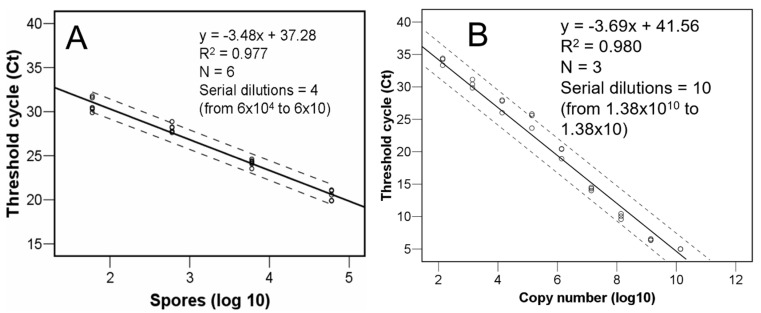 Figure 1
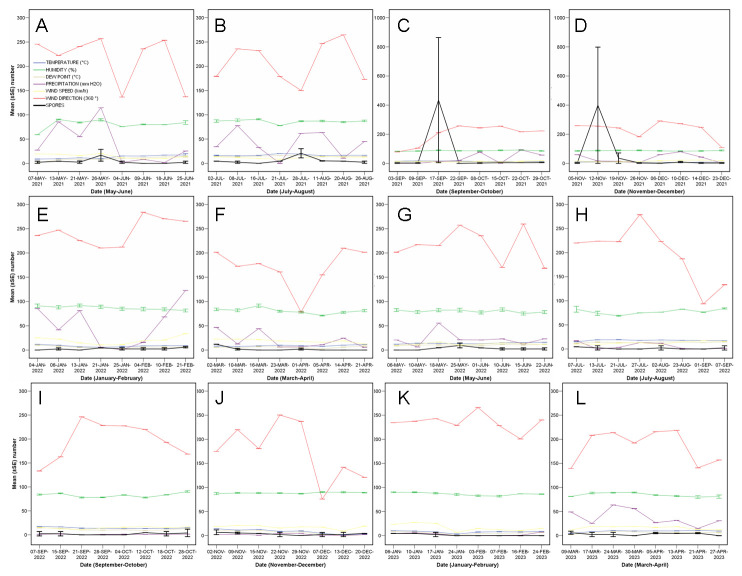 Figure 2
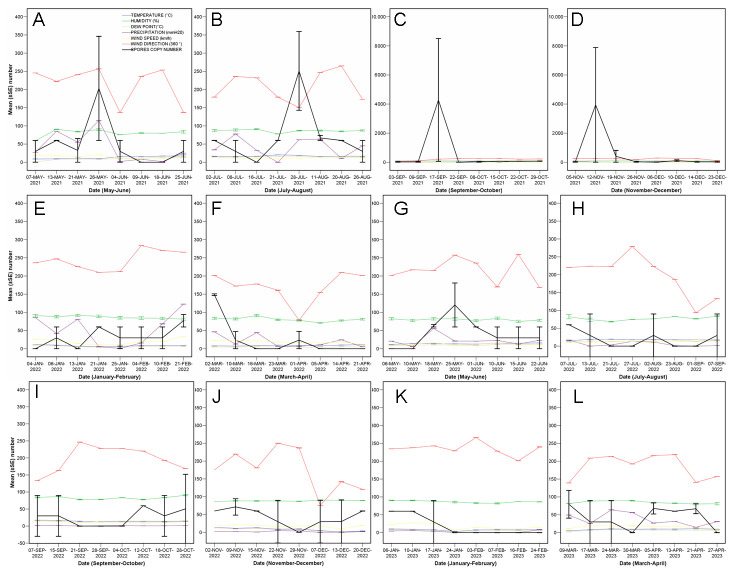 Figure 3
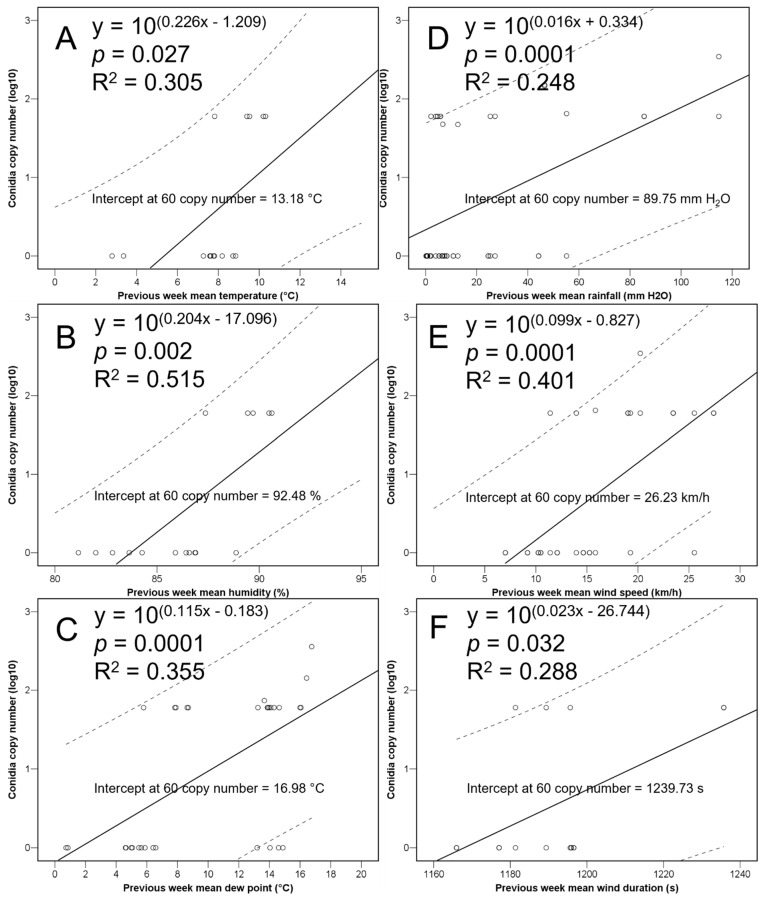 Figure 4
Peer Reviews
No public reviews on file for this paper yet. If you reviewed it on a platform where reviews are public (OpenReview, ICLR, NeurIPS, ICML), you can paste yours below so the community can read it here.
Videos
No videos yet. Explain this paper in a talk, walkthrough, or lecture? Add one.
Taxonomy
TopicsPlant and Fungal Interactions Research · Plant Virus Research Studies · Plant Pathogens and Fungal Diseases