Clinical Utility of Genetic Testing with Geographical Locations in ADPKD: Describing New Variants
Carmen García Rabaneda, María Luz Bellido Díaz, Ana Isabel Morales García, Antonio Miguel Poyatos Andújar, Juan Bravo Soto, Anita Dayaldasani Khialani, Margarita Martínez Atienza, Rafael Jose Esteban de la Rosa

TL;DR
This study identifies new genetic variants in ADPKD patients and explores their geographical distribution and impact on kidney survival.
Contribution
The study reports 33 new PKD1 and six new PKD2 gene variants in ADPKD, contributing to a more detailed genetic map of the disease.
Findings
33 new PKD1 gene variants and six new PKD2 gene variants were identified, likely affecting protein function.
Truncated PKD1 variants were associated with lower renal survival compared to missense variants.
Geographical distribution of variants was analyzed, aiding in understanding disease patterns.
Abstract
Background: Our study aims to comment on all ADPKD variants identified in our health area and explain how they are distributed geographically, to identify new variants, and relate the more frequent variants with their renal phenotype in terms of kidney survival. Materials and Methods: We identified patients suffering from ADPKD in a specialized consultation unit; genealogical trees were constructed from the proband. According to the ultrasound-defined modified Ravine–Pei criteria, relatives classified as at risk were offered participation in the genetic study. Socio-demographic, clinical, and genetic factors related to the impact of the variant on the survival of the kidney and the patient, such as age at RRT beginning and age of death, were recorded. Results: In 37 families, 33 new variants of the PKD1 gene were identified, which probably produce a truncated protein. These variants…
Genes, proteins, chemicals, diseases, species, mutations and cell lines named across the full text — each resolved to its canonical identifier and authoritative record.
Click any figure to enlarge with its caption.
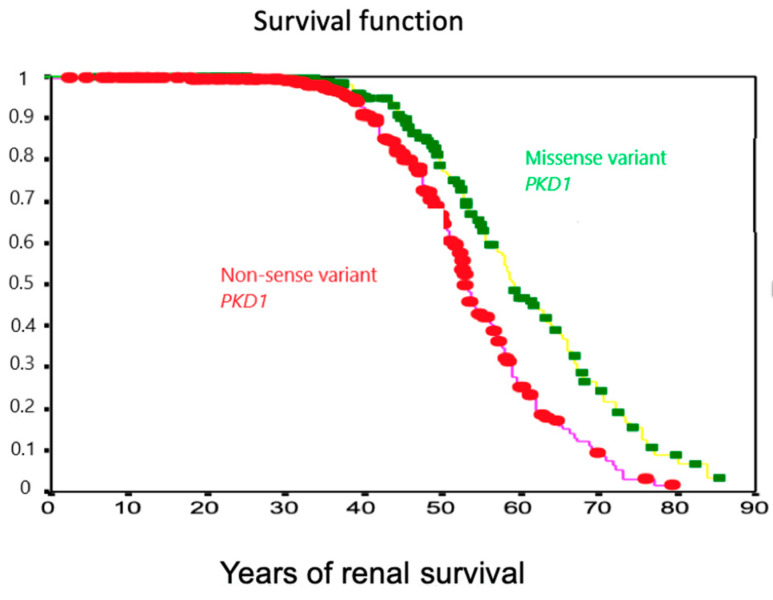 Figure 1
Peer Reviews
No public reviews on file for this paper yet. If you reviewed it on a platform where reviews are public (OpenReview, ICLR, NeurIPS, ICML), you can paste yours below so the community can read it here.
Videos
No videos yet. Explain this paper in a talk, walkthrough, or lecture? Add one.
Taxonomy
TopicsGenetic and Kidney Cyst Diseases · Genetic Syndromes and Imprinting · Genetics and Neurodevelopmental Disorders