Spironolactone Induces Vasodilation by Endothelium-Dependent Mechanisms Involving NO and by Endothelium-Independent Mechanisms Blocking Ca2+ Channels
Margarida Lorigo, João Amaro, Elisa Cairrao

TL;DR
Spironolactone causes blood vessel relaxation through both endothelium-dependent and -independent mechanisms and may act as an endocrine disruptor in humans.
Contribution
The study reveals spironolactone's dual vasodilation mechanisms and suggests it may act as an endocrine disruptor in humans.
Findings
Spironolactone induces vasodilation via endothelium-dependent NO mechanisms and endothelium-independent Ca2+ channel blockade.
A non-monotonic effect on cell viability was observed, characteristic of endocrine-disrupting compounds.
Findings suggest spironolactone may act as an endocrine disruptor at a human level.
Abstract
Background: Spironolactone (SPI) is a diuretic widely used to treat cardiovascular diseases (CVD) and is non-specific for mineralocorticoid receptors (MR) and with an affinity for progesterone (PR) and androgen (AR) receptors. Since 2009, it has been suggested that pharmaceuticals are emerging contaminants (called EDC), and recently, it was reported that most EDC are AR and MR antagonists and estrogen receptors (ER) agonists. Concerning SPI, endocrine-disrupting effects were observed in female western mosquitofish, but there are still no data regarding the SPI effects as a possible human EDC. Methods: In this work, aortic rings were used to analyze the contractility effects of SPI and the mode of action concerning the involvement of Ca2+ channels and endothelial pathways. Moreover, cytotoxic effects were analyzed by MTT assays. Results: SPI induces vasodilation in the rat aorta by…
Genes, proteins, chemicals, diseases, species, mutations and cell lines named across the full text — each resolved to its canonical identifier and authoritative record.
Click any figure to enlarge with its caption.
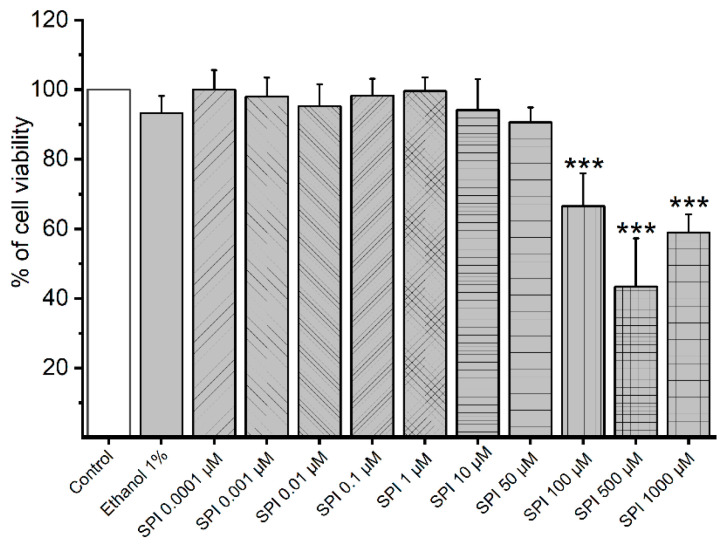 Figure 1
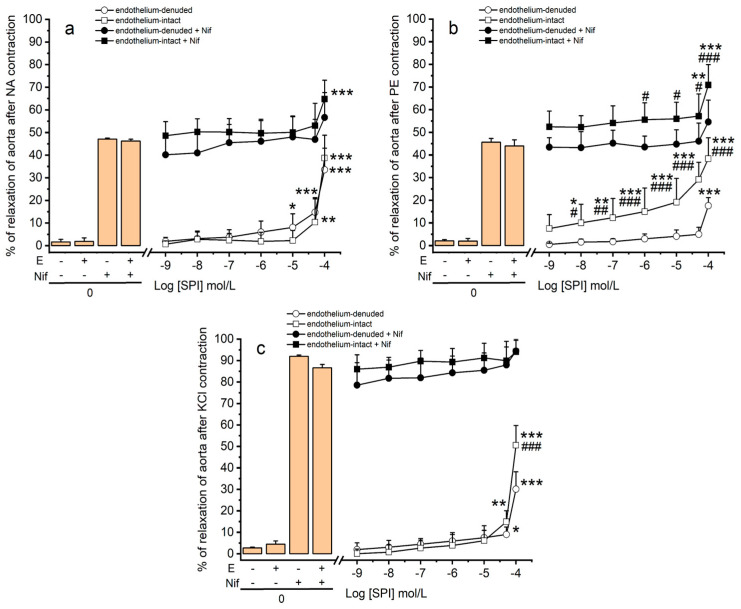 Figure 2
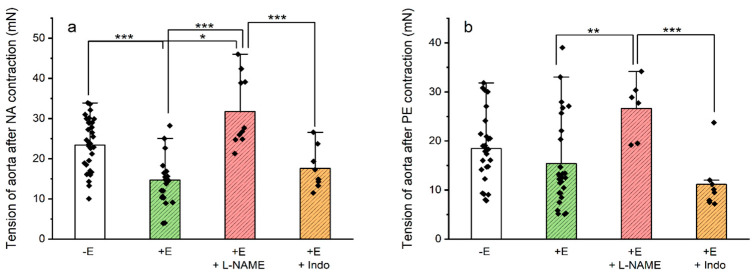 Figure 3
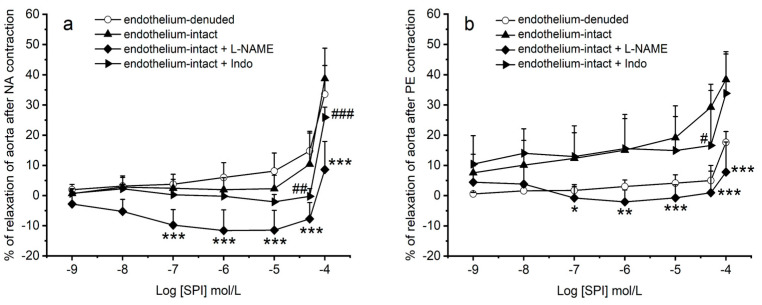 Figure 4
Peer Reviews
No public reviews on file for this paper yet. If you reviewed it on a platform where reviews are public (OpenReview, ICLR, NeurIPS, ICML), you can paste yours below so the community can read it here.
Videos
No videos yet. Explain this paper in a talk, walkthrough, or lecture? Add one.
Taxonomy
TopicsHormonal Regulation and Hypertension · Estrogen and related hormone effects · Hormonal and reproductive studies