Evolution of the WRKY Family in Angiosperms and Functional Diversity under Environmental Stress
Weihuang Wu, Jinchang Yang, Niu Yu, Rongsheng Li, Zaixiang Yuan, Jisen Shi, Jinhui Chen

TL;DR
This paper explores how the WRKY family of plant proteins evolved in flowering plants and how they help plants cope with environmental stress.
Contribution
The study provides new insights into the functional diversity and evolutionary patterns of WRKY transcription factors in angiosperms, particularly in Magnoliaceae.
Findings
WRKY transcription factors are crucial for plant adaptation to environmental stresses through pathways like ROS and hormone signaling.
The WRKY family is divided into three major groups in angiosperms based on conserved domains and structures.
The study highlights the role of WRKY proteins in physiological responses such as stomatal closure and leaf shrinkage.
Abstract
The transcription factor is an essential factor for regulating the responses of plants to external stimuli. The WRKY protein is a superfamily of plant transcription factors involved in response to various stresses (e.g., cold, heat, salt, drought, ions, pathogens, and insects). During angiosperm evolution, the number and function of WRKY transcription factors constantly change. After suffering from long-term environmental battering, plants of different evolutionary statuses ultimately retained different numbers of WRKY family members. The WRKY family of proteins is generally divided into three large categories of angiosperms, owing to their conserved domain and three-dimensional structures. The WRKY transcription factors mediate plant adaptation to various environments via participating in various biological pathways, such as ROS (reactive oxygen species) and hormone signaling pathways,…
Genes, proteins, chemicals, diseases, species, mutations and cell lines named across the full text — each resolved to its canonical identifier and authoritative record.
Click any figure to enlarge with its caption.
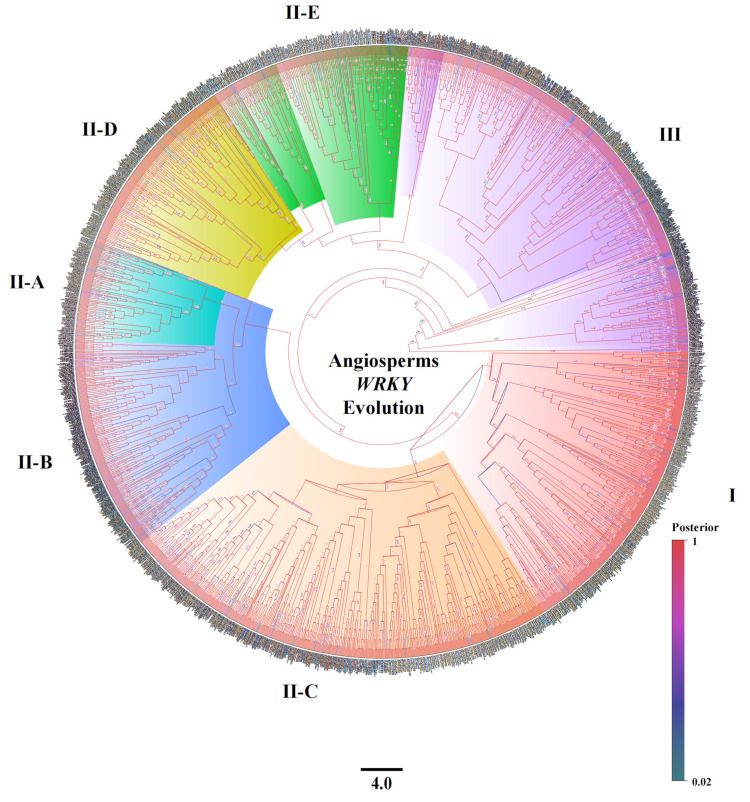 Figure 1
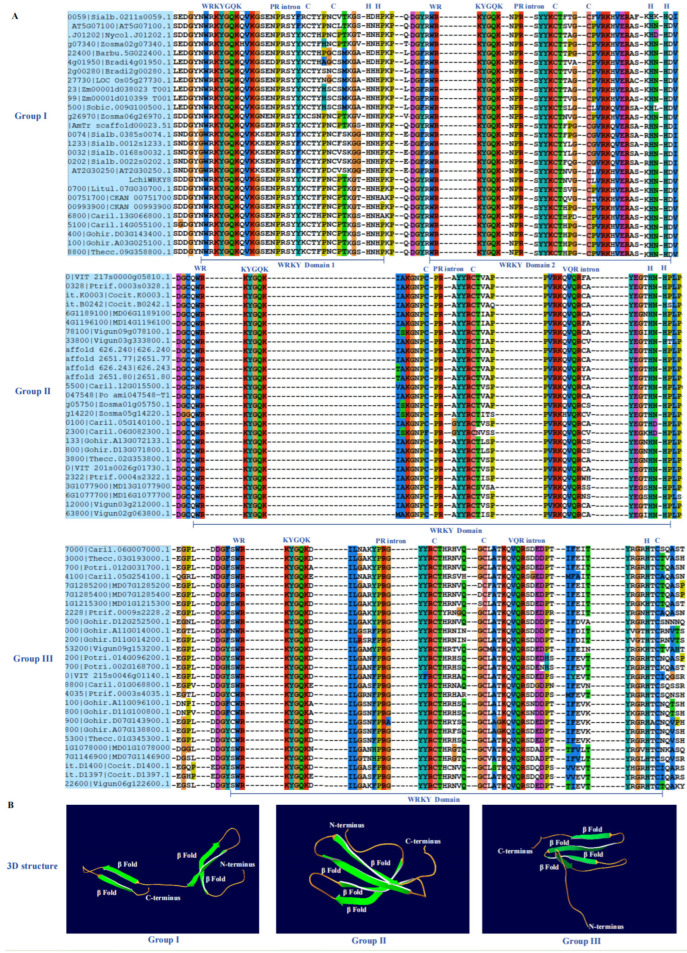 Figure 2
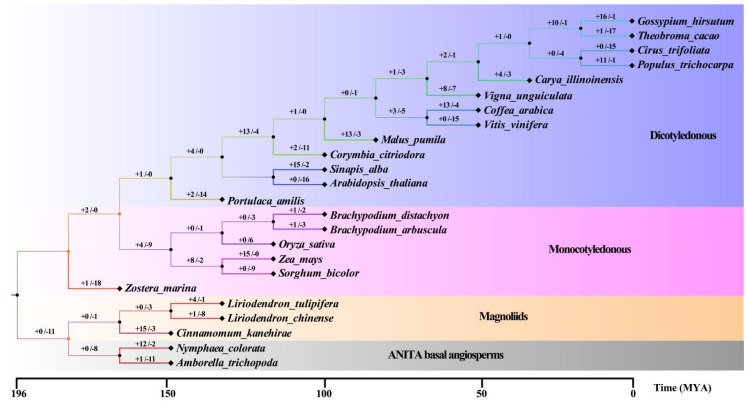 Figure 3
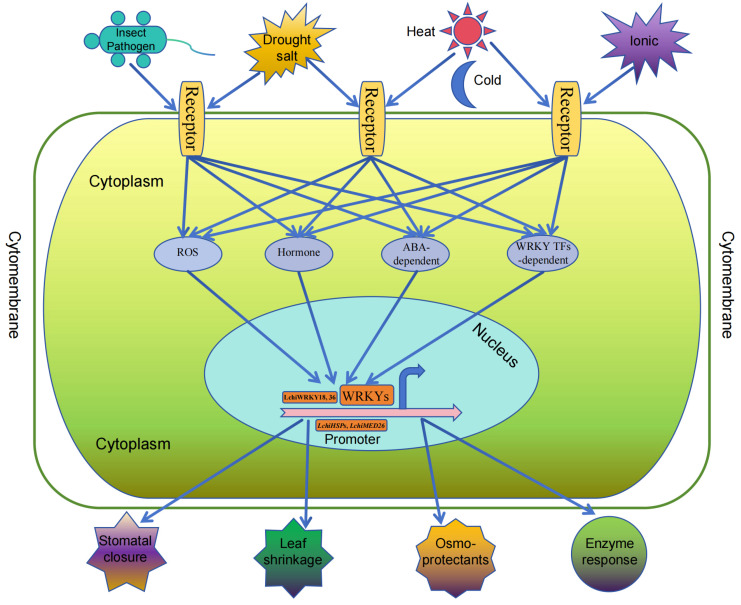 Figure 4
Peer Reviews
No public reviews on file for this paper yet. If you reviewed it on a platform where reviews are public (OpenReview, ICLR, NeurIPS, ICML), you can paste yours below so the community can read it here.
Videos
No videos yet. Explain this paper in a talk, walkthrough, or lecture? Add one.
Taxonomy
TopicsEducational and Social Studies