Virulence Spectra of Hungarian Pyrenophora teres f. teres Isolates Collected from Experimental Fields Show Continuous Variation without Specific Isolate × Barley Differential Interactions
József Bakonyi, Diána Seress, Zoltán Á. Nagy, Ildikó Csorba, Mónika Cséplő, Tibor A. Marton, Anke Martin, Klára Mészáros

TL;DR
This study examines the virulence of Pyrenophora teres f. teres isolates in Hungary and finds continuous variation in their ability to infect barley, with no specific isolate-differential interactions.
Contribution
The first report on pathogenic variation of Ptt in Hungary, identifying 28 pathotypes and suggesting improvements to the barley differential set.
Findings
Twenty-eight Ptt pathotypes were identified from 34 isolates collected in Hungary.
Isolates showed continuous virulence variation without specific isolate × barley differential interactions.
Some barley differentials showed strong resistance to multiple isolates, useful for breeding NFNB-resistant barley.
Abstract
Pyrenophora teres f. teres (Ptt), the causal agent of net form net blotch (NFNB) disease, is an important and widespread pathogen of barley. This study aimed to quantify and characterize the virulence of Ptt isolates collected from experimental fields of barley in Hungary. Infection responses across 20 barley differentials were obtained from seedling assays of 34 Ptt isolates collected from three Hungarian breeding stations between 2008 and 2018. Twenty-eight Ptt pathotypes were identified. Correspondence analysis followed by hierarchical clustering on the principal components and host-by-pathogen GGE biplots suggested a continuous range of virulence and an absence of specific isolate × barley differential interactions. The isolates were classified into four isolate groups (IG) using agglomerative hierarchical clustering. One IG could be distinguished from other IGs based on…
Genes, proteins, chemicals, diseases, species, mutations and cell lines named across the full text — each resolved to its canonical identifier and authoritative record.
Click any figure to enlarge with its caption.
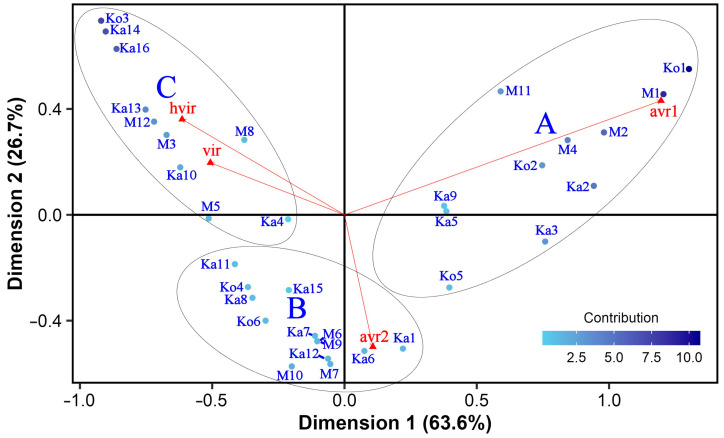 Figure 1
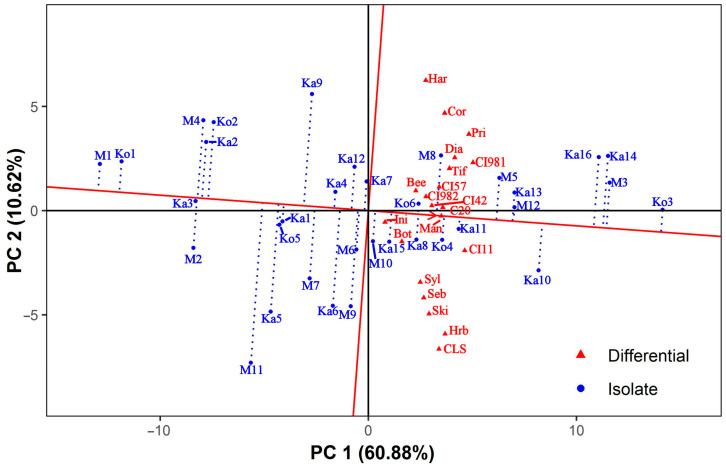 Figure 2
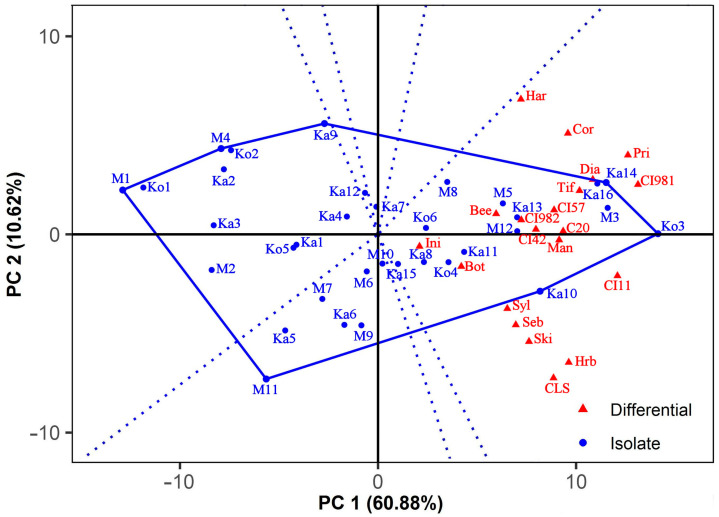 Figure 3
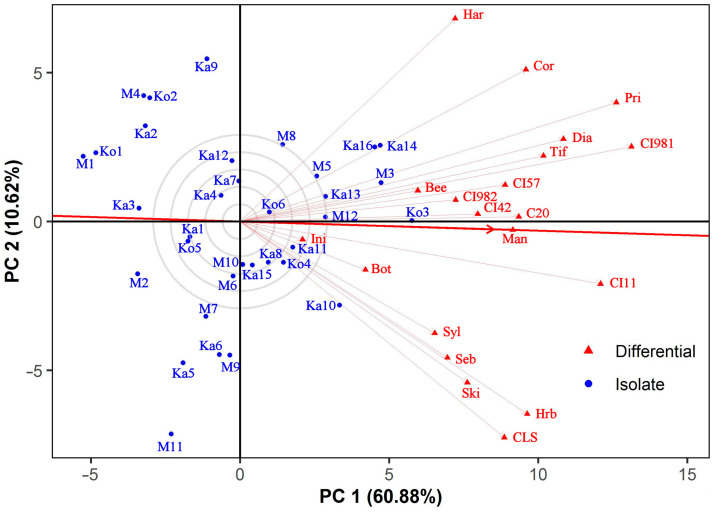 Figure 4
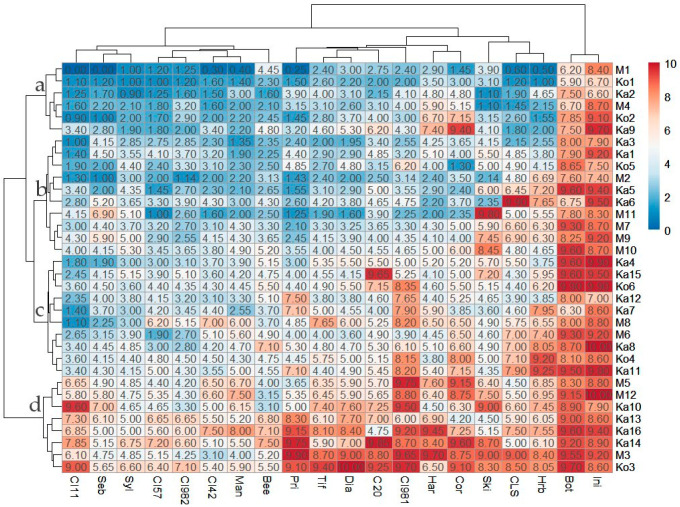 Figure 5
Peer Reviews
No public reviews on file for this paper yet. If you reviewed it on a platform where reviews are public (OpenReview, ICLR, NeurIPS, ICML), you can paste yours below so the community can read it here.
Videos
No videos yet. Explain this paper in a talk, walkthrough, or lecture? Add one.
Taxonomy
TopicsMedieval Architecture and Archaeology · Archaeological and Historical Studies