Exposure to Non-Steady-State Oxygen Is Reflected in Changes to Arterial Blood Gas Values, Prefrontal Cortical Activity, and Systemic Cytokine Levels
Elizabeth G. Damato, Joseph S. Piktel, Seunghee P. Margevicius, Seth J. Fillioe, Lily K. Norton, Alireza Abdollahifar, Kingman P. Strohl, David S. Burch, Michael J. Decker

TL;DR
Exposure to fluctuating oxygen levels affects blood gases, brain activity, and immune markers in aviators.
Contribution
This study reveals how non-steady-state oxygen exposure impacts physiological and cognitive responses in aviators.
Findings
Non-steady-state FiO2 exposure leads to higher PaO2 levels after exposure compared to steady-state conditions.
Prefrontal cortical activation is reduced after exposure to non-steady-state FiO2 >50%.
Serum cytokine levels increase 48 hours after non-steady-state FiO2 exposure.
Abstract
Onboard oxygen-generating systems (OBOGSs) provide increased inspired oxygen (FiO2) to mitigate the risk of neurologic injury in high altitude aviators. OBOGSs can deliver highly variable oxygen concentrations oscillating around a predetermined FiO2 set point, even when the aircraft cabin altitude is relatively stable. Steady-state exposure to 100% FiO2 evokes neurovascular vasoconstriction, diminished cerebral perfusion, and altered electroencephalographic activity. Whether non-steady-state FiO2 exposure leads to similar outcomes is unknown. This study characterized the physiologic responses to steady-state and non-steady-state FiO2 during normobaric and hypobaric environmental pressures emulating cockpit pressures within tactical aircraft. The participants received an indwelling radial arterial catheter while exposed to steady-state or non-steady-state FiO2 levels oscillating ± 15% of…
Genes, proteins, chemicals, diseases, species, mutations and cell lines named across the full text — each resolved to its canonical identifier and authoritative record.
Click any figure to enlarge with its caption.
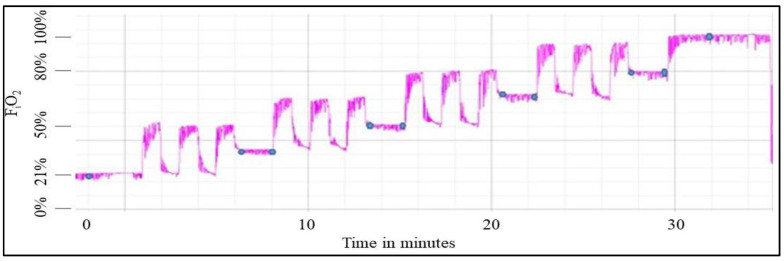 Figure 1
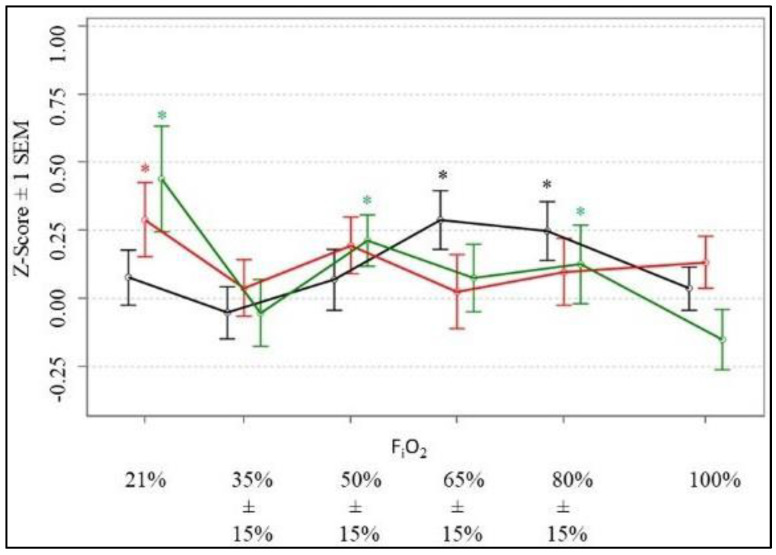 Figure 2
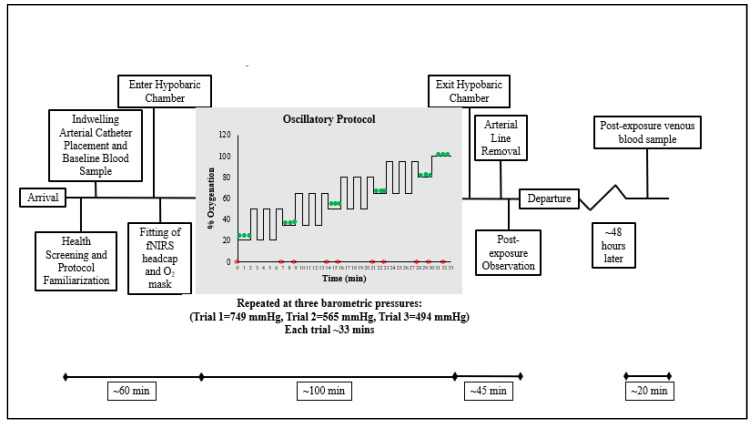 Figure 3
Peer Reviews
No public reviews on file for this paper yet. If you reviewed it on a platform where reviews are public (OpenReview, ICLR, NeurIPS, ICML), you can paste yours below so the community can read it here.
Videos
No videos yet. Explain this paper in a talk, walkthrough, or lecture? Add one.
Taxonomy
TopicsHigh Altitude and Hypoxia · Traumatic Brain Injury and Neurovascular Disturbances · Cardiovascular and Diving-Related Complications