The Effect of HMGB1 and HMGB2 on Transcriptional Regulation Differs in Neuroendocrine and Adenocarcinoma Models of Prostate Cancer
Martín Salamini-Montemurri, Ángel Vizoso-Vázquez, Aida Barreiro-Alonso, Lidia Lorenzo-Catoira, Esther Rodríguez-Belmonte, María-Esperanza Cerdán, Mónica Lamas-Maceiras

TL;DR
This study shows that HMGB1 and HMGB2 proteins regulate gene expression differently in aggressive and non-aggressive prostate cancer models.
Contribution
The study reveals distinct regulatory roles of HMGB1 and HMGB2 in neuroendocrine versus adenocarcinoma prostate cancer models.
Findings
HMGB1 mainly repressed gene expression, while HMGB2 activated it in prostate cancer cells.
Genes like SERPINE1, CDK1, and ZWINT showed significant expression changes after HMGB1 or HMGB2 manipulation.
Differences in HMGB1 and HMGB2 regulation were observed between neuroendocrine and adenocarcinoma prostate cancer subtypes.
Abstract
Human high-mobility group-B (HMGB) proteins regulate gene expression in prostate cancer (PCa), a leading cause of oncological death in men. Their role in aggressive PCa cancers, which do not respond to hormonal treatment, was analyzed. The effects of HMGB1 and HMGB2 silencing upon the expression of genes previously related to PCa were studied in the PCa cell line PC-3 (selected as a small cell neuroendocrine carcinoma, SCNC, PCa model not responding to hormonal treatment). A total of 72% of genes analyzed, using pre-designed primer panels, were affected. HMGB1 behaved mostly as a repressor, but HMGB2 as an activator. Changes in SERPINE1, CDK1, ZWINT, and FN1 expression were validated using qRT-PCR after HMGB1 silencing or overexpression in PC-3 and LNCaP (selected as an adenocarcinoma model of PCa responding to hormonal treatment) cell lines. Similarly, the regulatory role of HMGB2 upon…
Genes, proteins, chemicals, diseases, species, mutations and cell lines named across the full text — each resolved to its canonical identifier and authoritative record.
Click any figure to enlarge with its caption.
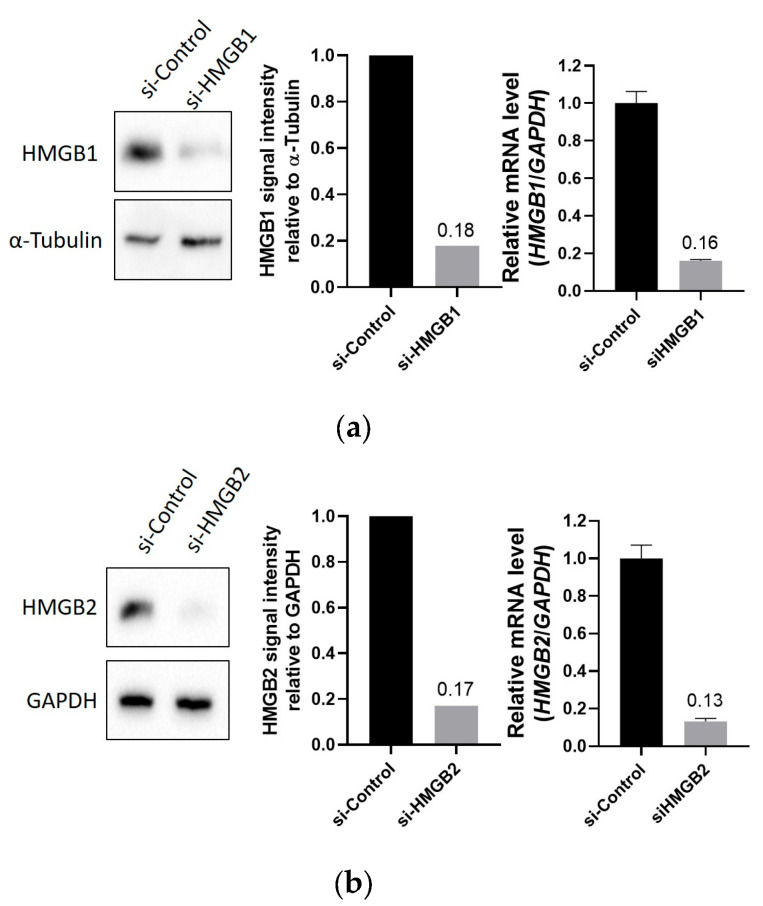 Figure 1
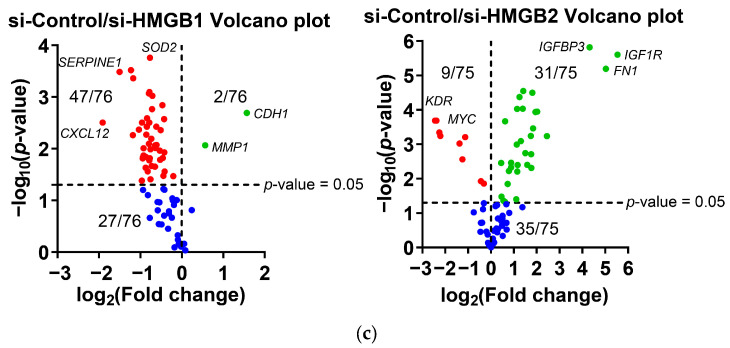 Figure 2
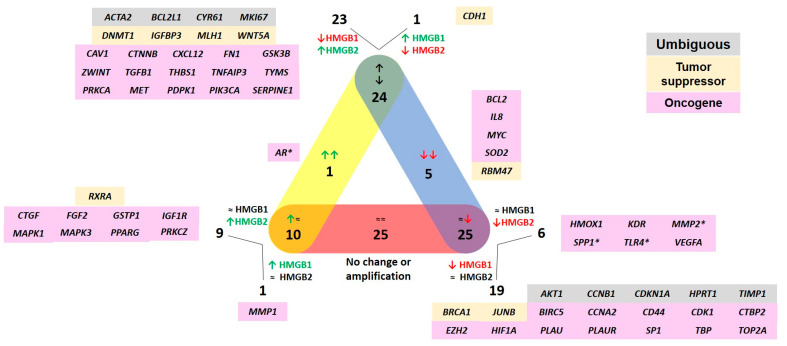 Figure 3
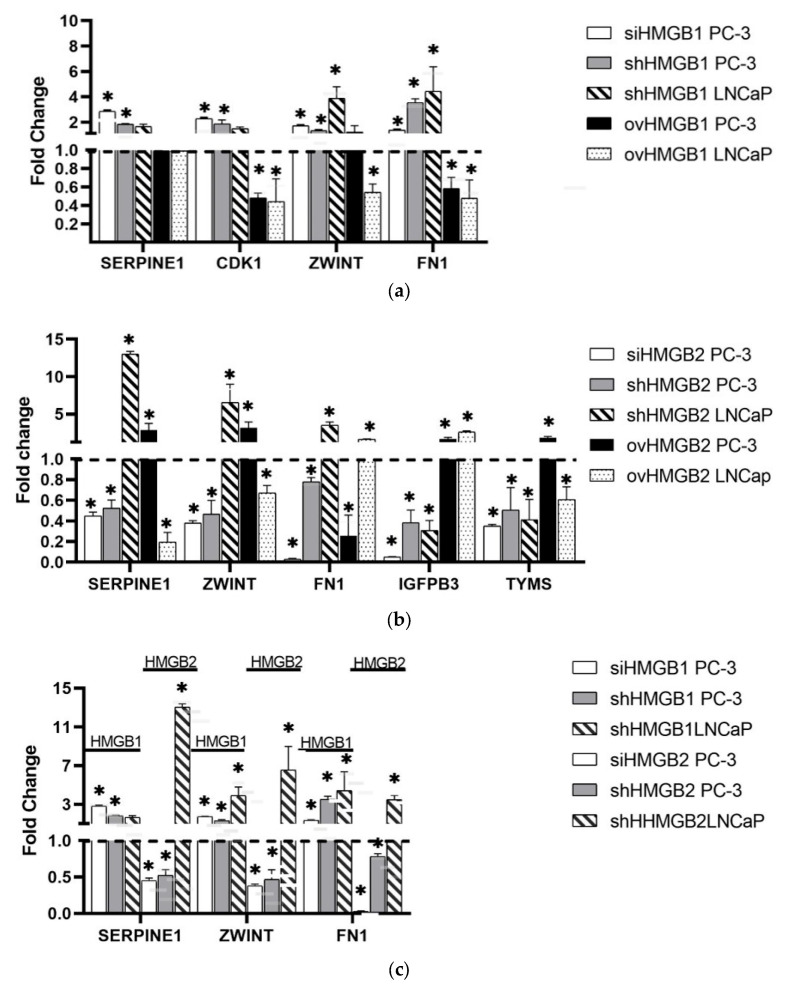 Figure 4
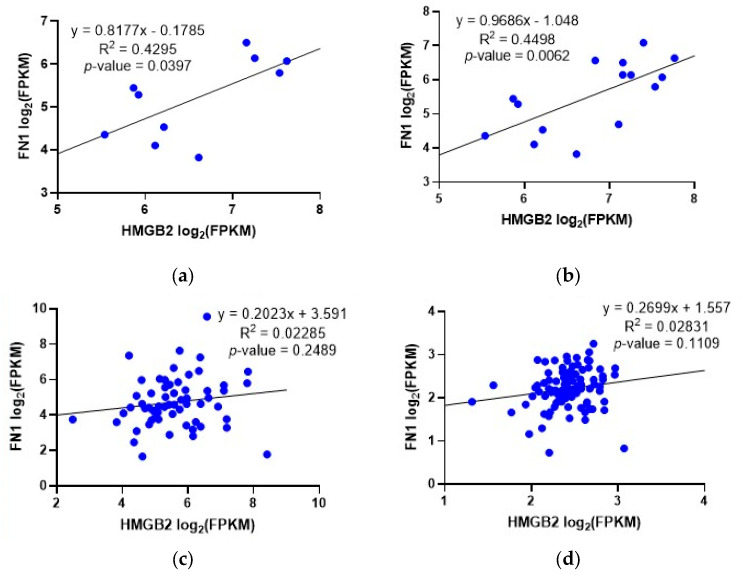 Figure 5
Peer Reviews
No public reviews on file for this paper yet. If you reviewed it on a platform where reviews are public (OpenReview, ICLR, NeurIPS, ICML), you can paste yours below so the community can read it here.
Videos
No videos yet. Explain this paper in a talk, walkthrough, or lecture? Add one.
Taxonomy
TopicsProstate Cancer Treatment and Research · Cancer-related molecular mechanisms research · Cancer-related gene regulation