Immunoprofiles and Oncologic Outcomes of 15 Patients with Androgen Receptor-Positive Salivary Duct Carcinoma
Emile Gogineni, Blake E. Sells, Khaled Dibs, Sachin R. Jhawar, Catherine T. Haring, Abberly L. Limbach, David J. Konieczkowski, Sung J. Ma, Simeng Zhu, Sujith Baliga, Darrion L. Mitchell, John C. Grecula, Marcelo Bonomi, Priyanka Bhateja, Matthew O. Old, Nolan B. Seim

TL;DR
This study explores treatment outcomes and immunological profiles in patients with androgen receptor-positive salivary duct carcinoma, suggesting potential for personalized therapies.
Contribution
The study demonstrates high survival rates using aggressive treatment and highlights variable immunoprofiles for future personalized therapy in AR+ salivary duct carcinoma.
Findings
Patients with AR+ SDC showed high 5-year overall survival rates (87%) with aggressive treatment.
Immunoprofiles varied widely, suggesting potential for individualized treatment strategies.
Trimodality therapy (surgery, radiation, systemic therapy) was commonly used and effective.
Abstract
Salivary duct carcinomas (SDC) can present with distinct immunologic profiles similar to breast cancer, such as androgen receptor (AR) and HER-2/Neu-positivity, raising the hypothesis that these tumors may respond to hormonal signaling. No consensus exists on how to best manage this entity. The data evaluating the use of targeted therapies, such as androgen deprivation therapy and HER-2 receptor inhibitors, in the front-line setting when treating curatively is limited. We studied patients with AR+ SDC, demonstrating high rates of control and survival using an aggressive approach to treatment. Immunoprofiles were highly variable, highlighting the potential for future treatment individualization. We hope that this may allow for personalization of treatment in the future, using molecular profiling to determine whether the addition of biological agents in the definitive setting against…
Genes, proteins, chemicals, diseases, species, mutations and cell lines named across the full text — each resolved to its canonical identifier and authoritative record.
Click any figure to enlarge with its caption.
 Figure 1
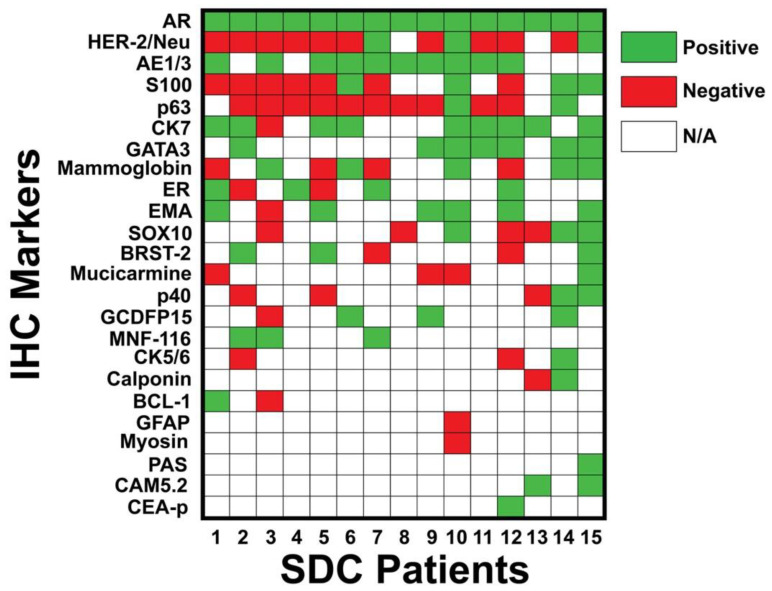 Figure 2
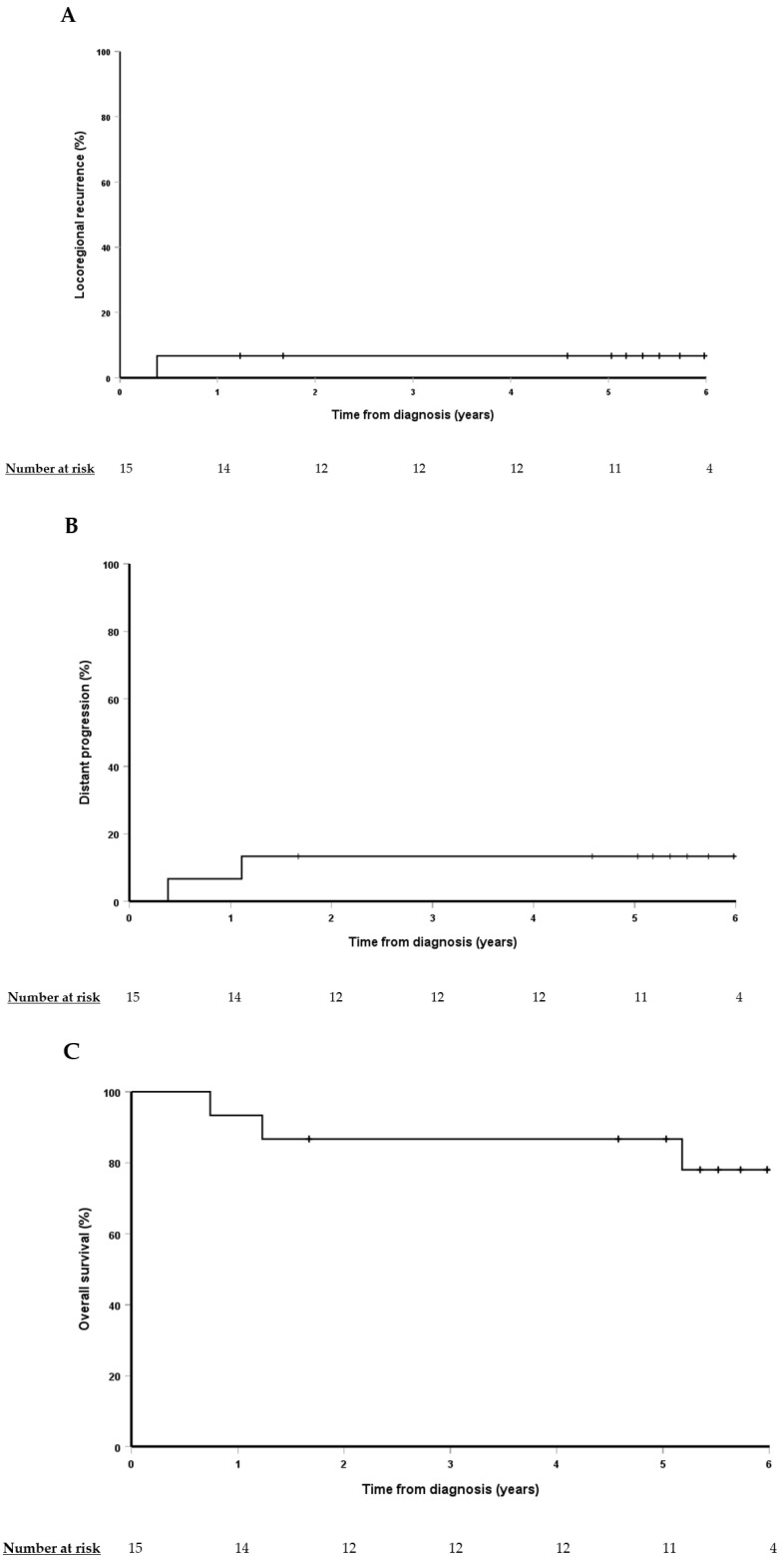 Figure 3
Peer Reviews
No public reviews on file for this paper yet. If you reviewed it on a platform where reviews are public (OpenReview, ICLR, NeurIPS, ICML), you can paste yours below so the community can read it here.
Videos
No videos yet. Explain this paper in a talk, walkthrough, or lecture? Add one.
Taxonomy
TopicsRisk and Safety Analysis