Pest categorisation of Lepidosaphes malicola
Claude Bragard, Paula Baptista, Elisavet Chatzivassiliou, Francesco Di Serio, Paolo Gonthier, Josep Anton Jaques Miret, Annemarie Fejer Justesen, Christer Sven Magnusson, Panagiotis Milonas, Juan A. Navas‐Cortes, Stephen Parnell, Roel Potting, Philippe Lucien Reignault

TL;DR
This paper assesses the risk of Lepidosaphes malicola, a scale insect, becoming a pest in the EU, based on its host range and potential for entry through plant imports.
Contribution
The study provides a detailed pest categorization of Lepidosaphes malicola for the EU, highlighting its potential as a quarantine pest.
Findings
L. malicola is a polyphagous pest affecting over 60 plant species, including economically important crops.
The insect has two generations annually and could establish in southern and central EU regions.
Despite its pest status in parts of Asia, there is no evidence of it being a pest in Türkiye or currently established in the EU.
Abstract
The EFSA Panel on Plant Health performed a pest categorisation of Lepidosaphes malicola (Hemiptera: Diaspididae), the Armenian mussel scale, for the territory of the European Union, following commodity risk assessments of Prunus persica and P. dulcis plants for planting from Türkiye, in which L. malicola was identified as a pest of possible concern. L. malicola is a polyphagous insect of temperate and arid areas, feeding on more than 60 plant species belonging to 26 families. Important crops significantly affected by L. malicola in parts of Asia include stone fruits (Prunus armeniaca, P. persica), pome fruits (Malus domestica, Pyrus communis), grapes (Vitis vinifera), pomegranate (Punica granatum), walnuts (Juglans regia) and ornamental plants (Berberis spp., Cornus spp., Jasminum spp., Ligustrum spp.). L. malicola has two generations annually. The overwintered eggs hatch from late May…
Genes, proteins, chemicals, diseases, species, mutations and cell lines named across the full text — each resolved to its canonical identifier and authoritative record.
Click any figure to enlarge with its caption.
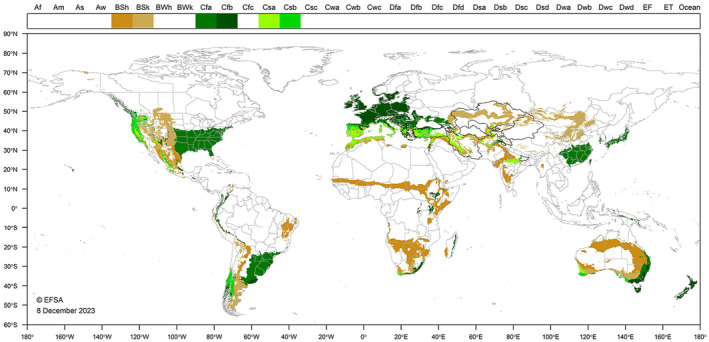 Figure 1
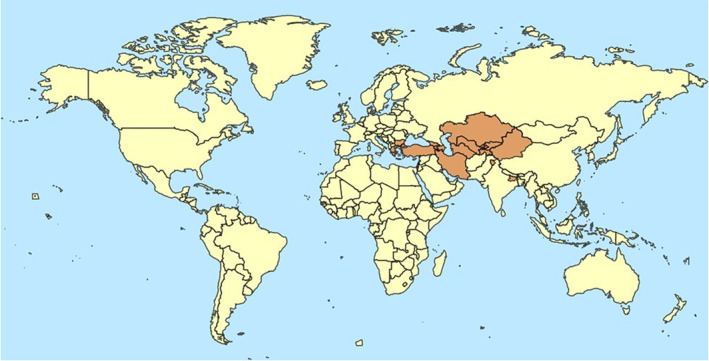 Figure 2
Peer Reviews
No public reviews on file for this paper yet. If you reviewed it on a platform where reviews are public (OpenReview, ICLR, NeurIPS, ICML), you can paste yours below so the community can read it here.
Videos
No videos yet. Explain this paper in a talk, walkthrough, or lecture? Add one.
Taxonomy
TopicsResearch on scale insects · Insect-Plant Interactions and Control · Agricultural pest management studies