Percutaneous Needle Decompression: A Novel Approach Toward Treating Compartment Syndrome of the Leg
Syed Abdullah Haider, Sadia Iram, Pervaiz Iqbal

TL;DR
A 45-year-old man with acute compartment syndrome after a leg fracture was successfully treated with percutaneous needle decompression instead of surgery.
Contribution
This case demonstrates the successful use of percutaneous needle decompression as an alternative to open fasciotomy for acute compartment syndrome.
Findings
Percutaneous needle decompression was used successfully on all compartments of the affected leg.
The treatment avoided complications associated with double incision fasciotomy.
Abstract
Percutaneous needle decompression (PND) can be a successful alternative to open fasciotomies for acute compartment syndrome (ACS). We present the case of a 45-year-old male patient who survived a road traffic accident and developed ACS following his open fracture of the tibia and fibula. He was treated by performing PND on all compartments of the affected leg using a 24 gauge needle thus avoiding the complications of a double incision fasciotomy.
Genes, proteins, chemicals, diseases, species, mutations and cell lines named across the full text — each resolved to its canonical identifier and authoritative record.
Click any figure to enlarge with its caption.
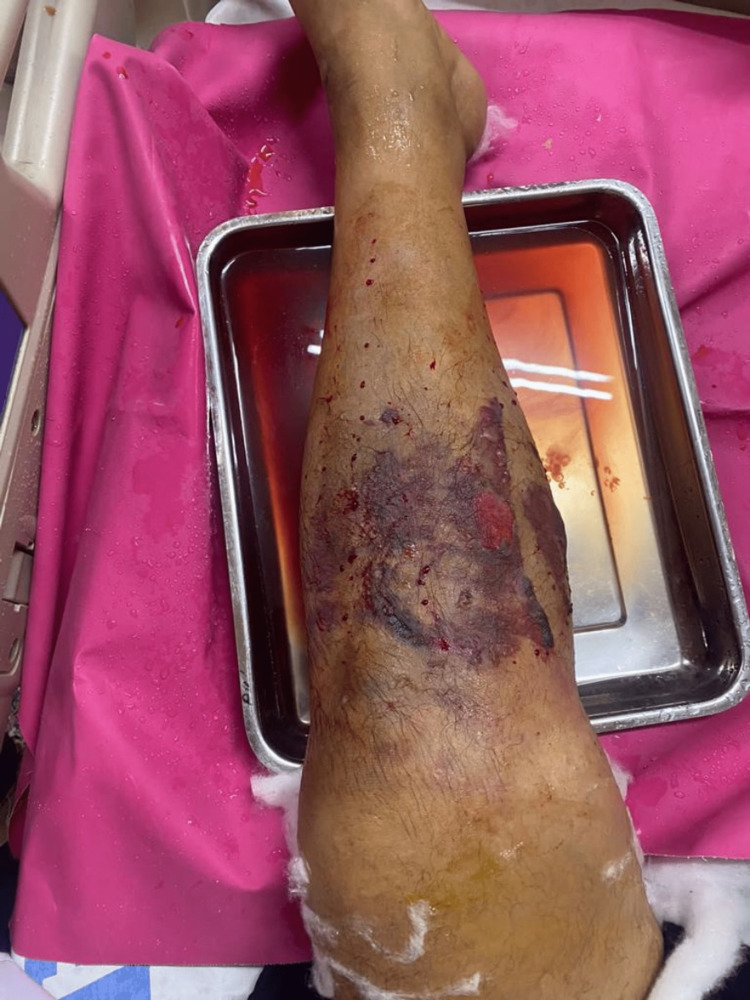 Figure 1
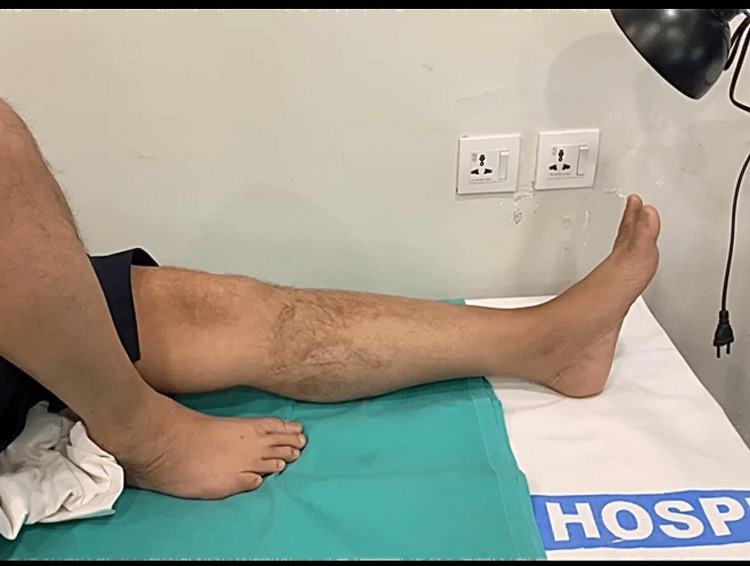 Figure 2
Peer Reviews
No public reviews on file for this paper yet. If you reviewed it on a platform where reviews are public (OpenReview, ICLR, NeurIPS, ICML), you can paste yours below so the community can read it here.
Videos
No videos yet. Explain this paper in a talk, walkthrough, or lecture? Add one.
Taxonomy
TopicsMuscle and Compartmental Disorders · Sports injuries and prevention