Ajaniaflavida (Asteraceae, Anthemideae), a distinct new species from southwestern China

Abstract
Genes, proteins, chemicals, diseases, species, mutations and cell lines named across the full text — each resolved to its canonical identifier and authoritative record.
Click any figure to enlarge with its caption.
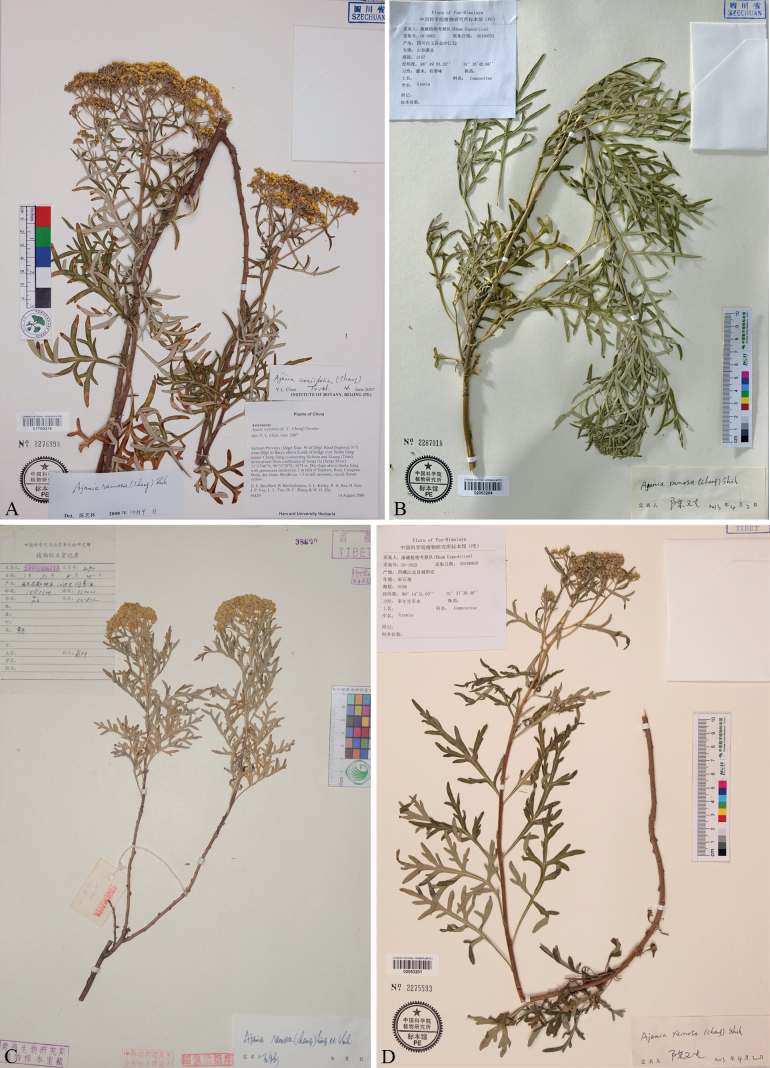 Figure 1
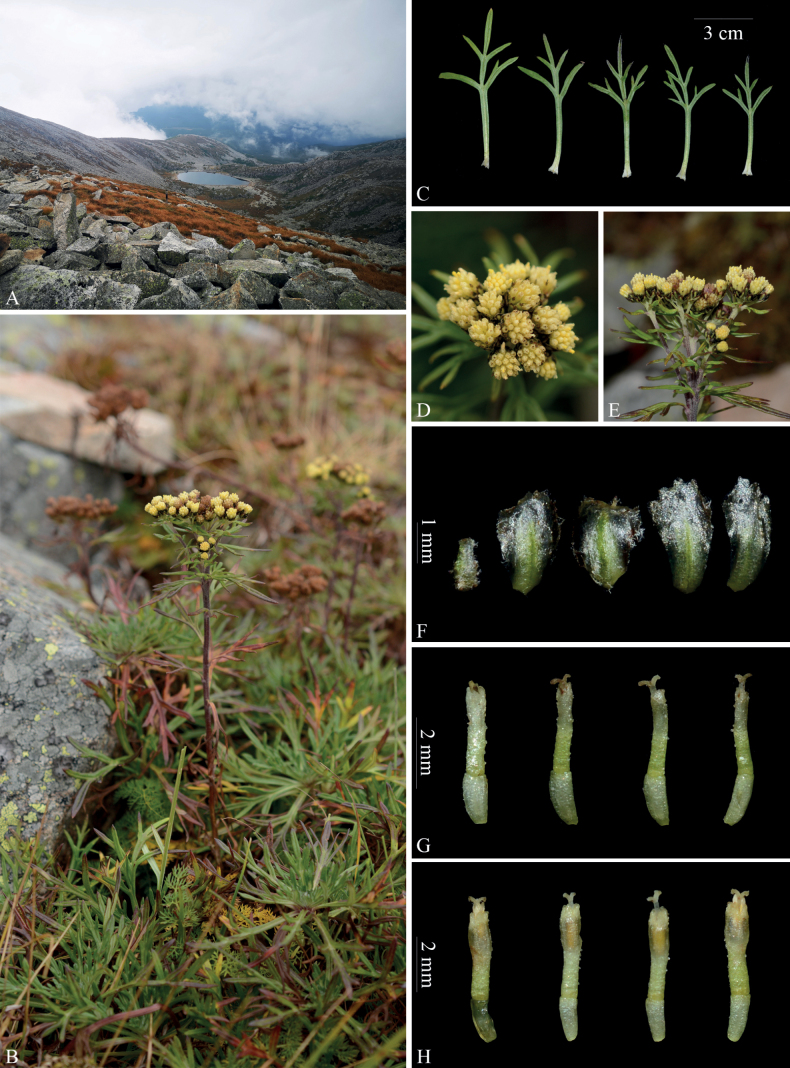 Figure 2
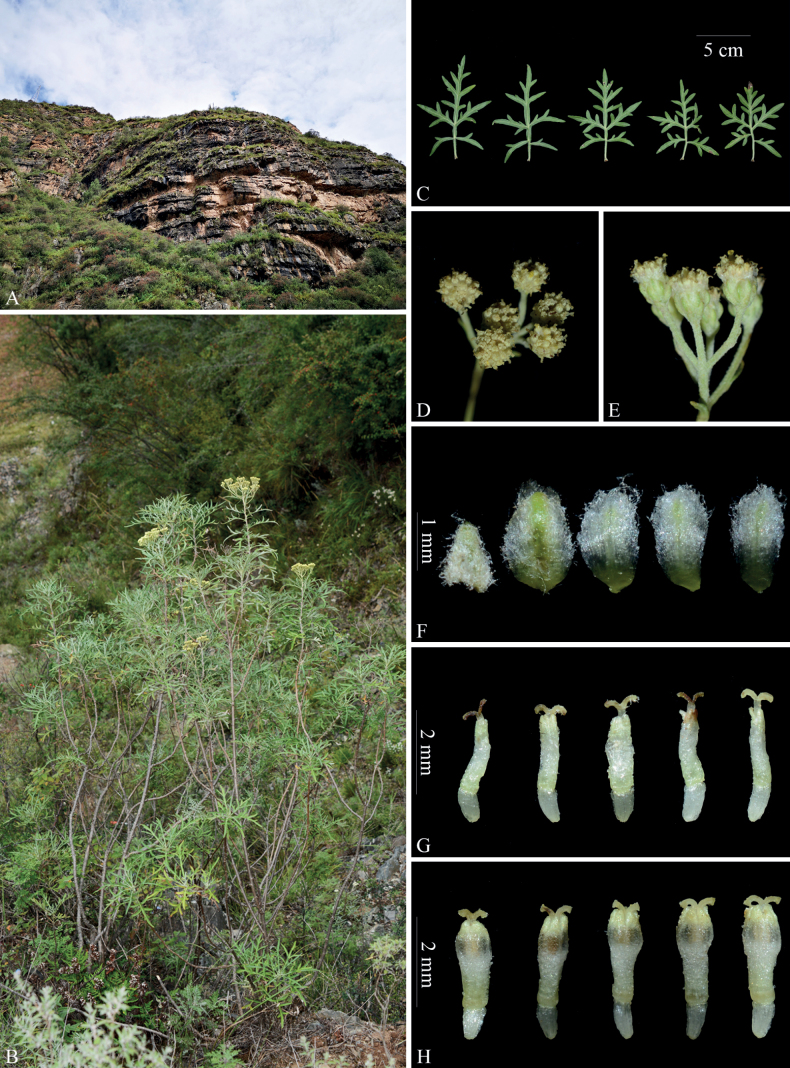 Figure 3
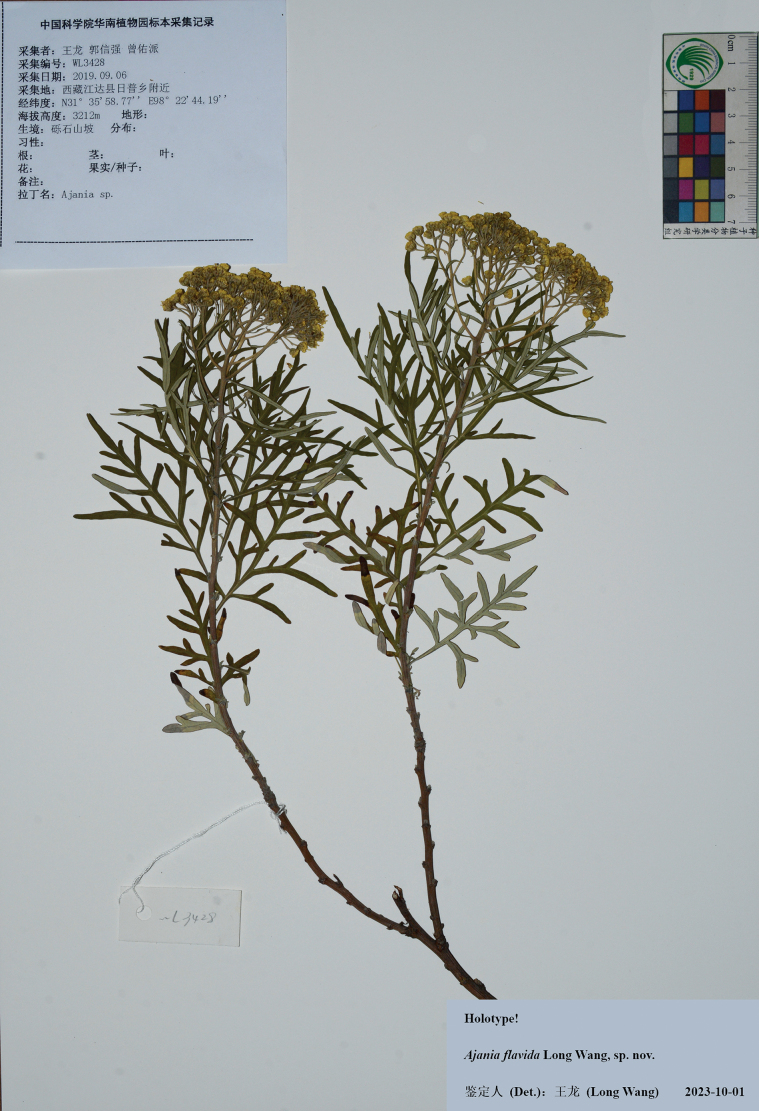 Figure 4
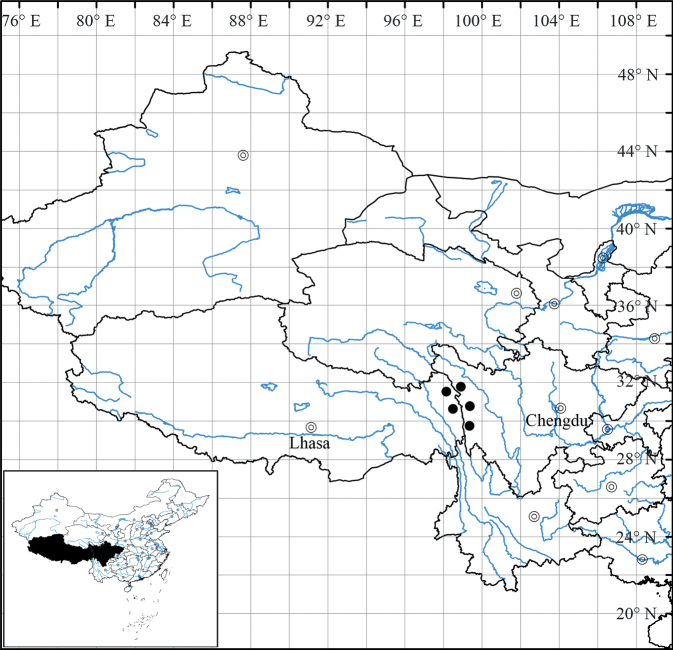 Figure 5
Peer Reviews
No public reviews on file for this paper yet. If you reviewed it on a platform where reviews are public (OpenReview, ICLR, NeurIPS, ICML), you can paste yours below so the community can read it here.
Videos
No videos yet. Explain this paper in a talk, walkthrough, or lecture? Add one.
Taxonomy
TopicsSesquiterpenes and Asteraceae Studies · Plant and Fungal Species Descriptions · Phytochemistry and Biological Activities
Introduction
Ajania Poljak. (Asteraceae, Anthemideae) consists of 30−39 species mainly distributed in central Asia (Bremer and Humphries 1993; Oberprieler et al. 2007a, b, 2009; Shih et al. 2011). In China, 35 species are currently recognized, among which 23 are endemic (Shih et al. 2011). Over the past decade, taxonomic updates in this genus have been infrequent, with only a new species described from Iran (Sonboli et al. 2013).
During herbarium surveys of Ajania in China, seven collections, including D. E. Boufford et al. 36429 (F, PE; Fig. 1A), Kham Exped. 10-0662 (PE; Fig. 1B), Y. W. Tsui 5942 (PE), and M. Z. Wen & S. C. Xiao Xiang157 (CDBI) from Sichuan, and HNWP Xizang Exped. 2195 (HNWP; Fig. 1C), Kham Exped. 10-1622 (PE; Fig. 1D) and Qinghai-Xizang Vegetat. Exped. 9655 (PE) from Xizang, all in China, caught our attention. Most of these collections have been previously identified as A.ramosa (C. C. Chang) C. Shih (Fig. 2), but they are quite different from that species in an array of characters. Plants of this taxon are shrubs of 1−2 m tall, with leaf blades 2-pinnatisect, involucres ca. 3 mm in diameter, and margins of the phyllaries whitish scarious, while in A.ramosa the plants are subshrubs of 40−60 cm tall, with leaf blades 1(−2)-pinnatisect, involucres 4−5 mm in diameter, and margins of the phyllaries brown scarious. To precisely determine the identity of these collections, we undertook a field visit to Jomda in eastern Xizang in September 2019. Through careful comparisons, we found that this taxon is indeed quite different from A.ramosa in A.sect.Phaeoscyphus, which is characterized by having larger (4−10 mm in diameter) capitula, not straw-colored, not glossy involucres and marginally dark brown or purple scarious phyllaries. It can be, however, readily referred to A.sectAjania based on the smaller (ca. 3 mm in diameter) capitula, straw-colored, glossy involucres and marginally whitish scarious phyllaries. It is easily distinguishable from the remaining species within this section in being shrubs of 1−2 m tall and having creamy yellow florets. The taxon in question therefore represents a hitherto undescribed species, which we describe below.
Specimens of Ajaniaflavida sp. nov. previously misidentified as A.ramosa or A.variifoliaA China, Sichuan, Dêgê, D. E. Boufford et al. 36429 (PE) B China, Sichuan, Baiyü, Kham Exped. 10-0662 (PE) C China, Xizang, Jomda, HNWP Xizang Exped. 2195 (HNWP) D China, Xizang, Jomda, Kham Exped. 10-1622 (PE).
Ajaniaramosa in the wild (China, Shaanxi, Meixian) A habitat B habit C basal leaves (adaxial surface) D synflorescence (top view) E synflorescence (side view) F phyllaries (abaxial surface) G marginal female florets H central disk florets. Photographs by Long Wang.
Material and methods
For morphological comparisons, we examined physical or digitalized herbarium specimens (with high-resolution) of Ajania deposited at several major herbaria in China, including CDBI, HNWP, IBSC, KUN, NAS, PE, SZ, and WUK (acronyms follow Thiers (2024)). Specimens of A.flavida were collected and photographed during our field investigation to Xizang Autonomous Region in 2019. Morphological observations and measurements were based on fresh material as well as all herbarium specimens of this species. For conservation assessment, we used Geo CAT, the online geospatial conservation assessment tool (Bachman et al. 2011; http://geocat.kew.org/) to calculate the Extent of Occurrence (EOO) and Area of Occupancy (AOO) with a user-defined cell width of 2 km.
Taxonomic treatment
Ajania
flavida
Taxon classificationPlantaeAsteralesAsteraceae
Long Wang sp. nov.
74A7A89E-3B7E-5C27-B3C0-2746FE3FE91E
urn:lsid:ipni.org:names:77338638-1
Diagnosis.
Ajaniaflavida is distinct in A.sect.Ajania in being shrubs of 1−2 m in height and having creamy yellow florets. It is superficially similar to A.ramosa in A.sect.Phaeoscyphus, but can be easily distinguished by the plant habit (shrub vs. subshrub), plant height (1−2 m vs. 40−60 cm), leaf division (2-pinnatisect vs. 1(−2)-pinnatisect), size of the involucres (ca. 3 mm vs. 4−5 mm in diameter), color (creamy yellow vs. yellow) of the florets and margins (whitish scarious vs. brown scarious) of the phyllaries.
Ajaniaflavida sp. nov. in the wild (China, Xizang, Jomda) A habitat B habit C basal leaves (adaxial surface) D synflorescence (top view) E synflorescence (side view) F phyllaries (abaxial surface) G marginal female florets H central disk florets. Photographs by Long Wang.
Type.
China. Xizang: Jomda, Tongpu, 31°35'58.77"N, 98°22'44.19"E, rocky slopes along river, 3212 m a.s.l., 6 September 2019 (fl.), Long Wang, Xin-qiang Guo & You-pai Zeng 3428 (holotype: IBSC; isotypes: IBSC). Fig. 4.
Holotype sheet of Ajaniaflavida sp. nov.
Description.
Shrubs, 1–2 m tall. Old branches gray-black, sparsely sericeous or glabrescent, with densely leafy tips; flowering branches robust, densely grey powdery-sericeous, especially in upper parts and on peduncles. Proximal leaves of flowering branches withered during anthesis. Middle leaves of flowering branches shortly petiolate; petiole 1–2 cm long; leaf blade ovate in outline, 7–10 cm long, 6–7 cm wide, adaxially dark green, grey sericeous, abaxially greyish, densely grey sericeous, 2-pinnatisect; lobes usually 5, narrowly oblong, lateral 1 or 2 pairs 3–4 cm long, 1.0–2.5 cm wide, distal ones 4–6 cm long, 2–3 cm wide, 1-pinnatisect; segments 2–7, lanceolate to narrowly oblong, lateral 1–3 pairs 4–20 mm long, 2–4 mm wide, distal ones 2–4 cm long, 2–5 mm wide. Distal leaves of flowering branches shortly petiolate to sessile; petiole, when present, 0.5–1.5 cm long; leaf blade ovate to linear in outline, progressively smaller upward, 1-pinnatisect to undivided. Synflorescence a terminal compound flat-topped panicle, 5–10 cm in diameter. Capitula many, erect. Involucres campanulate, ca. 3 mm in diameter, outside straw-colored, glossy; phyllaries in 4 rows, outer ones ovate to triangular-ovate, 1.0–1.2 mm long, 0.8–1.0 mm wide, abaxially densely whitish sericeous, apex acute, middle ones oblong to elliptic, 1.5–2.0 mm long, 1.0–1.2 mm wide, abaxially whitish sericeous, margin narrowly to broadly whitish scarious, apex rounded, inner ones narrowly oblong to oblong, 1.5–2 mm long, 0.6–1 mm wide, abaxially slightly whitish sericeous, margin broadly whitish scarious, apex rounded to obtuse. Florets creamy yellow, exterior with several sessile glands. Marginal female florets 9–11, 2–2.8 mm long; tube 0.4–0.7 mm long; corolla narrowly tubular, 0.8–1.1 mm long, apically 4–5-denticulate. Central disk florets many, 2.8–3.2 mm long; tube 0.8–1.2 mm long; corolla broadly tubular, 0.9–1.2 mm long, apically 5-denticulate, incurved; style 1.1–1.3 mm long; branches creamy yellow. Achenes (immature) 0.6–0.8 mm long, obconic. Pappus absent.
Distribution and habitat.
Ajaniaflavida is currently known only from western Sichuan (Baiyü, Batang, Dêgê) and eastern Xizang (Gonjo, Jomda), China (Fig. 5). It grows on rocky slopes in gorges at elevations of 3075–3800 m above sea level.
Distribution of Ajaniaflavida sp. nov. (Black dot).
Etymology.
The specific epithet ‘flavida’ refers to the creamy yellow florets of this new species.
Phenology.
Flowering in September; fruiting in October.
Vernacular name.
川藏亚菊 (Chinese pinyin: chuān zàng yà jú).
Conservation status.
Ajaniaflavida is currently known only from eight collections made from western Sichuan (Baiyü, Batang, Dêgê) and eastern Xizang (Gonjo, Jomda), China. It usually grows on rocky slopes along roadsides in the gorges, and its habitat is at risk through human activities, such as overgrazing and road construction (Wang, pers. obs.). The Extent of Occurrence (EOO) and the Area of Occupancy (AOO) are calculated to be 7516.23 km^2^ and 32 km^2^, respectively. According to the IUCN Red List Categories and Criteria (IUCN 2012, 2022), this species should be categorized as Vulnerable (VU): B1ab(iii)+2ab(iii).
Notes.
Two collections of Ajaniaflavida, viz. D. E. Boufford et al. 36429 (F, PE) and M. Z. Wen & S. C. Xiao Xiang157 (CDBI), have been previously misidentified as A.variifolia C. C. Chang, a species occurring in Heilongjiang, Hubei and Shaanxi in China. Ajaniaflavida is readily distinguished from A.variifolia in being a shrub (vs. subshrub), 1−2 m (30−60 cm) tall and having leaf blades 2-pinnatisect (vs. 1-pinnatisect), involucres ca. 3 mm (vs. 4−5 mm) in diameter, and margins of phyllaries whitish (vs. brown) scarious.
It is noteworthy that the identity of Ajaniaramosa needs to be further determined. According to our observations on both herbarium specimens and living plants in the wild, this species is poorly defined. It may encompass elements of multiple species in the genus.
Additional specimens examined
(paratypes). China. Sichuan: Baiyü, Jinsha xiang, by the Yangtze River, among scrub in valley, 3157 m, 31°16'42.66"N, 98°49'03.32"E, 25 July 2010, Kham Exped. 10-0662 (PE); Batang, Lieyi xiang, Yidun, on rocks along road, 3400 m, 19 September 1984, M. Z. Wen & S. C. Xiao Xiang157 (CDBI); Dêgê, Gongya township, road (highway 317) from Dêgê to Baiyu above E side of bridge over Jinsha Jiang (upper Chang Jiang) connecting Sichuan and Xizang (Tibet), downstream from confluence of Serqu He (Serqu River), dry slope above Jinsha Jiang with spinescent shrubs (ca. 1 m tall) of Sophora, Rosa, and Caragana, 3075 m, 31°37'40"N, 98°35'28"E, 14 August 2006, D. E. Boufford et al. 36429 (F, PE); Dêgê, Keluodong xiang, on the way from Keluodong to Damagou, 1 August 1951, Y. W. Tsui 5942 (PE). Xizang: Gonjo, Waba [Zeba xiang], grassland on mountain slopes, 3800 m, 20 August 1976, Qinghai-Xizang Vegetat. Exped. 9655 (PE); Jomda, near Jomda township, on cliffs in valley, 3195 m, 31°31'39.40"N, 98°14'31.03"E, 10 August 2010, Kham Exped. 10-1622 (PE); Jomda, Tongpu xiang, terrace in valley, 3300 m, 25 August 1973, HNWP Xizang Exped. 2195 (HNWP).
Supplementary Material
XML Treatment for Ajania flavida
The reference list from the paper itself. Each links out to its DOI / PubMed record.
- 1Bachman S Moat J Hill A Wde Torre J Scott B (2011) Supporting red list threat assessments with Geo CAT: Geospatial conservation assessment tool.Zoo Keys 150: 117–126. 10.3897/zookeys.150.2109 PMC 323443422207809 · doi ↗ · pubmed ↗
- 2Bremer K Humphries CJ (1993) Generic monograph of the Asteraceae-Anthemideae.Bulletin of the Natural History Museum Botany Series 23: 71–177.
- 3IUCN (2012) IUCN Red List Categories and Criteria, version 3.1 (2nd edn.).Gland, Switzerland and Cambridge, 32 pp.
- 4IUCN (2022) Guidelines for Using the IUCN Red List Categories and Criteria. Version 15.1. IUCN Standards and Petitions Committee. Prepared by the Standards and Petitions Committee. http://cmsdocs.s 3.amazonaws.com/Red List Guidelines.pdf
- 5Oberprieler C Himmelreich S Vogt R (2007 a) A new subtribal classification of the tribe Anthemideae (Compositae).Willdenowia 37(1): 89–114. 10.3372/wi.37.37104 · doi ↗
- 6Oberprieler C Vogt R Watson LE (2007 b) XVI. Tribe Anthemideae Cass. (1819). In: Kadereit JW, Jeffrey C (Eds) The Families and Genera of Vascular Plants (Vol. 8). Springer, Gewerbestrasse, 342−374.
- 7Oberprieler C Himmelreich SKällersjöM Vallès J Watson LE Vogt R (2009) Anthemideae. In: Funk VA, Susanna A, Stuessy TF, Bayer RJ (Eds) Systematics, Evolution, and Biogeography of Compositae. International Association for Plant Taxonomy, Vienna, 631−666.
- 8Shih C Christopher JH Gilbert MG (2011) Ajania Poljakov. In: Wu ZY, Raven PH, Hong DY (Eds) Flora of China (Vols 20−21). Science Press, Beijing & Missouri Botanical Garden Press, St. Louis, 656−667.