Editorial: Immunological response to nanomaterials
Luis Jesús Villarreal-Gómez, Giuseppe Bardi, José Manuel Cornejo-Bravo, Ma Concepción Peña-Juárez

Abstract
Genes, proteins, chemicals, diseases, species, mutations and cell lines named across the full text — each resolved to its canonical identifier and authoritative record.
Click any figure to enlarge with its caption.
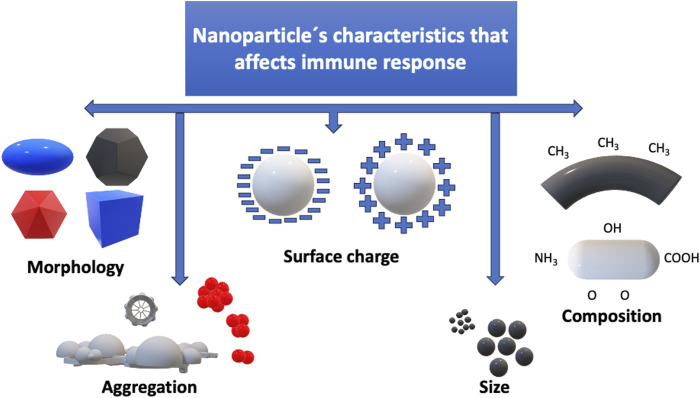 Figure 1
Peer Reviews
No public reviews on file for this paper yet. If you reviewed it on a platform where reviews are public (OpenReview, ICLR, NeurIPS, ICML), you can paste yours below so the community can read it here.
Videos
No videos yet. Explain this paper in a talk, walkthrough, or lecture? Add one.
Taxonomy
TopicsAdvanced Nanomaterials in Catalysis · Nanoparticles: synthesis and applications · Nanoplatforms for cancer theranostics
Nanomaterials have emerged as promising tools in various fields, including medicine, electronics, and environmental remediation, owing to their unique physicochemical properties and versatile applications. However, as the utilization of nanomaterials continues to expand, concerns regarding their potential impact on human health and the environment have garnered increased attention, particularly in relation to the immunological response they may elicit (Asghar et al., 2024).
Understanding the interaction between nanomaterials and the immune system is essential for ensuring their safe and effective use. The immune system plays a crucial role in defending the body against foreign invaders and maintaining homeostasis. Therefore, any disruption or dysregulation of immune function by nanomaterials could have significant implications for human health (Ernst et al., 2021).
Research in the field of immunotoxicology has made significant strides in elucidating the effects of nanomaterials. Studies have shown that nanomaterial features, including size, shape, surface chemistry, and composition, can influence the immune response at different levels (Villarreal et al.) (Figure 1). For instance, certain nanoparticles have been found to trigger inflammatory responses, oxidative stress, and immunosuppression, while others may modulate immune cell function or elicit allergic reactions (Hofer et al., 2022).
Moreover, the route of exposure to nanomaterials can impact the nature and magnitude of the immune response. Inhalation, ingestion, dermal contact, and injection represent different routes through which nanomaterials can enter the body, each posing unique challenges and considerations for assessing immunotoxicity (Gupta and Xie, 2018).
This Research Topic addressed both the advantageous and detrimental immunological aspects associated with the presence of nanomaterials in various synthesized forms, including nanoparticles, nanogels, nanofibers, nanotubes, and others. These materials may serve as nanocarriers for drug delivery or substrates for tissue engineering and implantable biosensors.
Abdullah et al. studied a new carrier system for delivering anticancer drugs, comprising heat-inactivated Lactiplantibacillus plantarum (HILP) labeled with carbon dots (CDs), termed CDs/HILP. This hybrid carrier exhibited multifunctionality, acting as a probiotic drug carrier with bioimaging capabilities and utilizing prodigiosin (PG) as the anticancer agent. Preparation and characterization of HILP, CDs, and PG were conducted using established methods, including transmission electron microscopy (TEM) and laser scanning confocal microscopy (LSCM). The CDs/HILP system demonstrated sustained release of PG over 672 h and enhanced cytotoxicity against Caco-2 and A549 cells compared to free PG. Additionally, CDs/HILP facilitated improved distribution and nuclear delivery of PG, promoting late apoptosis of Caco-2 cells and reducing their migratory ability. Molecular docking studies suggested interaction between PG and mitogenic molecules involved in cell proliferation. Overall, CDs/HILP shows promise as an innovative, multifunctional nanobiotechnological carrier for delivering anticancer drugs (Abdullah et al.).
Vázquez et al. discussed that nanotechnologies offer significant potential for advancing miRNA-based cancer therapeutics, addressing current challenges and future opportunities. MicroRNAs (miRNAs), small non-coding RNA molecules, play a crucial role in cancer development by regulating gene expression post-transcriptionally. Despite efforts, targeted delivery of artificial miRNAs, such as anti-miRNAs and miRNA mimics, remains challenging. Nanotechnology-based delivery systems show promise in effectively delivering artificial miRNAs to target sites, offering innovative approaches to combat cancer initiation and progression. This review evaluates recent developments in nanotechnology-enabled miRNA delivery systems for cancer therapy and discusses potential challenges and future directions, including plant-made nanoparticles, phytochemical-mediated modulation of miRNAs, and nanozymes (Vázquez et al.).
Finally, Qian et al., reported an electrospun core–sheath nanofibers, loaded with nanohydroxyapatite (nHA) and simvastatin (SIM), hold potential for bone regeneration applications. These nanofibers, composed of polycaprolactone (PCL), were fabricated using electrospinning technology. Characterization studies confirmed the cylindrical morphology of the nanofibers and the amorphous state of SIM within them. The core–sheath structure enabled sustained release of SIM over 672 h and promoted cell proliferation. This synergistic approach involving materials and nanostructure holds promise for the development of biomedical materials for bone regeneration (Qian et al.).
The reference list from the paper itself. Each links out to its DOI / PubMed record.
- 1Asghar N.Hussain A.Nguyen D. A.Ali S.Hussain I.Junejo A. (2024). Advancement in nanomaterials for environmental pollutants remediation: a systematic review on bibliometrics analysis, material types, synthesis pathways, and related mechanisms. J. Nanobiotechnology 22 (1), 26. 10.1186/s 12951-023-02151-3 38200605 PMC 10777661 · doi ↗ · pubmed ↗
- 2Ernst L.Casals E.Italiani P.Boraschi D.Puntes V. (2021). The interactions between nanoparticles and the innate immune system from a nanotechnologist perspective. Nanomaterials 11 (11), 2991. 10.3390/nano 11112991 34835755 PMC 8621168 · doi ↗ · pubmed ↗
- 3Gupta R.Xie H. (2018). Nanoparticles in daily life: applications, toxicity and regulations. J. Environ. Pathology, Toxicol. Oncol. 37 (3), 209–230. 10.1615/J Environ Pathol Toxicol Oncol.2018026009 PMC 619226730317972 · doi ↗ · pubmed ↗
- 4Hofer S.Hofstätter N.Punz B.Hasenkopf I.Johnson L.Himly M. (2022). Immunotoxicity of nanomaterials in health and disease: current challenges and emerging approaches for identifying immune modifiers in susceptible populations. WIR Es Nanomedicine Nanobiotechnology 14 (6), e 1804. 10.1002/wnan.1804 36416020 PMC 9787548 · doi ↗ · pubmed ↗