Development of a Medical Device in Response to a Fatal Self-Injection of Non-prescribed Opioids: A Case Report
Kara Bragg, Michael Albus, Leslie V Simon, Bradley Bragg, Rachelle Beste

TL;DR
A patient with opioid use disorder fatally self-injected opioids into a medical catheter, highlighting the need for devices to prevent such incidents.
Contribution
The paper introduces the need for a medical device to prevent self-injection of non-prescribed substances into vascular access devices.
Findings
There are no commercially available devices to prevent self-injection into vascular access devices.
A patient's fatal overdose revealed the risks faced by patients who inject drugs in medical settings.
Formal reporting mechanisms are needed for incidents involving self-injection into vascular access devices.
Abstract
Patients who inject drugs (PWID) pose unique challenges in their medical care due to risks of increased infection and overdose. There are no known commercially available devices to prevent patients from self-injecting non-prescribed substances into vascular access devices (VADs). A patient in the emergency department (ED) of a midsized suburban hospital self-injected an opioid in the ED restroom after the placement of a vascular catheter by the nursing staff as part of her ED care. Despite precautions taken for a patient with a known opioid use disorder (OUD) and a history of self-injecting non-prescribed substances into VADs, the patient suffered a self-induced fatal overdose. PWID are at significant risk of self-injection when requiring intravenous medications as part of their medical care. This case highlighted the need for formal reporting for patients who self-inject non-prescribed…
Genes, proteins, chemicals, diseases, species, mutations and cell lines named across the full text — each resolved to its canonical identifier and authoritative record.
Click any figure to enlarge with its caption.
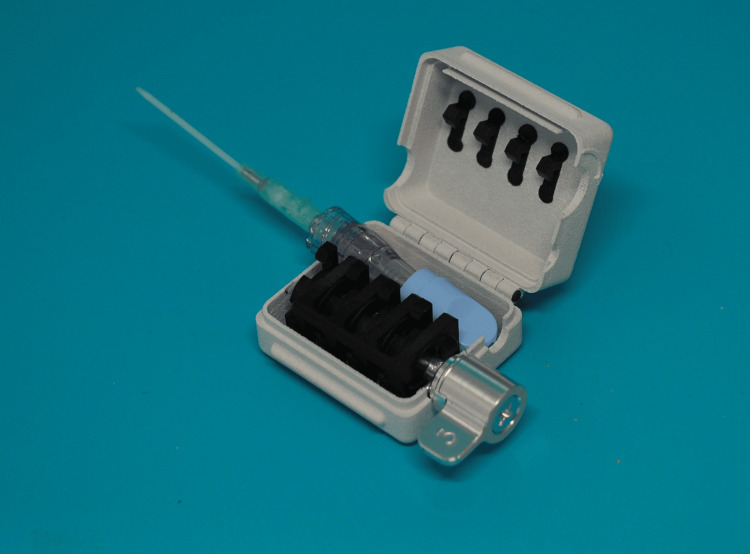 Figure 1
| No device | Neuma clamp | Tamper evident lock | Direct 1:1 supervision | Video monitoring | IV SafeLock | |
| Device cost | √ | √ | √ | X | X | √ |
| Ease of use | √ | √ | √ | X | X | √ |
| Protection | X | X | X | √ | √ | √ |
| Secure and reusable | X | X | X | √ | √ | √ |
| Useable on all access ports | √ | √ | √ | √ | √ | √ |
Peer Reviews
No public reviews on file for this paper yet. If you reviewed it on a platform where reviews are public (OpenReview, ICLR, NeurIPS, ICML), you can paste yours below so the community can read it here.
Videos
No videos yet. Explain this paper in a talk, walkthrough, or lecture? Add one.
Taxonomy
TopicsOpioid Use Disorder Treatment · HIV, Drug Use, Sexual Risk · Poisoning and overdose treatments
Introduction
The opioid epidemic has increased dramatically since 1999 leading to one of the United States' top healthcare crises [1]. Since the Covid-19 pandemic and the time of this case study, the rates have increased by 15% from 2020 to 2021 [2]. Efforts have focused on restricting the opioid prescription supply, but this does not address the needs of the patients requiring intravenous therapy [3]. Patients who inject drugs (PWID) are at greater risk for complications with a vascular access device (VAD) including bloodstream infections, line infections, bacteremia, endocarditis, overdose, and death [4-6]. The costs associated with the complications of self-injection of non-prescribed substances into vascular devices (SIVAD) are associated with increases in length of stay (LOS) readmissions and increased healthcare costs [6,7]. Patients are more prone to leave against medical advice (AMA) secondary to intentional withholding of intravenous access. There are no known commercially available devices to prevent patients from SIVAD [8].
The opioid epidemic has caused an increase in hospitalizations associated with opioid use disorder (OUD) [9]. PWID may require intravenous medications during their treatment. This poses a dilemma for both the patient and the provider. PWID have a higher risk of self-injecting during a time when they may be experiencing withdrawal or cravings [4,7,10]. Medical providers must balance the risks of VAD and the risk of SIVAD by the patient leading to additional complications [7]. Nurses must endure the cognitive burden of managing at-risk patients with unprotected VADs while providing the parental therapy necessary for appropriate treatment [10].
Furthermore, PWID is often at increased risk of poor outcomes secondary to other confounding factors such as lack of insurance, psychiatric disorders, and other forms of substance abuse [5]. Providers are often reluctant to discharge patients home on parenteral therapy for fear of SIVAD leading to subsequent prolonged hospital stays [9]. Patients are subject to bias and stigma during their care [5,11]. Furthermore, PWID is a high-risk population, often leaving AMA leading to incomplete treatment leading to increased morbidity, readmission, and death [5].
At the time of our patient’s death, there were few options available to assist with the management of PWID in the hospital setting. Direct observation, detection devices, or removing the access site between infusions were the standards of care [10]. Furthermore, there was a lack of reported evidence regarding the risks associated with a PWID and receiving intravenous therapy in either the inpatient or outpatient setting [4]. Studies published since our initial research reported up to 40% of OUD patients with SIVAD intended for antimicrobial use [5].
Case presentation
A Caucasian female patient in her mid-forties presented to the emergency department (ED) with right breast tenderness, fever, chills, “rigors,” nausea, vomiting, and generalized malaise. Her medical history was significant for opioid dependence, mastocytosis, multiple myeloma, and recurrent cellulitis and abscess in the breast. The patient was seen in the ED multiple times that year and had been treated recently for sepsis. The patient met inpatient criteria for acute kidney injury and received IV cefazolin for recurrent infection with infectious disease consult. Before arrival in the ED, the patient was prescribed a 100 mg fentanyl patch in place and up to 12 mg of hydromorphone every four hours for chronic pain from her mastocytosis. The patient also required diphenhydramine before antibiotic administration to prevent itching. She received two 12.5 mg doses of diphenhydramine on her precedent of needing anti-pruritic treatment before cefazolin. She also received 12.5 mg of promethazine.
The patient was intentionally roomed across from the nursing station, and all her belongings were placed at the glass door entrance to her room. After she was admitted to the hospital, she was held in the ED for 3.5 hours waiting for an inpatient bed. Before her transfer, she requested to use the restroom. After she failed to return to her room, the staff performed a check and found her unresponsive on the bathroom floor with a syringe attached to her VAD. She underwent resuscitation unsuccessfully and was pronounced dead.
Discussion
This case highlights the conundrum that healthcare providers face when caring for PWID. Patients are at increased risk of infection, overdose, and death while adding to the duration cost of their healthcare [6,7]. Despite precautions taken, the patient found an opportunity to use her own VAD, which caused a fatal overdose. SIVAD is likely during a hospital stay unless the underlying issue of OUD is addressed [5]. The dilemma arises on how to adequately provide analgesia safely in the hospital setting as most nurses and providers understand that placing a VAD allows SIVAD [10]. A literature review on the topic found a lack of publications on the prevalence and statistics regarding the frequency of SIVAD at the time of this case. Recent studies show an increasing acknowledgment of the need for formal management [6,7]. There was a lack of comprehensive protocols defining the management of patients in the hospital and outpatient settings [7]. Current methods in use were direct supervision, video surveillance detection tape, and protective caps that needed to be removed for therapy. There was no known medical device that would prevent a patient from accessing their device while still making it accessible to the provider [8]. This prompted the design of a multiuse medical device that would allow patients to have intravenous access, intermittent and continuous infusions, and well as piggy-backed medications (Table 1).
The device surrounds all infusion ports and hubs allowing access by nurses for medication administration yet preventing access by the patient (Figure 1).
IV SafeLock prototype shown with INT catheter in place, key inserted, and in the open unlocked positionINT, intermittent needle therapy
A clinical trial showed the device to be functional in an ED setting, protecting the infusion ports while allowing intravenous therapy [8]. The device may alleviate fears that providers have expressed about placing VADs in PWID [10]. The device would also potentially allow for outpatient parenteral antimicrobial therapy often limited secondary to fear of SIVAD by patients with OUD [4,11]. VAD protection can help keep medical costs down by preventing line infections, endocarditis, prolonged hospitalization, and patients leaving AMA [5].
Conclusions
This case study, while not unique, highlighted deficits in the healthcare industry for managing PWID who require intravenous therapy in the acute care and home health setting. There was a lack of information available regarding the reporting and frequency of SIVAD. Reasons could include fear of lower scores for the institution on benchmarking. Second, there was a distinct lack of equipment that would allow providers to safely address the need for intravascular access in PWID. This case prompted the development of a medical device that will allow providers to safely provide intravenous therapy in PWID. The device proved successful in its first clinical trial in the ED setting. This case also shows a need for more comprehensive, non-punitive reporting by hospitals of SIVAD to understand the scope of the problem and allow institutions to create protocols and use protective equipment to minimize adverse patient outcomes in this population.
The reference list from the paper itself. Each links out to its DOI / PubMed record.
- 1How increasing medical access to opioids contributes to the opioid epidemic: evidence from Medicare Part DJ Health Econ Powell D Pacula RL Taylor E 1022867120203219302210.1016/j.jhealeco.2019.102286 PMC 7231644 · doi ↗ · pubmed ↗
- 2Understanding the Opioid Overdose Epidemic 11 2023 2023 https://www.cdc.gov/opioids/basics/epidemic.html
- 3Prevention of prescription opioid misuse and projected overdose deaths in the United States JAMA Netw Open Chen Q Larochelle MR Weaver DT 02201910.1001/jamanetworkopen.2018.7621 PMC 641596630707224 · doi ↗ · pubmed ↗
- 4"I have such a hard time hitting myself, I thought it'd be easier": perspectives of hospitalized patients on injecting drugs into vascular access devices Harm Reduct J Brooks HL Salvalaggio G Pauly B Dong K Bubela T Taylor M Hyshka E 541920223561912110.1186/s 12954-022-00637-1PMC 9137200 · doi ↗ · pubmed ↗
- 5In-hospital illicit drug use and patient-directed discharge: barriers to care for patients with injection-related infections Open Forum Infect Dis Eaton EF Westfall AO Mc Clesky B Paddock CS Lane PS Cropsey KL Lee RA 07202010.1093/ofid/ofaa 074PMC 709613332258203 · doi ↗ · pubmed ↗
- 6A 9-point risk assessment for patients who inject drugs and require intravenous antibiotics: focusing inpatient resources on patients at greatest risk of ongoing drug use Clin Infect Dis Eaton EF Mathews RE Lane PS 104110436820193016539510.1093/cid/ciy 722 · doi ↗ · pubmed ↗
- 7Self-injecting non-prescribed substances into vascular access devices: a case study of one health system's ongoing journey from clinical concern to practice and policy response Harm Reduct J Chase J Nicholson M Dogherty E 1301920223642462910.1186/s 12954-022-00707-4PMC 9694828 · doi ↗ · pubmed ↗
- 8Evaluation of the functionality in an emergency department setting of an intravenous protection device to prevent self-injection Med Devices: Evid Res Bragg K Albus M Bragg B Beste R Simon L 13514217202410.2147/MDER.S 451439 PMC 1096123938529519 · doi ↗ · pubmed ↗